

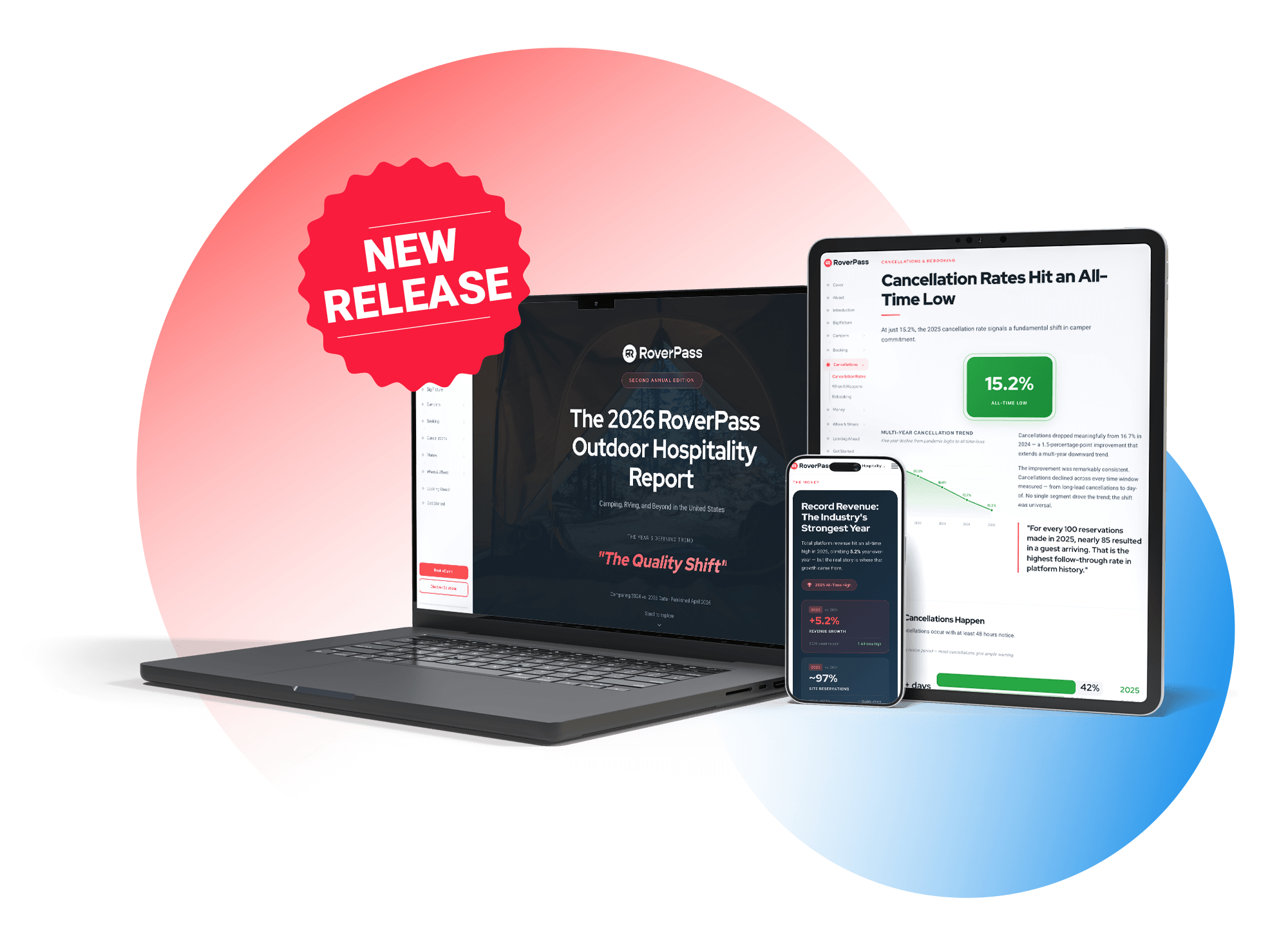

Campground and RV park revenue reached an all-time high in 2025 even as reservation volume declined for the first time, according to the 2026 Outdoor Hospitality Report released April 6 by RoverPass.
The report, based on first-party transaction data from hundreds of thousands of reservations across United States properties, found total bookings fell 1.0% year over year while total platform revenue increased 5.2%.
The divergence signals a shift in how travelers engage with outdoor hospitality, with higher spending per trip offsetting fewer overall reservations.
Ravi Parikh, CEO of RoverPass, said the data reflects a change in consumer behavior rather than reduced demand.
“The data tells a clear and compelling story. Travelers didn’t stop camping in 2025 — they started camping differently. They spent more deliberately, stayed longer, and chose higher-quality experiences. The operators who understood that shift captured a disproportionate share of the value,” Parikh said in a press release.
The report identifies 2025 as a turning point for the sector, as operators move away from volume-driven strategies toward maximizing revenue per booking. This includes maintaining pricing, investing in premium accommodations, and reducing reliance on discounts.
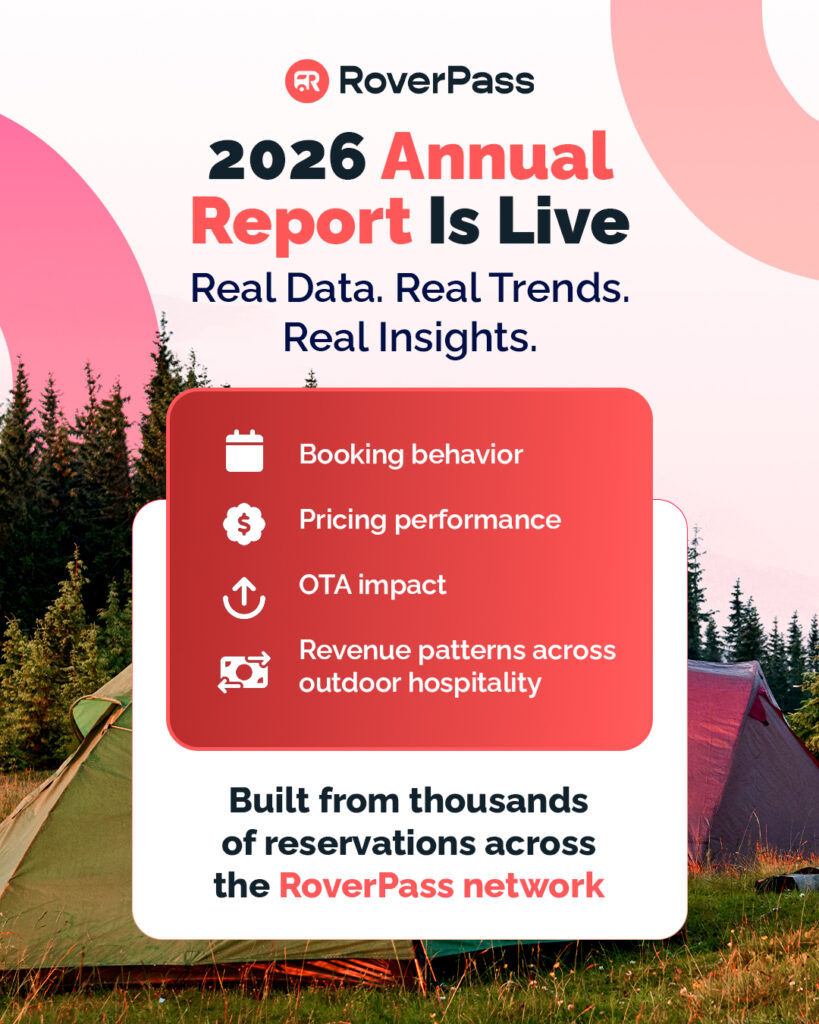
Several operational metrics reinforce the shift. Walk-in bookings dropped 81.8%, while pre-planned reservations increased.
Cancellation rates reached a record low, indicating more committed travelers. At the same time, product and ancillary revenue rose 47.3%, suggesting guests are purchasing additional services and add-ons beyond basic site bookings.
The report also outlines seven trends expected to shape 2026. Demand for glamping is projected to accelerate, with potential to double by 2027.
The Midwest is emerging as a key growth region, potentially challenging the South’s long-standing dominance. Longer-term stays are expected to become more common, reshaping campground business models to accommodate hybrid vacation and residential use.
Other trends include the growing role of artificial intelligence in trip planning, increasing adoption of dynamic pricing strategies, expanded payment options such as ACH and contactless systems, and continued growth in shoulder-season demand. November bookings, for example, rose 18.7%, pointing to longer operating seasons for prepared operators.
The 35-page report covers data from January 1 through December 31, 2025, with comparisons to 2024, and is based exclusively on completed reservations processed through the RoverPass platform.
