


A coalition of 32 conservation organizations, community groups, and businesses has formally appealed to Florida’s top legislative leaders, requesting a substantial increase in state park funding to address a $759 million maintenance backlog affecting all 176 parks in the system. The letter, sent to Senate President Ben Albritton and House Speaker Daniel Perez in early March 2026, arrives as lawmakers finalize the state budget during the closing weeks of the legislative session, placing pressure on decision-makers to act before appropriations are locked in.
The gap between current funding proposals and the coalition’s request is substantial. Both the Florida House and Senate have proposed $25 million for state park facility improvements in their fiscal 2026-27 budgets, while Gov. Ron DeSantis requested $50 million in his budget proposal. The coalition calculates that at the legislature’s proposed rate, clearing the backlog would take 30 years, and even the governor’s higher figure would require 15 years to eliminate the deficit. The $759 million figure originates from a December 2025 Florida Department of Environmental Protection report that identified the repair needs. The report was required under the 2025 State Park Preservation Act, according to The Invading Sea. The coalition is requesting at least $100 million for general park facility improvements and an additional $20 million specifically for Americans with Disabilities Act compliance upgrades.
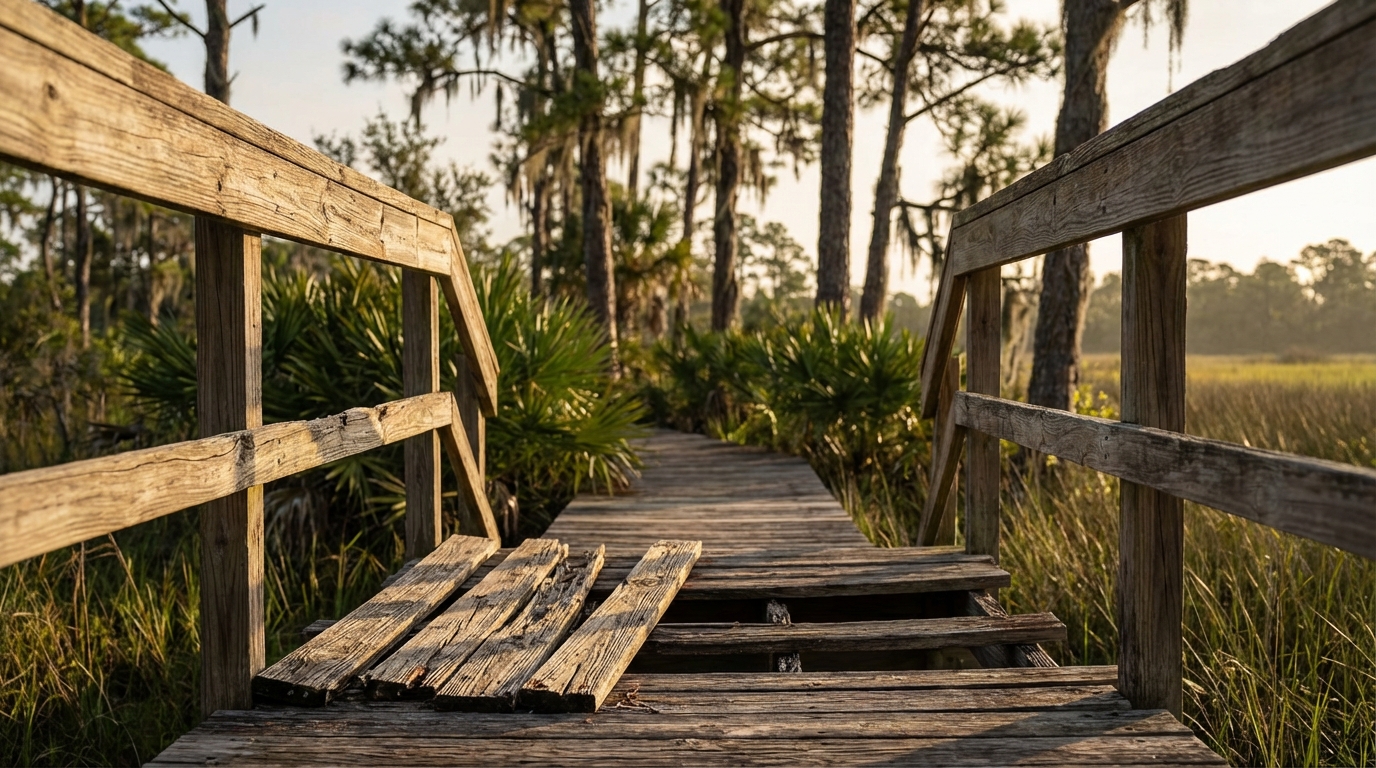
The scope of repairs needed across Florida’s park system encompasses a wide range of deteriorating infrastructure. The DEP report identified failing septic and wastewater systems requiring repair, road stabilization needs, and aging restrooms, visitor centers, cabins, and boardwalks demanding upgrades. Additional needs include safety improvements, accessibility upgrades, and modernization of essential facilities including trails and utilities. Continuing to delay these repairs will multiply future costs, force facility closures, and negatively impact local tourism economies that depend heavily on the state’s award-winning park system.
The coalition argues that sufficient funds exist to meet their request without straining the state budget. Advocates point to the Land Acquisition Trust Fund, which is projected to hold $824.7 million in statutorily uncommitted funds for fiscal 2026-27. The uncommitted funding is increasing by $30 million compared to the previous fiscal year, further strengthening the coalition’s position that a $120 million appropriation for parks is financially feasible.
Florida now operates 176 state parks, with the most recent addition being Shoal River Headwaters State Park, a 2,480-acre site near DeFuniak Springs in Walton County that opened in January 2026. The 2025 State Park Preservation Act, which mandated the DEP infrastructure report, was itself a legislative response to public backlash that erupted across the state in summer 2024. That controversy stemmed from reports that the DeSantis administration planned to build golf courses and other public amenities in nine state parks, prompting widespread criticism from conservation groups and outdoor recreation advocates.
Private campground and RV park operators watching this funding debate may recognize parallel warning signs in their own facilities. The 30-year timeline to clear the state park backlog serves as a cautionary example of what happens when maintenance is consistently underfunded year after year. A capital reserve fund represents standard practice in the hospitality industry, with many operators setting aside a percentage of annual revenue specifically for facility improvements and unexpected repairs. Annual infrastructure audits help identify small problems before they become costly emergency repairs, particularly for septic systems, electrical hookups, and water delivery systems. Aging restroom facilities and utility hookups rank among the most common deferred maintenance items at private campgrounds, directly mirroring the challenges described in the state park inventory.
The coalition’s specific request for $20 million dedicated to ADA compliance upgrades reflects broader industry recognition of accessibility as both an obligation and an opportunity. Accessible pathways to common areas, restrooms, and at least a portion of campsites represent baseline requirements under federal accessibility guidelines. Operators who exceed minimum accessibility requirements often report positive guest feedback and increased bookings from travelers with disabilities and their families. Staff training on disability awareness and assistance protocols helps create a welcoming environment.
The growing senior traveler demographic is driving additional demand for accessible facilities, as many older RV enthusiasts benefit from the same features designed for guests with disabilities. As state parks work to improve accessibility, private campgrounds and RV parks that have already invested in inclusive facilities may be better positioned to attract guests who have historically relied on public lands for outdoor recreation. Clear signage indicating accessible routes and facilities helps guests navigate properties safely and independently.
For operators managing their own properties, digital maintenance tracking systems have become increasingly popular tools for documenting repair needs, scheduling preventive maintenance, and projecting future capital expenditure requirements. Investing in durable, low-maintenance materials during initial construction or renovation typically reduces long-term repair costs, even when upfront expenses are higher. Many operators are also transitioning to eco-friendly infrastructure solutions such as composting toilets, solar-powered amenities, and permeable paving materials that reduce both environmental impact and long-term maintenance burdens.
Modular construction approaches for cabins, restrooms, and visitor facilities are gaining popularity among both public and private operators because they allow for faster installation and easier component replacement when repairs become necessary. This approach can help operators avoid the long timelines that accumulate when traditional construction methods combine with funding shortfalls. Whether managing a state park system or a privately owned RV resort, the principle remains the same: deferred maintenance compounds over time, and what begins as minor repairs eventually demands major capital investment.
The coalition letter arrives at a decisive moment, with lawmakers in the final weeks of budget negotiations. The coming days will determine whether state parks receive the enhanced funding advocates are seeking or continue operating under appropriation levels that would extend the repair timeline across decades. Private operators can use this situation as a prompt to evaluate their own capital improvement plans and ensure they are not accumulating a hidden backlog that will eventually demand attention.
Whether in the public or private sector, the financial reality remains the same: addressing infrastructure needs proactively costs far less than managing crisis repairs decades later. Investing in sustainable, low-maintenance solutions during renovations not only reduces environmental impact but also decreases long-term operational costs. For campground owners and RV park operators across Florida and beyond, the state park funding debate offers both a cautionary tale and an opportunity to reassess their own maintenance strategies before small problems grow into systemic challenges.
