

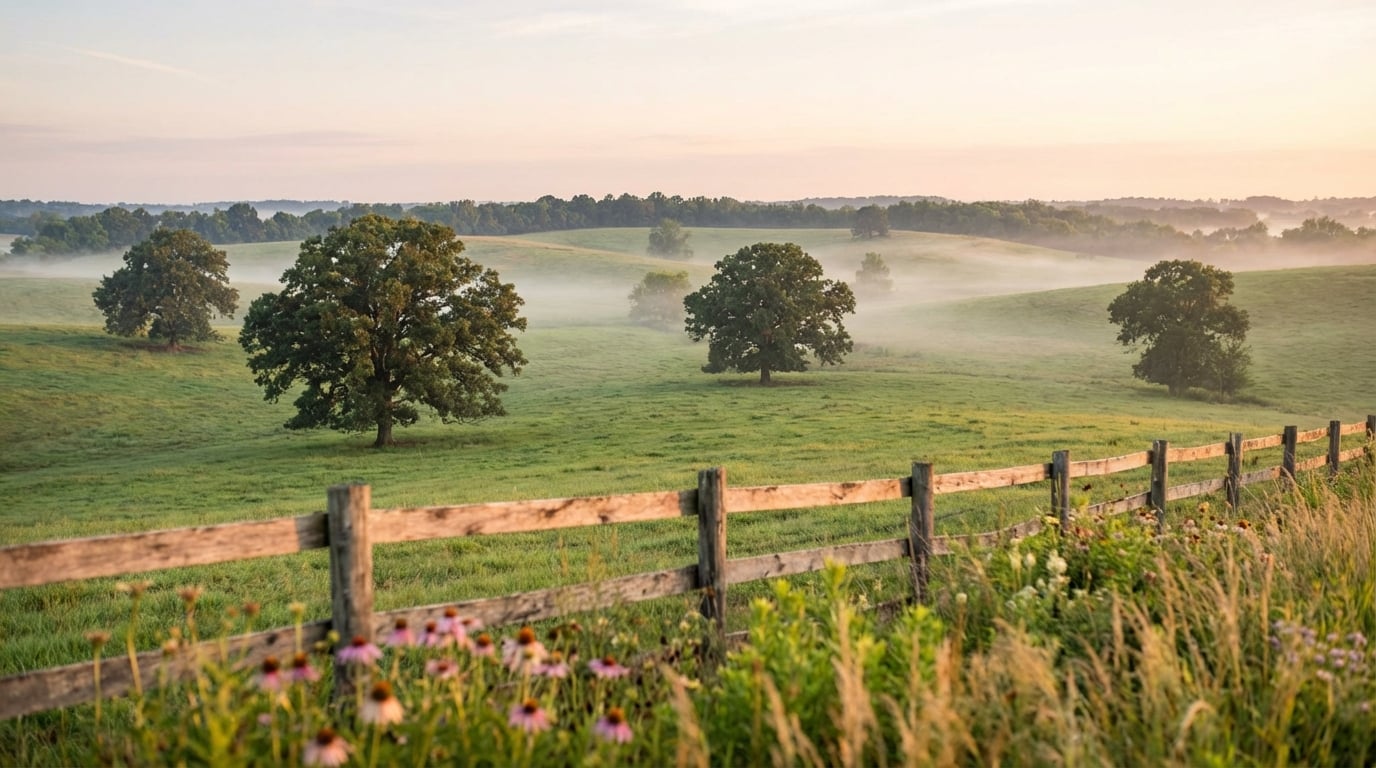

The Coopertown Planning Commission convened a workshop on Feb. 25, 2026, to evaluate a proposal from a local landowner seeking to transform a 73-acre agricultural property into a primitive rural resort. The session, held at 6 p.m. at Fire Station #5 at 3752 Old Coopertown Road, marked an early step in what could become a primitive rural resort in the rural Tennessee community.
Layton Jones, owner of Jones Farm at 1855 New Hope Road, presented his vision for the property identified as Coopertown Tax Map 137, Parcel 029.00, during the workshop according to a public notice. The workshop format allowed planning commissioners to review project details, pose questions and offer preliminary feedback without taking formal action on the proposal. This distinction matters for outdoor hospitality professionals monitoring the development, as workshops typically precede the formal application and voting process that determines whether projects advance.
The primitive rural resort designation Jones is pursuing represents a middle-ground classification between traditional agricultural use and fully developed commercial recreational properties. This zoning category typically permits low-density accommodations including tent camping sites, rustic cabins, yurts and minimal-infrastructure glamping units while restricting high-impact developments such as paved RV pads with full hookups or permanent commercial structures. For operators considering similar ventures, understanding what this classification allows and prohibits proves essential to realistic business planning.
Operators typically encounter requirements under primitive rural resort zoning that include limited impervious surface coverage to protect watershed areas and maintain rural character, restrictions on permanent utility infrastructure that often necessitate off-grid or hybrid solutions, and lower guest density caps per acre compared to traditional campground zoning. Design guidelines frequently require structures to blend with natural surroundings through material and color restrictions, while enhanced buffer zones between accommodations and neighboring agricultural properties help preserve community character.
The 73-acre parcel size at Jones Farm offers substantial flexibility that many smaller properties lack. Operators pursuing this type of development should anticipate that municipalities will carefully evaluate how proposals align with preservation of rural character, making the workshop process a critical opportunity to address concerns before formal applications proceed. The Coopertown Planning Commission’s approach demonstrates how local governments often use preliminary sessions to gather information and identify potential issues early in the review process.
Agricultural land conversion to outdoor hospitality use has become an increasingly common pathway for rural landowners seeking new revenue streams. Before pursuing rezoning, operators often evaluate soil composition for drainage and structural support, identify wetland areas that may restrict development, assess existing road access for guest traffic capacity and inventory natural features that enhance campsite appeal. Properties without existing utility connections typically require careful planning for water sourcing through well drilling or municipal connection, while septic system design must account for peak occupancy loads.
Industry experience suggests phased development often reduces financial risk and allows operators to test market demand before committing to full buildout. Many successful agricultural conversions begin with tent camping or basic glamping units, then expand infrastructure based on guest feedback and revenue performance. Solar and battery systems have become common considerations for properties pursuing primitive or eco-focused designations, enabling operators to maintain rustic aesthetics while meeting modern expectations for basic conveniences.
Properties that maintain elements of agricultural heritage often enhance their marketability rather than diminish it. Working farms adding agritourism accommodations, farm-to-table dining experiences or agricultural education programming typically command premium rates and generate stronger guest loyalty than properties that fully abandon their farming roots. The Jones Farm proposal exemplifies this growing trend of agricultural landowners exploring outdoor hospitality as a viable economic alternative to traditional farming operations.
The Coopertown proposal unfolds against a backdrop of broader regional discussions about rural resort regulations. Cheatham County, where Coopertown is located, has ongoing deliberations regarding Rural Resort regulations that have been continued from February 2025. The Cheatham County Planning Commission is scheduled to meet March 5, 2026, at 6 p.m. in the Cheatham County Court House in Ashland City, Tennessee, where Rural Resort regulations appear on the agenda as a separate legislative discussion. County-level decisions may inform or influence how municipalities like Coopertown handle similar proposals, making these parallel discussions relevant for developers and operators watching how regional policies evolve.
For outdoor hospitality professionals evaluating opportunities in markets with primitive rural resort designations, the trade-off between infrastructure limitations and lower development costs can actually benefit those who market authenticity and immersion in nature as core value propositions. The growing demand for unplugged or digital detox experiences aligns well with properties operating under these zoning classifications, where the absence of extensive infrastructure becomes a feature rather than a limitation.
Understanding local zoning frameworks and workshop processes remains essential to project planning for anyone considering agricultural-to-recreational conversions. Municipal workshops serve as critical junctures where developers can gauge official sentiment, respond to preliminary concerns and adjust proposals before investing in formal applications. The Jones Farm case illustrates how these sessions function in practice, with commissioners reviewing specifics and providing feedback in a less formal setting than a voting meeting would entail.
Formal zoning decisions regarding the Jones Farm property would occur at future meetings following the workshop review process. For outdoor hospitality professionals monitoring similar opportunities in their own markets, the Coopertown proposal provides a useful reference point for understanding how rural communities evaluate primitive resort concepts and balance economic development interests with preservation of agricultural character that defines their identity.
