

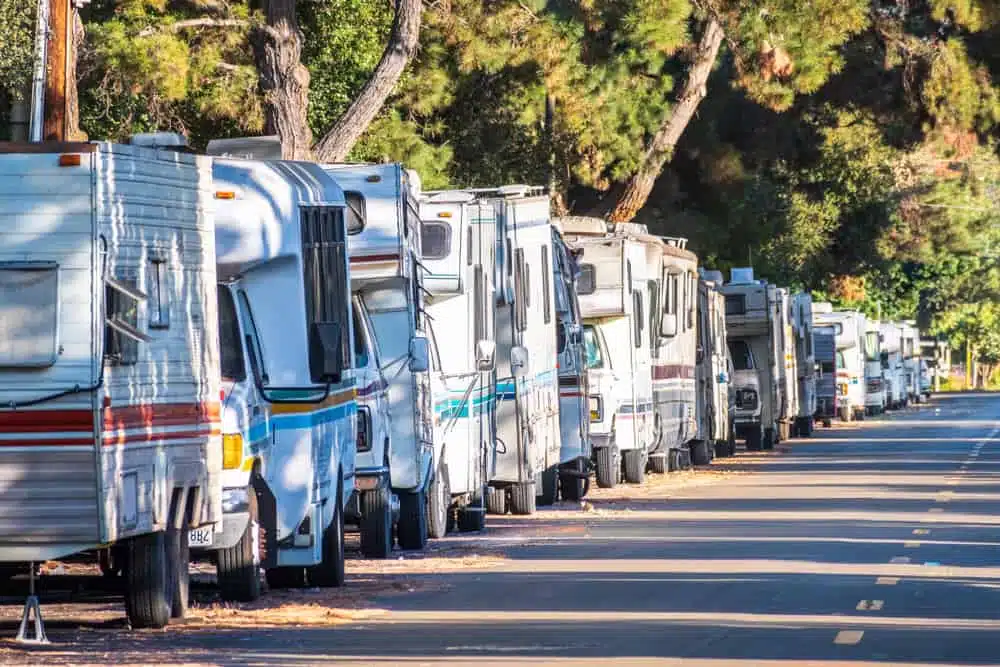

Recreational vehicle manufacturers are adjusting production schedules as high fuel prices and geopolitical uncertainties impact spring sales.
According to an article by Reuters, in late March, Coley Brady, co-founder of Alliance RV, reduced assembly line operations from five days a week to four across most of his five factories in Elkhart, Indiana.
The production slowdown followed market disruptions from the conflict involving the U.S., Israel, and Iran, which raised American gasoline prices by 33% and diesel by 43%.
Regarding the market shifts, Brady noted, “Clearly the war and higher gas prices are the easiest things to point to”.
The contraction reflects a broader economic trend, as Commerce Department data revealed that inflation-adjusted consumer spending on recreational goods and vehicles declined in April for the fifth consecutive month.
This represents the longest spending downturn in the category since the economic recession of 2008.
Compounding these challenges, interest rates for RV loans average 7.53%, according to LendingTree data, which further tightens retail buyers’ budgets.
Jeff Hirsch, chief executive officer of Campers Inn, stated that while affluent baby boomers continue purchasing, cost-conscious consumers are delaying investments.
Data from Statistical Surveys Inc. indicated that retail RV registrations dropped nearly 22% in March and approximately 17% in April compared to the previous year.
Additionally, the RV Industry Association reported a 13.5% decline in wholesale shipments to dealerships during the first four months of the year.
On June 1, the association lowered its 2026 shipment forecast to a range between 300,000 and 328,100 units, down from the 342,200 units recorded last year.
RV Industry Association President Craig Kirby stated, “Economic headwinds and tightening household budgets are weighing on consumer demand and contributing to a more cautious outlook for RV shipments in 2026”.
The current market conditions follow a volatile period where pandemic-era shipments peaked at over 600,000 units in 2021 before experiencing an inventory overhang. Industry consultant Gregg Fore observed that recent energy market spikes “killed whatever speed there was” in the market ahead of the spring season.
Despite temporary setbacks, some executives remain optimistic about long-term demand shifting back toward domestic road travel due to high international airfares and cruise ship health concerns.
Brady, whose company produced 8,200 units last year, remarked, “The stock market is strong, and I think that’ll ultimately be good for business”.
He added that “Mexico has had issues with cartels and violence,” which alongside cruise line disruptions could influence travelers. Discussing alternative travel friction, Brady said, “You’d think all of that would guide back to RV use”.
Ball State University economist Michael Hicks noted that the industry regularly relies on buyers in their 50s and 60s who have secure retirement savings and previous experience navigating fluctuating interest rates.
Rhode Island retiree Michael Provost, 69, mirrored this sentiment while traveling, stating, “You kind of take it in stride”.
For the RV industry, tracking these wholesale and retail fluctuations is vital for inventory management, dealership health, and campground occupancy forecasting.
