

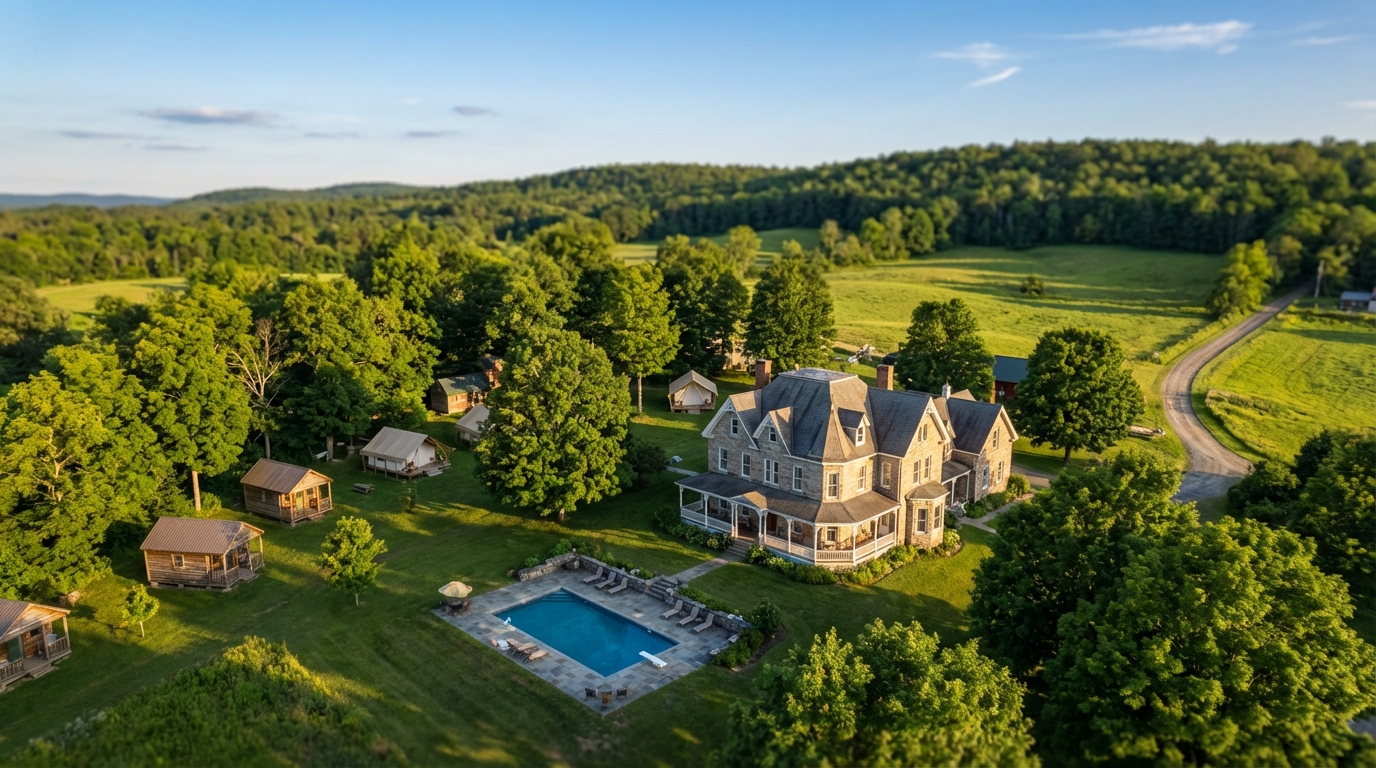

A 35-acre property in Mount Olive Township, New Jersey, that once operated as the Goodland Country Club nudist resort has hit the market for $2.9 million, presenting outdoor hospitality operators with a rare chance to acquire extensive existing infrastructure in Morris County. The property at 50 Drakestown Road features dozens of structures including cabins, multifamily buildings, camping sites, and recreational amenities spread across improved land that permanently closed in 2024 following the owner’s retirement. Jessica Craig and Michele Blinn-Barreiro of Coldwell Banker Realty are representing the listing.
At the heart of the 35.09-acre property stands a Victorian-era mansion featuring fireplaces, hardwood flooring, and stonework that speaks to construction quality rarely replicated in modern development. The main residence currently holds permits for 10 furnished rooms and includes an efficiency apartment. For operators evaluating acquisition opportunities, older properties like this one often contain materials and craftsmanship that would prove cost-prohibitive to reproduce today. The mansion’s existing room permits represent embedded value, potentially positioning the structure as a boutique lodge or event venue without requiring operators to navigate the permitting process from scratch.
The grounds contain approximately 24 one-room cabins spread across the property, along with several multifamily residential buildings and a recreation hall. Additional structures include various sheds, workshops, and utility buildings that support ongoing operations. Properties offering this variety of structure types provide operational flexibility that purpose-built facilities struggle to match, allowing owners to accommodate different guest segments simultaneously and test various accommodation formats before committing to a single approach.
The cabin inventory aligns particularly well with current market dynamics in outdoor hospitality. The micro-cabin and glamping pod trend continues gaining momentum as travelers seek accommodations that blend outdoor authenticity with modern comfort. Operators who successfully update rustic structures with contemporary amenities may achieve premium pricing that neither traditional campgrounds nor mid-tier hotels can command. The 24 existing cabins offer a foundation for this approach without the timeline and expense of ground-up construction.
Camping and RV infrastructure already established on the property includes designated RV and trailer sites with existing hookups and six campsite pads equipped with fire pits. For operators concerned about regulatory hurdles, these pre-existing sites suggest that camping uses are already permitted on the property, reducing the uncertainty that often accompanies new outdoor hospitality development. Properties with established use permits frequently grandfather in operational rights that would prove difficult or impossible to secure for greenfield projects.
Recreational amenities scattered throughout the grounds include an inground swimming pool with an adjacent picnic area, a hot tub, a sun deck, a volleyball court, and shuffleboard courts. Installing this type of recreational infrastructure from scratch would require substantial capital investment, making these existing amenities a significant component of the property’s overall value. Updating mechanical systems, plumbing and electrical capacity in existing recreational facilities can deliver higher return on investment than constructing new amenities entirely.
Beyond the physical amenities, the property falls under New Jersey Highlands environmental regulations, which restrict further subdivision and limit major redevelopment. According to the listing, the property may be best suited for a buyer interested in rehabilitating or restoring the existing structures. While these restrictions might initially appear limiting, they effectively preserve the property for continued hospitality use rather than residential subdivision, creating competitive protection for any operator who invests in rehabilitation.
Working within environmental protection frameworks has become increasingly common for outdoor hospitality operators as available land in desirable locations grows scarcer. Many regulations allow for renovation and rehabilitation of existing structures even when new construction faces prohibitions. Maintaining the footprint and general character of existing improvements typically proves more permissible than expanding or altering land use, and infrastructure upgrades such as utility improvements and safety enhancements are generally treated differently from new development under most environmental protection schemes.
The Highlands restrictions offer additional strategic advantages that operators should consider. Properties in protected areas frequently feature preserved natural landscapes that appeal to eco-conscious guests seeking sustainable accommodations. Limited future development in surrounding areas protects viewsheds and maintains the rural character that attracts outdoor hospitality visitors in the first place. Positioning a property as operating in harmony with environmental stewardship resonates with a growing segment of travelers who prioritize sustainability in their lodging decisions.
Recreation halls and common buildings like those on this property can generate ancillary revenue streams through event hosting, corporate retreats, and group bookings. The multifamily residential buildings may offer staff housing solutions or additional accommodation options depending on local regulations and rehabilitation scope. This diversity of structure types enables phased development approaches where operators generate revenue from initial units while reinvesting profits into subsequent improvements across the property.
Repurposing established resort properties has emerged as a practical alternative to ground-up development as construction costs and permitting timelines continue challenging the industry. Operators who successfully rehabilitate legacy properties may maintain original character elements while upgrading guest-facing amenities, creating a sense of history and place that newly constructed facilities struggle to replicate. Starting with the highest-quality existing structures allows operators to establish market positioning and build reputation before committing to full-property renovation.
The listing describes the opportunity as a rare chance to acquire a large tract of improved land with historic character, though it notes that rehabilitation of buildings will likely be required. For outdoor hospitality operators seeking alternatives to competing for increasingly scarce undeveloped land, properties like this former nudist resort represent a pathway to market entry that leverages existing improvements. The $2.9 million asking price for 35.09 acres of improved land with dozens of structures, established camping infrastructure, and recreational amenities offers a starting point for operators ready to evaluate adaptive reuse as their development strategy.
