


Massachusetts campground and RV park operators must prepare for open burning season, which officially began January 15 and continues through May 1, bringing strict regulations that govern the disposal of brush, forestry debris, and other approved natural materials on commercial outdoor hospitality properties.
The Massachusetts Department of Environmental Protection establishes air quality requirements for open burning through 310 CMR 7.07, while local fire chiefs enforce permits and retain authority to deny permits or suspend burning based on daily atmospheric conditions, according to state officials who issued their annual reminder on the burning season. For properties managing dozens or hundreds of campsites, compliance requires more than understanding the rules—it demands systematic staff training and property-wide safety infrastructure that exceeds residential requirements.
It is important to note that these open burning regulations apply specifically to waste disposal activities, not to recreational campfires guests may enjoy for cooking or warming.
The regulations establish a narrow window for legal open burning: fires may only occur between 10 a.m. and 4 p.m., and all fires must be completely extinguished by the 4 p.m. deadline. Every open burn must be located at least 75 feet from any dwelling, and operators must obtain permits in advance from their local fire department. These departments may impose additional limitations beyond state requirements if circumstances make open burning hazardous. For campground operators, this means the 75-foot setback applies to property maintenance activities such as disposing of brush, prunings, and forestry debris—separate rules govern recreational campfires at guest sites.
Communicating fire safety regulations to guests unfamiliar with Massachusetts law presents a significant operational challenge. Posting visible signage at check-in areas, camp stores, and individual sites that clearly states recreational campfire rules and prohibited materials creates a foundational layer of compliance. Adding fire safety information to digital reservation confirmations and pre-arrival emails sets expectations before guests arrive, while training front desk and ranger staff to verbally communicate the rules during check-in provides an additional touchpoint. Creating a simple one-page handout with visual icons showing what can and cannot be burned helps overcome language barriers and ensures quick comprehension among visitors from outside the region.
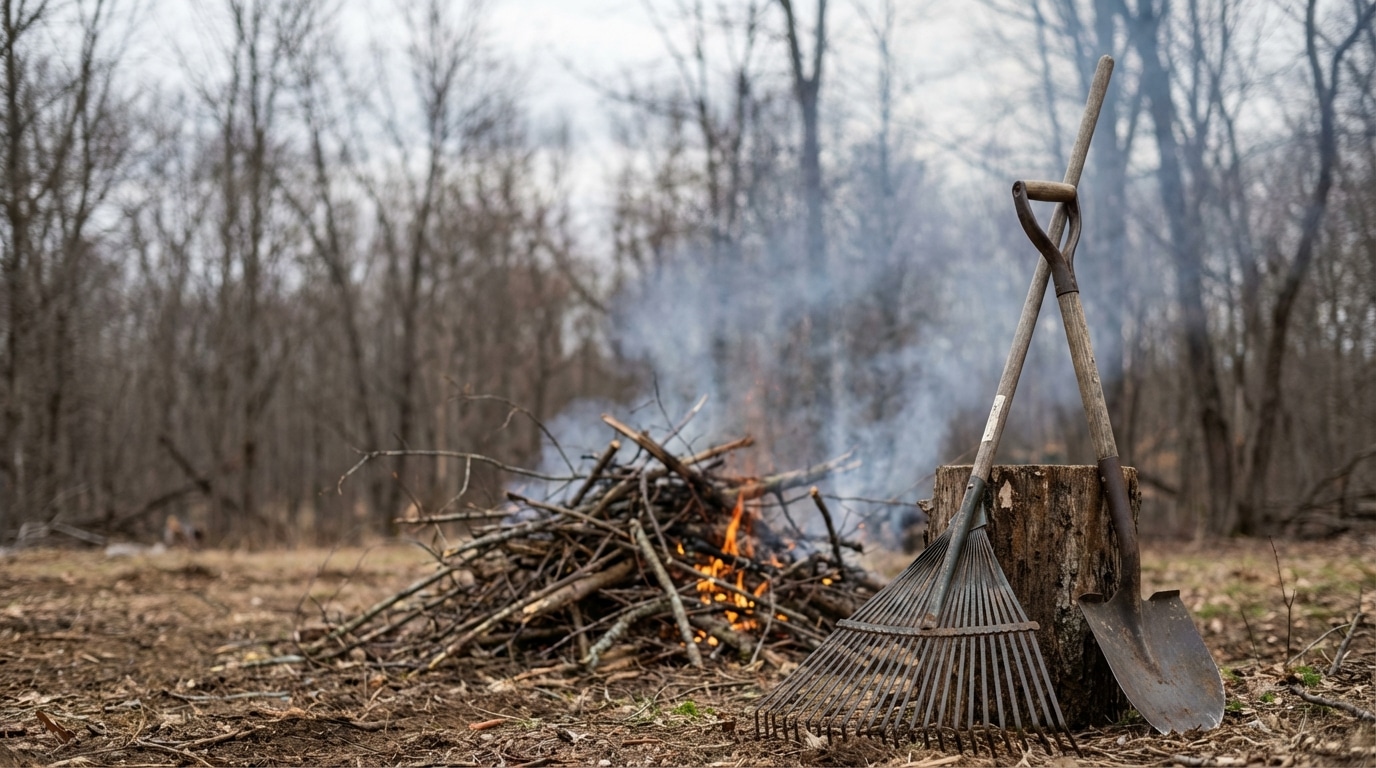
State Fire Marshal Jon M. Davine emphasized the conditional nature of burning permissions in his statement to residents. “Open burning season applies only to specific types of fuel and is always limited based on the daily fire hazard, environmental concerns, and location,” Davine said. “Even where burning is authorized, you must have a permit from your local fire department and you must be able to extinguish the fire on a moment’s notice. Please make safety your priority when burning.” For outdoor hospitality operators, this means keeping fire suppression equipment such as charged hoses, shovels, and rakes immediately available at every location where open burning occurs, and ensuring water spigots are operational and accessible at regular intervals throughout the property.
The list of materials that can legally be burned during open burning season is specific and limited. Permitted materials include brush, cane, driftwood, residential forestry debris, fruit tree and bush prunings, raspberry stalks, infected bee hives, trees and brush from agricultural land clearing, and fungus-infected elm wood if no other acceptable disposal method is available. The regulations strictly prohibit burning leaves, grass, hay, stumps, tires, household trash, construction materials, demolition debris, and any brush, trees, cane, or driftwood from commercial or industrial land clearing. This distinction matters for campground operators who may need to dispose of land-clearing debris through alternative means rather than burning.
Bonnie Heiple, Commissioner of the Massachusetts Department of Environmental Protection, addressed the environmental rationale behind these restrictions. “Improper open burning creates safety risks and can harm air quality,” Heiple said. “Only burning approved natural materials — like driftwood and prunings — and burning on ‘good air days,’ when pollution levels are low and air circulates well, ensures these fires can be managed safely.” Operators looking to offer campfire experiences while minimizing risk often designate specific communal fire areas where staff can monitor compliance and ensure only approved materials are used.
Managing fire risk on commercial outdoor hospitality properties demands a more comprehensive approach than individual residential burning. Maintaining water sources and fire control tools such as pressurized water hoses, shovels, or rakes in common areas and near designated fire pits is standard practice, as is conducting pre-season staff training on fire response protocols, including how to properly extinguish brush fires and when to contact emergency services. Creating firebreaks or maintaining mowed buffer zones around high-density areas reduces spread potential if a fire escapes containment. Keeping a property map with hydrant locations, access roads for fire trucks, and assembly points supports coordination with local fire departments during emergencies, while regularly inspecting and clearing brush accumulation from fence lines, storage areas, and utility connections minimizes fuel sources.
Open burning is permanently banned year-round in 22 densely populated Massachusetts communities: Arlington, Belmont, Boston, Brookline, Cambridge, Chelsea, Chicopee, Everett, Fall River, Holyoke, Lawrence, Lowell, Malden, Medford, New Bedford, Newton, Somerville, Springfield, Waltham, Watertown, West Springfield, and Worcester. The regulatory framework includes 310 CMR 7.07, which sets baseline air quality requirements and allows for “no burn” days, along with MGL chapter 48, section 13, which prohibits any open air fire without a permit, and the Massachusetts Comprehensive Fire Safety Code, which gives local fire chiefs additional authority. These layered regulations recognize that density and risk factors affect fire danger—a consideration equally relevant for campgrounds with closely spaced sites.
Because local fire departments may suspend burning on any given day due to atmospheric conditions, burn status can change without warning. Digital guest engagement platforms and property management software increasingly allow operators to send real-time notifications to all registered guests, enabling instant communication when burning is suspended and reducing the risk of unauthorized fires. Many property management platforms offer automated messaging features that push seasonal alerts without manual intervention. Some forward-thinking operators invest in weather monitoring tools that track humidity, wind speed, and temperature to make informed decisions about whether to allow fires on any given day, even within permitted hours.
The consequences of non-compliance extend beyond individual fines. Persons who burn unlawfully or allow a fire to grow out of control could be held liable for firefighting costs, and violators may face fines or jail time. Violations can also result in revocation of burning privileges. David Celino, Chief Fire Warden of the Department of Conservation and Recreation, issued a direct warning about these risks. “Massachusetts residents have seen just how quickly outdoor fires can grow out of control,” Celino said. “We encourage everyone to exercise caution – don’t risk a fire that puts you, your home, or your community at risk. Burn only approved materials, always get a permit from your local fire department, and ensure that any fire is extinguished properly and completely.”
For outdoor hospitality businesses, a single escaped fire could result in property damage, guest injuries, and significant liability exposure that dwarfs individual regulatory penalties. The regulations require that an adult tend to fires at all times, that fires burn small amounts at a time, and that operators never use gasoline, kerosene, or other accelerants to start fires. If winds pick up or weather changes, fires must be extinguished immediately—most fires get out of control during sudden wind changes. Should a fire escape containment, operators must contact the local fire department without delay.
The January 15 through May 1 open burning season offers campground and RV park operators a designated window for property maintenance activities involving approved natural materials, but only within strict safety parameters. Contacting local fire departments for permit requirements specific to each municipality is the essential first step, with the understanding that even permitted burning may be suspended based on daily conditions. Properties that invest in comprehensive staff training and infrastructure preparation that exceeds minimum residential requirements position themselves to conduct safe open burning operations throughout the season while protecting their operations, their guests, and their standing with regulators.
