

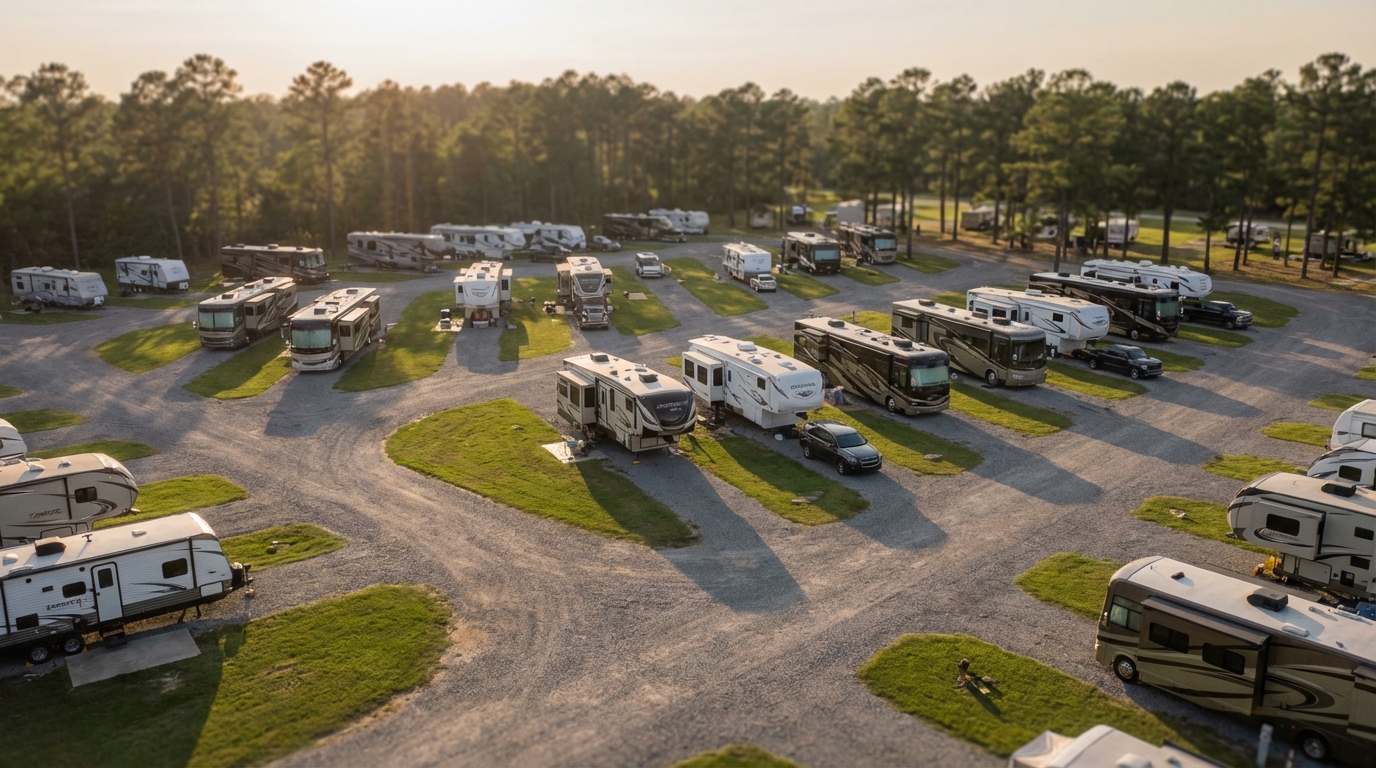

The Jackson County Board of County Commissioners (Florida) denied a development order for the proposed Windwood RV Park, halting plans for the park that would have been situated in immediate proximity to Cottondale Elementary School in the Florida Panhandle community.
A group of Cottondale residents attended the meeting prepared to argue against the project, which had been proposed for a site on Pontiac Loop just off Highway 90 in Jackson County.
The board’s decision followed a recommendation from the country planning board, recommending to deny the development.
Residents who organized against the development cited multiple concerns during the approval process, including traffic congestion that already affected the area during school hours, potential safety risks for children attending the nearby elementary school.
According to a local report, the developer behind Windwood RV Park had attempted to address mounting opposition by substantially reducing the project’s scope before the January 2026 hearing.
Originally proposed in June 2025 as a 55-unit facility, the revised plans presented to commissioners called for just 24 RV spaces plus an on-site office.
Despite this significant reduction in density, the modifications proved insufficient to overcome the concerns that had already crystallized among neighbors.
During the January meeting, the commissioner representing the district where the Windwood RV Park would have been located took a leading role in determining the project’s fate.
That commissioner made the motion to deny the development order, which was subsequently seconded and passed by the board.
Understanding the concerns of local residents serves as a strategic advantage for developers because it identifies the non-negotiable friction points that can derail a project. In the case of the proposed Windwood RV Park, building a rapport with local residents helps navigate the challenges before the approval process.
By communicating with residents early, a developer can distinguish between concerns that are manageable through design changes and those that are fundamental to the community’s identity or safety.
