

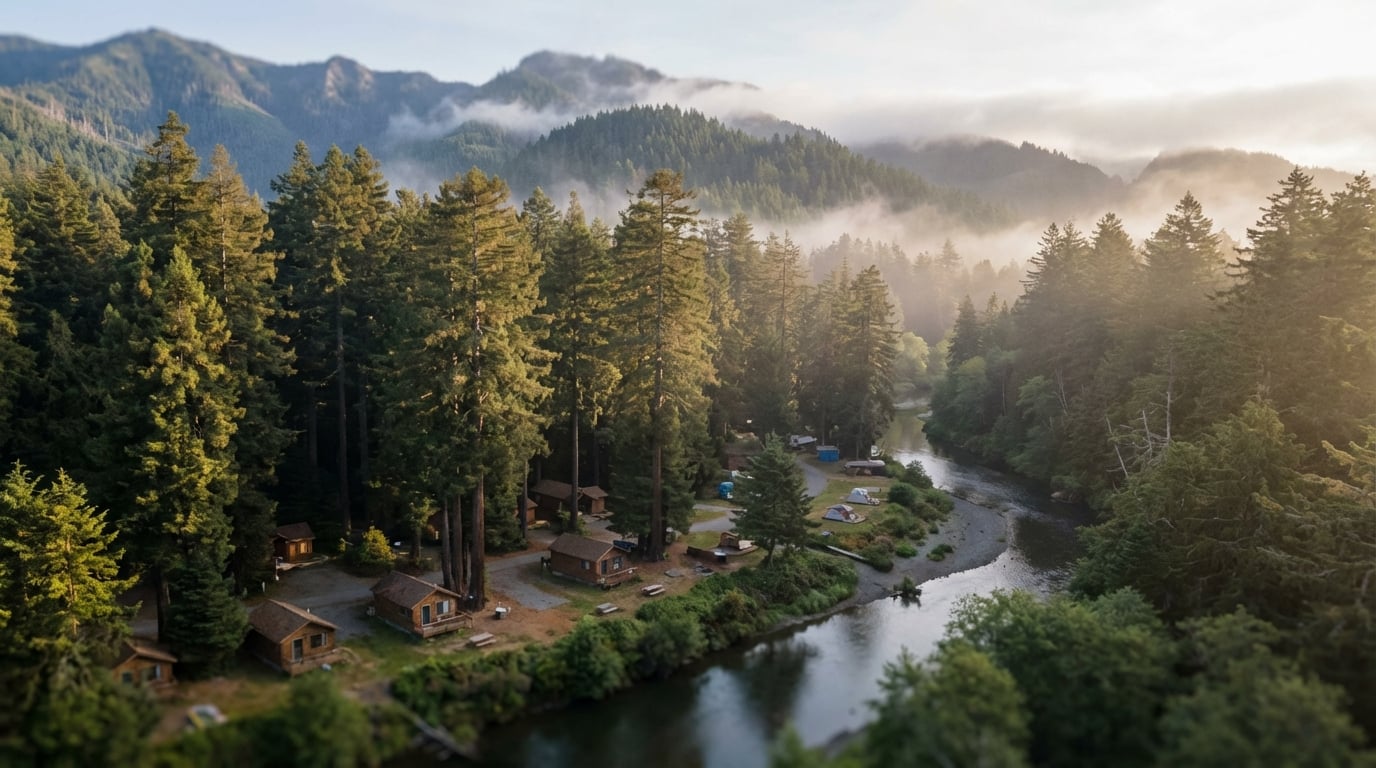

A New York-based investment firm has secured a unanimous recommendation from the Big Sur Land Use Advisory Committee to overhaul three campground properties along California’s scenic central coast, advancing a comprehensive redevelopment plan driven by aging infrastructure. EOS Investors LLC presented its proposal on March 10, 2026, outlining plans to transform Big Sur Campground and Cabins, Riverside Campground and Cabins, and the Pheneger Creek Community Housing Project through septic system modernization, accommodation restructuring, and workforce housing additions. The project now moves to the Monterey County Planning Commission for further evaluation.
The initiative stems primarily from the need for a new septic system after years of deferred maintenance, according to project consultants who emphasized this is not a glamping venture. The stationary trailers being proposed are necessary specifically to support the new septic infrastructure, which serves as the foundation for the entire redevelopment approach.
This deferred maintenance challenge reflects a broader industry dynamic: septic system upgrades represent one of the most significant infrastructure investments in outdoor hospitality, yet they also present substantial opportunities for property transformation. Modern septic systems designed for commercial outdoor hospitality applications typically offer higher treatment capacities, reduced environmental impact, and greater flexibility in site configuration compared to legacy systems installed decades ago. Properties constrained by outdated septic infrastructure often cannot support the bathroom-equipped cabins, park models, or glamping units that command premium nightly rates. Many operators have discovered that septic upgrades, while expensive upfront, can enable higher-value accommodation types that generate stronger returns over time.
The redevelopment plan involves a significant shift in accommodations, transitioning away from traditional mobile recreational vehicles. The current configuration of 130 rental RV sites would decrease to 107 stationary, RV-like park model units that will function similarly to hotel rooms. This reduction directly connects to the septic infrastructure requirements, illustrating how modernization enables strategic property repositioning. The proposal also includes 61 tent-only camping sites, with 13 designated as affordable accommodations to maintain accessibility for budget-conscious travelers.
The plan incorporates 30 new on-site housing units for employees, which is expected to significantly reduce commuting along Big Sur’s notoriously winding roads. Kirk Gafill, general manager at Nepenthe Restaurant, praised this workforce housing component.
“Maybe the most important thing to focus on from my perspective is that they’re investing in the workforce housing, which is, again, just critical to the entire community,” said Gafill.
Staffing challenges in destination outdoor hospitality markets have intensified in recent years, with operators in remote or high-cost-of-living areas struggling to recruit qualified employees. The primary barrier is often housing availability and affordability rather than wages alone. Communities near national parks, coastal destinations, and mountain resort areas frequently have limited rental inventory and housing costs that far exceed what hospitality wages can support. On-site workforce housing delivers multiple operational benefits: employees can respond more quickly to after-hours emergencies, reduce absenteeism from transportation issues, and properties often report lower turnover rates when staff live on the premises.
Developers highlighted a traffic study suggesting overall vehicle trips could decrease under the new plan, with reductions attributed to fewer mobile RVs navigating local roads and diminished employee commuting thanks to the workforce housing component. Planned on-site amenities designed to keep visitors on property include a cafe, retail store, food lodge, and potential liquor license. These additions aim to decrease the need for guests to drive into town for dining and supplies. Destination markets are increasingly grappling with community concerns about traffic and road wear from employee commuting, and campgrounds demonstrating reduced vehicle trips through workforce housing may find smoother paths through local planning approval processes, particularly in environmentally sensitive areas like Big Sur.
The Land Use Advisory Committee praised the proposal for working within existing land-use codes, with documentation indicating compliance with the Big Sur Land Use Plan, the Coastal Act, and county zoning regulations.
However, the project has drawn opposition from local advocacy groups concerned about the transformation’s broader implications. Keep Big Sur Wild, led by founder Marcus Foster, has raised questions about affordability, traffic from additional staff, and the classification of permanent structures as recreational vehicles.
“Are we going to allow investment firms to come in and buy up all our campgrounds and convert them into these high-end resorts that most of us can’t afford?” Foster said.
Foster has also emphasized the need for regulatory clarity before development proceeds. “We want to make sure that the land use plan is updated before any development on these properties goes forward, because we want to see in the land use plan draft update, better recognition and definition of what a visitor serving unit is,” he said.
The project must still navigate the California Environmental Quality Act process and secure approvals from the Monterey County Planning Commission, County Board of Supervisors, and California Coastal Commission. Written comments will be accepted by the county planning commission and Coastal Commission as part of the permitting process, and the advisory committee may recommend changes during its initial review.
