

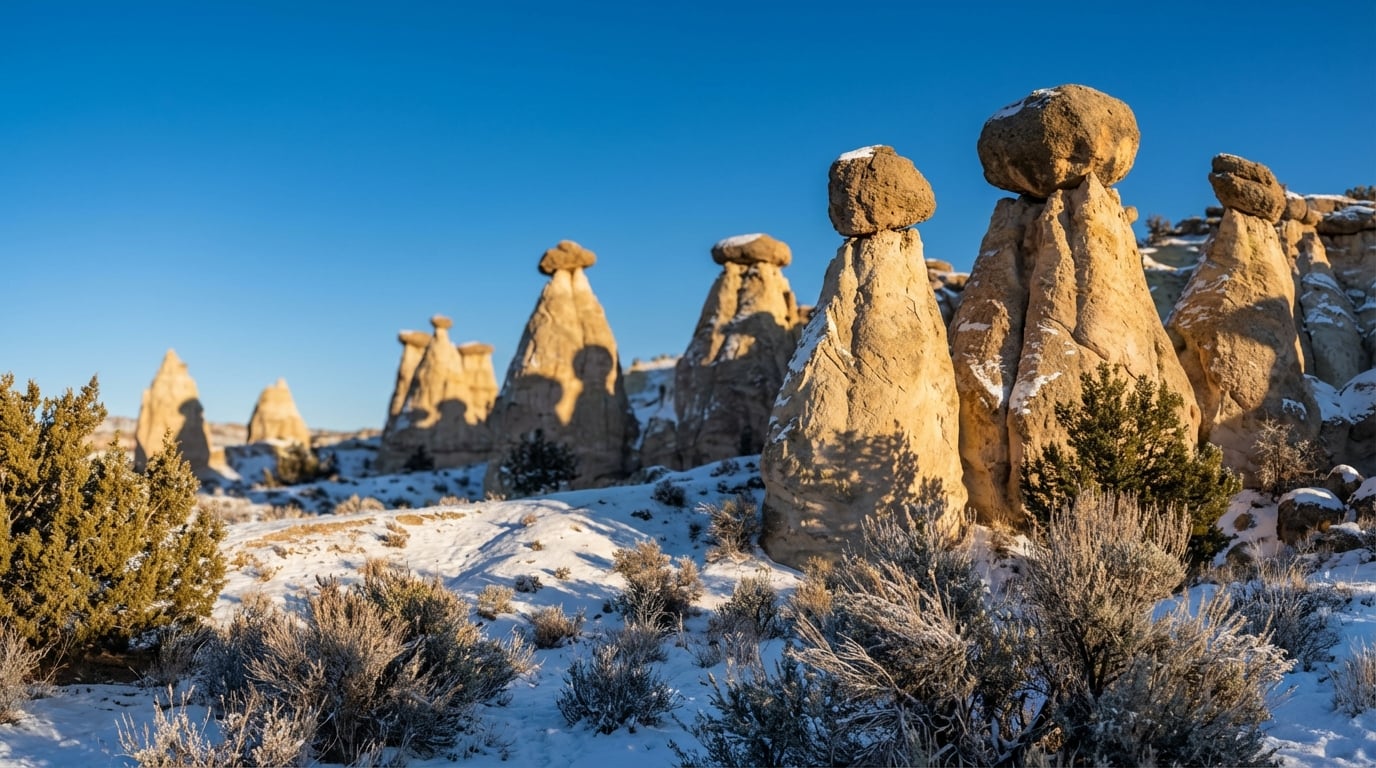

Kasha-Katuwe Tent Rocks National Monument reopened to visitors on Feb. 1, 2026, bringing renewed access to the iconic cone-shaped rock formations on New Mexico’s Pajarito Plateau, though winter conditions have forced a partial trail closure and a revised fee structure is now in effect. The development carries direct implications for campground and RV park operators in north-central New Mexico who serve travelers drawn to the monument’s distinctive geological features and slot canyons.
Winter weather has created hazardous conditions on the monument’s most popular route. The last quarter mile of the Slot Canyon Trail, specifically the steep ascent portion, remains closed due to ice accumulation, according to current BLM advisories. All other trail segments throughout the monument are open for hiking. With elevations ranging from 5,570 feet to 6,760 feet above sea level, conditions can vary significantly across the landscape, making accurate guest communication essential for nearby lodging operators.
These variable conditions create opportunities for campground operators to provide value through proactive safety communication. Posting condition updates on visible bulletin boards at check-in areas keeps guests informed without requiring them to seek out information independently. Including seasonal hazard reminders in confirmation emails and check-in materials sets appropriate expectations before visitors arrive. Camp stores that stock basic safety supplies such as traction devices can meet practical guest needs while generating ancillary revenue. Establishing clear disclaimers that direct guests to official BLM sources for real-time updates protects properties while still providing helpful guidance.
The total cost for a BLM Ticket Reservation has increased from $5 to $6 per person, reflecting a new $1 transaction fee charged by Recreation.gov for each ticket. This transaction fee applies to all visitors, including youth and holders of America the Beautiful Passes, who must still pay the transaction portion even if their base entry is otherwise covered. This distinction commonly causes confusion among guests, making it worth addressing proactively in guest communications.
Entry into the monument requires advance reservation only, with tickets available for purchase through Recreation.gov. No tickets are sold on-site, and same-day purchases are not possible. Visitors may make reservations at Recreation.gov for dates between Feb. 1 and March 31, 2026. The mandatory advance reservation system creates an opportunity for campground operators to differentiate their properties through superior guest communication. Helping guests navigate the Recreation.gov requirements adds tangible value that frequently translates to positive reviews and repeat visits.
The monument operates on a limited schedule, open Thursday through Monday only. Entry is permitted between 8 a.m. and 1 p.m., and visitors must exit by 4 p.m. All visitors are required to check in at the Cochiti Visitor Center before being led into the monument by pilot vehicles. Foot travel is the only permitted mode of transportation within the monument, and dogs are not allowed under any circumstances.
The Thursday-through-Monday operating schedule creates predictable patterns that campground operators can use to anticipate peak check-in days and staff accordingly. The pilot vehicle entry system and mandatory visitor center check-in mean guests need accurate timing guidance to avoid missed entry windows. Front desk staff trained on monument details, including hours, reservation requirements and current trail conditions, position properties as valuable local resources that guests will remember when planning future trips.
The monument’s distinctive landscape draws visitors seeking a unique geological experience. The cone-shaped tent rock formations resulted from volcanic eruptions that occurred six to seven million years ago, leaving pumice, ash and tuff deposits over 1,000 feet thick. Tremendous explosions from the Jemez volcanic field spewed rock fragments while searing hot gases blasted down slopes in pyroclastic flows. Boulder caps perched atop the tapering hoodoos protect the softer material below, though some formations have lost their resistant caprocks and are gradually disintegrating. The tent rocks vary in height from a few feet to 90 feet.
Visitors can explore the Cave Loop Trail, a 1.2-mile route rated as easy, along with opportunities for birdwatching, geologic observation and plant identification. Understanding why guests want to visit helps lodging operators speak knowledgeably about the attraction and provide recommendations that enhance the overall trip experience.
This visitor appeal translates directly into marketing opportunities for nearby properties. Campground operators may find that updating website landing pages and Google Business profiles to reference proximity to the destination helps capture search traffic from travelers researching the monument. Creating seasonal packages aligned with the monument’s operating schedule can encourage longer stays and increase per-guest revenue. Partnerships with local tourism boards and the Cochiti Visitor Center for recommended lodging listings drive referral traffic from visitors in the planning phase. Automated pre-arrival emails highlighting the monument’s reservation requirements and current conditions improve guest preparedness and reduce frustration.
Digital presence efforts can work alongside on-site strategies to reach travelers during their research phase. Social media content featuring proximity to the monument captures attention while potential guests are still planning their trips, and seasonal posts about trail conditions demonstrate local expertise. Properties in areas with winter hiking traffic benefit from highlighting amenities like heated bathhouses and warming areas where guests can prepare for or recover from cold-weather activities. Adequate parking for day-use vehicles helps manage traffic when guests return from attractions with limited parking like Tent Rocks.
Reservations remain available through March 31, 2026, and conditions may change as winter progresses into spring. Campground operators serving this region benefit from directing guests to official BLM sources for the most current information and maintaining relationships with local land management offices to stay informed about future closures or schedule changes.
Properties that proactively communicate the timed-entry system, fee structure and trail conditions position themselves as knowledgeable hosts who understand the needs of outdoor travelers exploring New Mexico’s remarkable public lands.
