

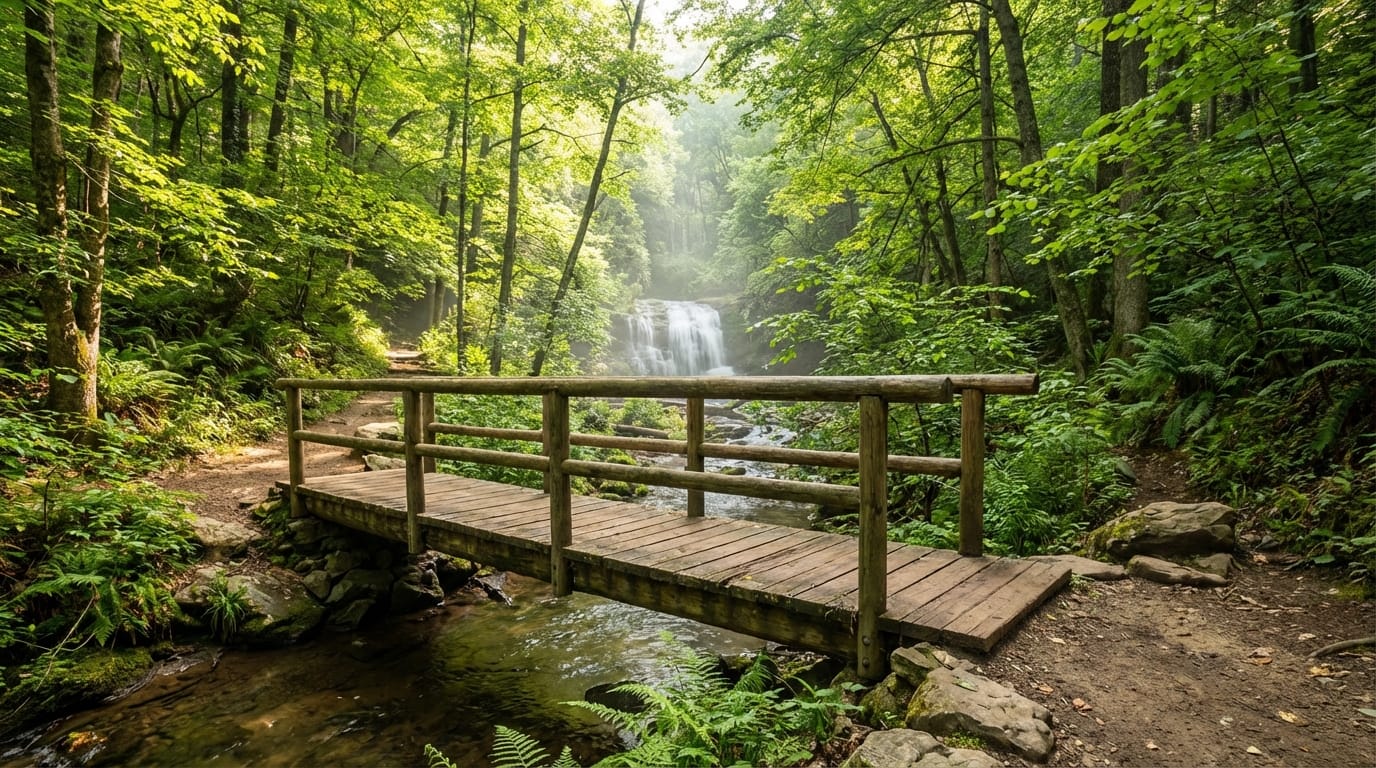

A new 40-foot pedestrian bridge at Laurel Run Park in Church Hill, Tennessee, has restored safe, year-round access to Laurel Run Falls, eliminating a hazardous river crossing that left the waterfall trail impassable during periods of high water. The trail reopened in late January 2026 following a brief construction closure, marking the completion of an infrastructure project that secured $205,000 in funding to address what park visitors identified as their top priority. For campground and RV park operators in the Tri-Cities region, the improvement represents an enhanced nearby attraction they can now promote to guests regardless of weather conditions or season.
The bridge measures 6.5 feet in width, a specification that carries practical significance for trail accessibility. Trail widths of six feet or greater represent an accepted best practice in the outdoor recreation industry, as this dimension accommodates two-way foot traffic and guests using mobility aids such as wheelchairs or walkers. Previously, hikers seeking to reach Laurel Run Falls had no choice but to ford the river directly, a crossing that became dangerous or entirely impassable after rainy weather raised water levels.
Hawkins County Parks Director John Young previously told the Kingsport Times News that when he asked Laurel Run Park attendees what would benefit them the most at the park, the vast majority said they wanted a bridge at the creek. That documented demand drove the county’s pursuit of funding to make the project a reality.
The Hawkins County Board of Commissioners secured two grants from the Tennessee Department of Tourism Development to finance the construction. A 2024 grant of $100,000 covered the purchase of bridge materials, while a second grant of the same amount awarded in late 2025 funded construction and associated costs. The City of Kingsport contributed $5,000 to satisfy the local match requirement for the initial grant, reflecting the project’s role in a broader initiative to connect Laurel Run Park with Kingsport’s Bays Mountain Park trail systems.
This phased funding approach offers a replicable model for outdoor hospitality operators considering their own infrastructure investments. Some state tourism departments and economic development agencies maintain grant programs or matching fund opportunities for private hospitality projects that support regional tourism goals. Spreading costs across multiple budget cycles, as this two-grant structure demonstrates, allows operators to pursue meaningful improvements while showing return on investment at each stage before committing to additional expenditures.
The cross-jurisdictional partnership between Hawkins County and Kingsport underscores how collaborative relationships can advance trail connectivity that benefits multiple communities. Campground and RV park operators in the area may find value in developing their own relationships with local parks departments, staying informed about trail conditions, upcoming closures, and new amenities they can highlight in guest communications and marketing materials.
The trail reopened shortly after Winter Storm Fern struck the Tri-Cities region on January 24, 2026, treating the bridge’s first users to the sight of a partially frozen waterfall. Spring wildflower season is anticipated to draw hikers, birdwatchers, and photographers to the falls in coming months. These distinct seasonal experiences present marketing opportunities for nearby outdoor hospitality properties, as winter waterfall visits and spring wildflower hikes attract different guest segments throughout the year.
Operators in the Church Hill and Kingsport area may consider updating guest information materials and marketing content to highlight safe, year-round waterfall access as a nearby attraction. Creating trail information stations at check-in areas with printed maps, difficulty ratings, and seasonal highlights represents a low-cost way to enhance guest experience while showcasing regional amenities that guests might otherwise overlook.
The trail closed for construction earlier in January, with the reopening announced via the park’s Facebook page. The brief closure period demonstrates how strategic scheduling during slower seasons can minimize disruption while delivering safety improvements that address documented visitor concerns. Operators planning their own trail improvements should factor temporary closures into project timelines, choosing periods of lower occupancy to reduce revenue impact.
Properties near well-maintained public trail systems can differentiate themselves in competitive markets without bearing the full cost of developing private amenities. Training staff to provide knowledgeable trail recommendations suited to different fitness levels adds value for guests and encourages positive reviews. Additional guest service enhancements nearby operators might consider include offering trail-ready amenities such as walking stick rentals or packed lunch options, as well as organizing guided group hikes or partnering with local naturalists for interpretive walks that encourage repeat visits.
The bridge specifications provide a useful reference point for operators considering stream crossings or trail improvements on their own properties. Durable materials and appropriate widths reduce long-term maintenance costs and improve accessibility despite higher upfront investment. Digital trail maps accessible via QR codes at trailheads can reduce printing costs while providing guests with updatable information about conditions and seasonal points of interest.
The completed bridge addresses the primary safety concern and amenity request expressed by park visitors while supporting the broader regional trail connectivity initiative between Laurel Run Park and Bays Mountain Park. Hikers, birdwatchers, and photographers now have reliable access to Laurel Run Falls throughout the year, enhancing the outdoor recreation landscape across the Tri-Cities area. For outdoor hospitality operators throughout the region, the improved public infrastructure strengthens the destination appeal that draws guests to their properties and creates opportunities to deliver enhanced experiences without significant capital investment.
