

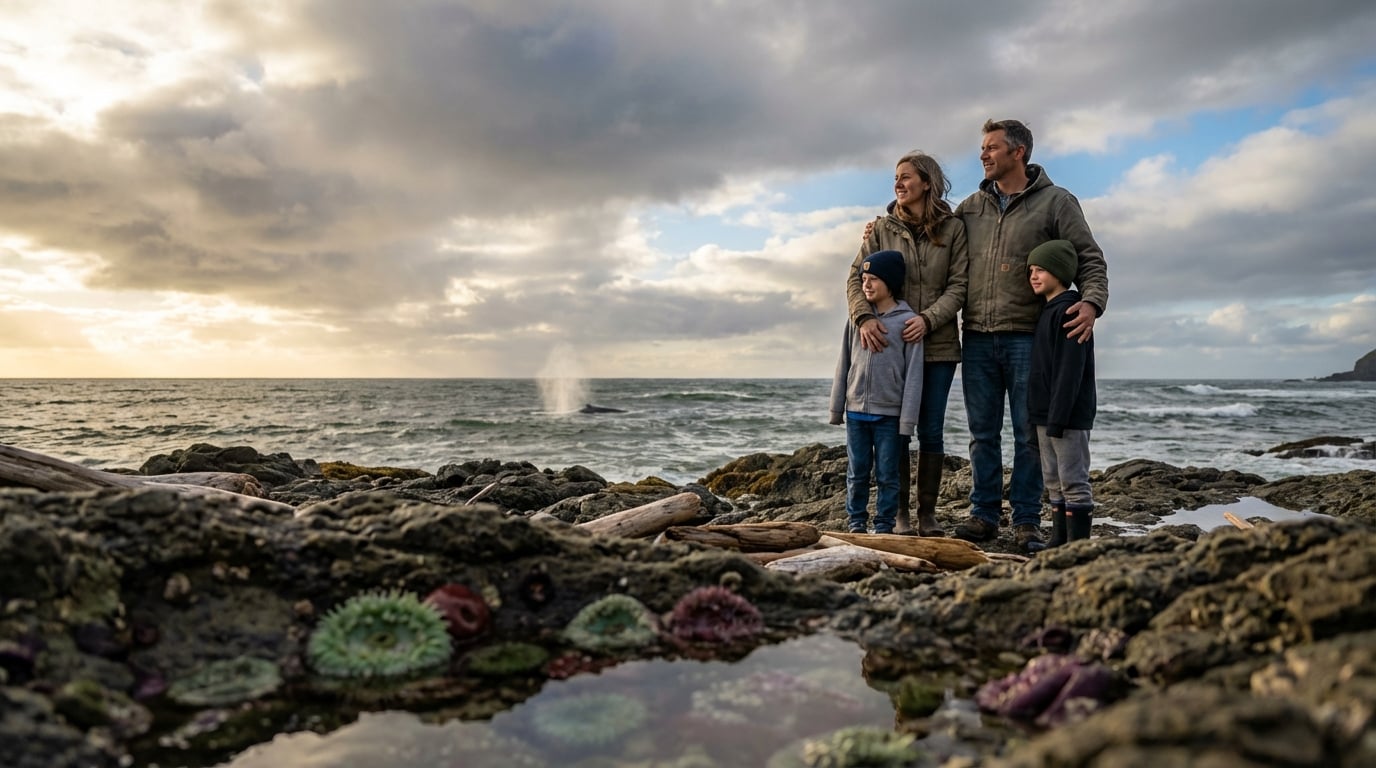

Low Cascade snowpack and unseasonably warm temperatures reaching the 70s in central Oregon are steering families away from mountain ski destinations and toward Oregon’s coast for the March 2026 spring break season, creating what could be a critical revenue opportunity for coastal campgrounds, RV parks, and tourist-based businesses still recovering from slow winter months.
Travel industry veterans have long operated by a simple rule of thumb: when Cascade snowpack runs low, families who would otherwise head to the mountains choose the beach instead, according to Lincoln Chronicle reporting. This winter’s conditions appear to be setting up precisely that scenario, with Oregon’s spring break kicking off the weekend of March 21. Michelle Korgan, owner of Ona Restaurant & Lounge in Yachats, understands the dynamic well. “When there’s snow on the mountain, we’re definitely less busy. So, we’ll obviously be keeping our eyes on the forecasts,” she said.
The economic stakes for coastal operators extend far beyond a single busy week. Restaurants, motels, lodges, and related businesses count on spring break for a much-needed cash infusion following slow tourist months in January and February. Last year, the coast saw 2 percent of its total room nights sold for the entire year during spring break week alone, according to Travel Oregon data, slightly outpacing other parts of the state at 1.87 percent. Shaun Barrick, a regional economist with the state Employment Department, emphasized the period’s importance while noting that overall travel-related numbers for the coast are softer than usual this year. “Spring break is super important for leisure and hospitality. Going from the extreme lows in December and January toward the big employment highs in July and August, it’s just a really critical time to get some juice to keep going,” Barrick said.
Dynamic pricing strategies similar to those used in the hotel industry have become increasingly standard among campground and RV park operators preparing for seasonal surges. Adjusting nightly rates based on occupancy forecasts and booking velocity is now common practice, and many modern campground management software platforms include automated pricing tools that adjust rates as availability decreases. Minimum stay requirements of three nights or longer during peak periods have also gained traction as a way to reduce turnover costs and administrative burden while ensuring sites remain occupied throughout busy weeks. Waitlist systems for fully booked periods help capture demand that might otherwise flow to competitors, and overflow parking arrangements with neighboring properties or local municipalities have become more prevalent as operators seek to distribute visitor impact across regions.
Current booking indicators suggest strong spring break performance on the horizon. As of late February, lodging occupancy stood just shy of 50 percent at coastal facilities, slightly behind the statewide average of 53.1 percent but notably exceeding levels from both 2023 and 2024. Drew Roslund, who operates the Overleaf and Fireside motels in Yachats, has watched average occupancy at his combined 97 rooms climb nearly 9 percent since the start of the year. “I don’t know if that will continue all through March, but things are looking good so far,” Roslund said, describing spring break as a nice shot in the arm for March and a great way to get out of the winter doldrums. Beachside State Park north of Yachats, which recently reopened, is already displaying its campground full sign.
Several major attractions are drawing visitors to the coast during the spring break window. The annual Spring Whale Watch Week, hosted by Oregon State Parks from March 21 through March 29, positions trained volunteers and park rangers at 15 sites along the coast to help visitors spot migrating gray whales and their calves. The National Oceanic and Atmospheric Administration estimates between 11,700 and 14,500 gray whales will migrate past Oregon’s shores this season, marking the lowest population numbers since the 1970s. Lincoln City’s Festival of Illusions and daily glass float drops along the beaches provide additional draws, while some visitors seek guided tidepool tours. Stacey Gunderson, marketing manager for the Oregon Coast Visitor Association, encouraged visitors to take advantage of the region’s diverse offerings. “It’s just a great time to explore coastal sloughs, rivers, shops and other cool things. Just be ready for the weather. It’s still spring in Oregon, after all,” Gunderson said.
Properties near whale watching sites have increasingly added guest amenities tied to regional events, with some offering simple viewing guides or binoculars for rent. Digital check-in systems at many outdoor hospitality properties now deliver educational content about local wildlife, tide safety, and beach etiquette before guests arrive. Pre-arrival emails or app notifications commonly include links to tide charts, whale watching schedules, and safety reminders. Weather-resistant signage at property entrances has also become standard at many coastal campgrounds, reminding guests of Leave No Trace principles and local safety guidelines with simple graphics and minimal text to communicate across language barriers.
The Oregon Coast Visitors Association is actively promoting its Coast Like a Local campaign, a $25,000 messaging initiative designed to reshape visitor behavior during the busy season. The campaign encourages tourists to respect beaches, properly dispose of trash, and practice ocean safety, with specific advice including checking tide schedules, remaining aware of winter swells, and never turning backs on the ocean. The National Weather Service forecasts a mixed bag of rain, sun, and clouds for spring break weather on the central Oregon coast.
This regional effort has prompted many individual properties to align with broader destination stewardship goals. Campground operators have increasingly adopted on-property systems that reinforce regional messaging while reducing maintenance burden. Centralized waste stations with clearly labeled recycling and trash receptacles have become more common, with strategic placement near high-traffic areas helping to cut litter throughout properties. Pet waste stations throughout grounds have grown especially important during peak periods when increased dog traffic can quickly degrade common areas, and regular maintenance schedules for these stations typically increase proportionally with occupancy.
Not all tourism trends point upward for coastal businesses. January 2026 marked the 13th consecutive month of falling Canadian visits to the United States, according to U.S. Travel Association data. Nationally, visits from Canada dropped nearly 21 percent year over year and are down 27.2 percent compared to January 2024, representing what Travel Oregon characterized as a sustained contraction in what has historically been the top inbound source market. Roslund, however, said he has not personally experienced this decline at his Yachats properties. “But that’s probably just our location being where it is. If we were in Seattle or even farther up the coast, we would probably be seeing the same thing folks in those areas are,” he said.
Despite seeing modest declines in overall park numbers in 2025, Oregon’s coast remains the state park system’s most popular destination, attracting 30.65 million day-use visits according to state parks statistics. The combination of redirected mountain demand and recovering occupancy rates presents a forecasting scenario that industry observers say could benefit prepared coastal operators.
For outdoor hospitality businesses positioned along the Oregon coast, the low snowpack scenario represents more than a weather anomaly. It signals a potential influx of guests who might otherwise have spent their spring break dollars at mountain resorts, according to industry observers, while the broader regional effort to promote responsible tourism continues to shape how coastal destinations welcome visitors in the seasons ahead.
