
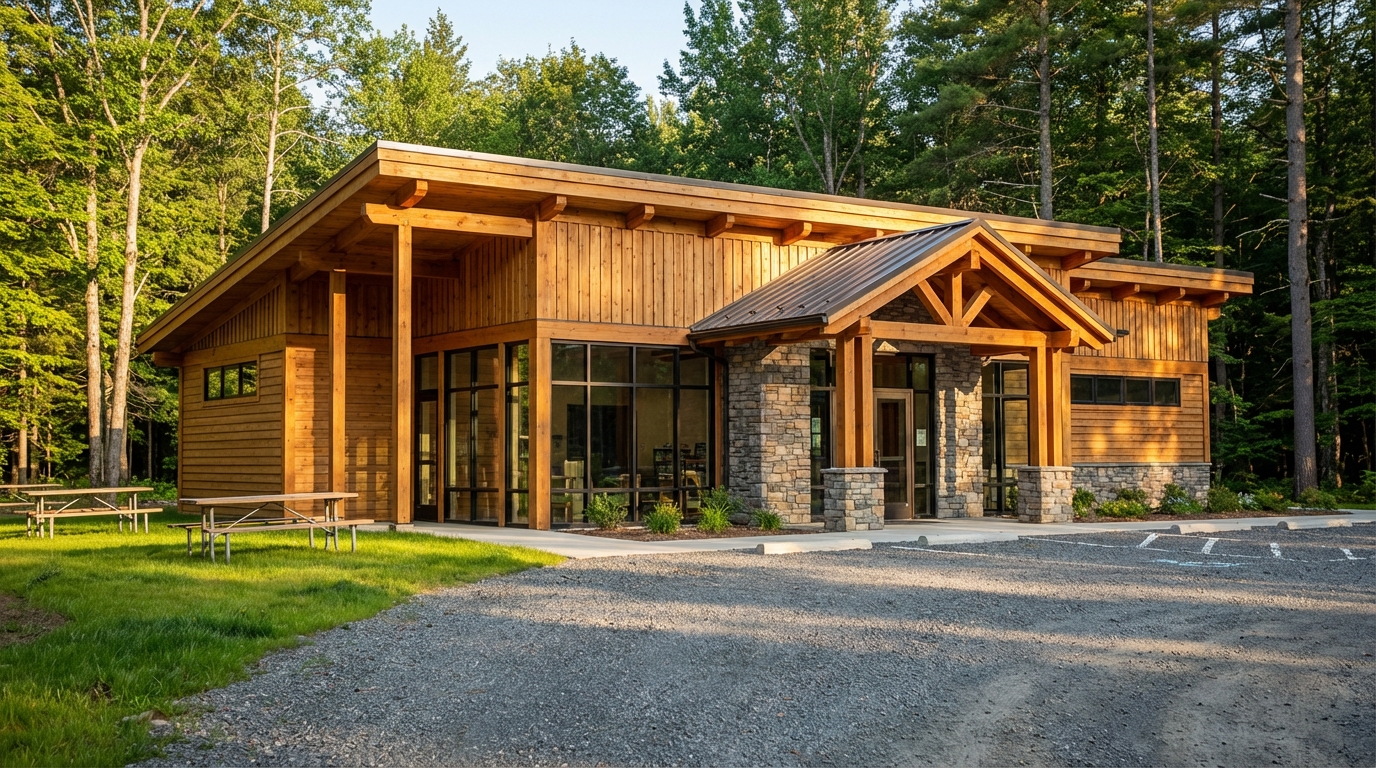

Grand Lake St. Marys State Park in Ohio has launched construction on a $2.5 million mixed-use facility that will consolidate the park’s aging camp store and main office into a single, modernized structure, offering a case study for private campground operators weighing similar infrastructure investments. The project, now underway at the popular Ohio destination, addresses deteriorating buildings while creating operational efficiencies that outdoor hospitality professionals have long recognized as essential to competitive positioning. For RV park and campground owners evaluating their own capital improvement priorities, the state park’s approach demonstrates how thoughtful facility consolidation can enhance both guest experience and staff productivity.
The new building is rising directly across from the existing park office, allowing current operations to continue uninterrupted throughout the construction period. Once completed, the facility will combine office, retail, reception, and storage functions under one roof. Guests will handle all their arrival needs at this centralized location, including campground registration, haul inspections, park information inquiries, dock fee payments, and camp store purchases. The current structures have become outdated and are in declining condition, making replacement rather than renovation the more practical path forward.
David Faler, park manager for Grand Lake St. Marys State Park, explained that the consolidated design directly addresses a frustration familiar to many campground operators: the inefficiency of sending arriving guests to multiple locations before they can settle into their sites.
“With the two buildings being combined, it’s going to make it a lot better for our campers that are coming in and now they don’t have to come to this building to get checked in and then go back to that building to get their tags,” Faler said. “Since both buildings are together, if we get real busy here in the registration office and there’s some extra people in the camp store, they can pull them then, that way the people here get timely service.”
The staffing flexibility Faler describes reflects a principle that private campground and RV park owners have embraced for years. Consolidating guest services into a single mixed-use facility is widely recognized as a best practice in outdoor hospitality operations. When registration, retail, and administrative functions occupy one building, operators typically see reduced utility costs compared to maintaining multiple structures. Single-point-of-service designs also minimize staffing requirements during shoulder seasons, when visitor volume can swing dramatically throughout a single day.
Cross-trained employees working in a consolidated facility can shift fluidly between tasks without losing time walking between buildings, a benefit that proves especially valuable during peak check-in windows on Friday afternoons and holiday weekends. The operational model also simplifies security protocols, enabling staff to monitor retail inventory, guest interactions, and office equipment from a single vantage point rather than dividing their attention across separate locations.
From the guest perspective, modern campers increasingly arrive expecting a streamlined check-in process that mirrors the efficiency of hotel front desks. Eliminating multiple stops before a family can back into their campsite reduces frustration and establishes a positive first impression. For operators tracking online reviews and repeat booking rates, that initial experience can meaningfully influence both metrics.
Construction on the Grand Lake St. Marys facility is expected to wrap up in April 2027, according to a Hometown Stations report. Upon the new building’s official opening, crews will demolish the existing camp store and park office, completing the transition to the modern facility.
This phased construction approach exemplifies a strategy that outdoor hospitality professionals often recommend when planning major capital projects. By completing new facilities before demolishing existing ones, properties maintain continuous operations and protect revenue flow during what could otherwise become a disruptive transition period. Parks that close registration offices or camp stores for extended renovation windows risk service gaps that frustrate guests and generate negative reviews during the construction phase.
Proactive infrastructure replacement has become essential for properties seeking to maintain competitive positioning and avoid emergency repairs that interrupt guest services at the worst possible moments. Industry professionals generally suggest evaluating core facilities every 15 to 20 years to determine whether renovation or full replacement delivers better long-term value. Energy efficiency improvements available in new construction, evolving accessibility requirements under the Americans with Disabilities Act, and shifting guest expectations frequently favor building new rather than retrofitting aging structures.
Many campground owners now incorporate sustainable building materials and energy-efficient systems into new construction from the outset. LED lighting, improved insulation, and water-conserving fixtures have become standard considerations that reduce ongoing operational costs while appealing to environmentally conscious campers who increasingly factor sustainability into their booking decisions.
The Grand Lake St. Marys project ultimately illustrates how outdoor hospitality properties, whether publicly or privately operated, can strategically address aging infrastructure while simultaneously improving guest experience. With the April 2027 completion date, the park will enter that camping season with a modernized service hub positioned to deliver the streamlined arrival process today’s campers expect. For campground and RV park owners weighing their own facility investments, the Ohio state park offers a practical template: consolidate services, build before you demolish, and design with both operational efficiency and guest expectations firmly in mind.
