

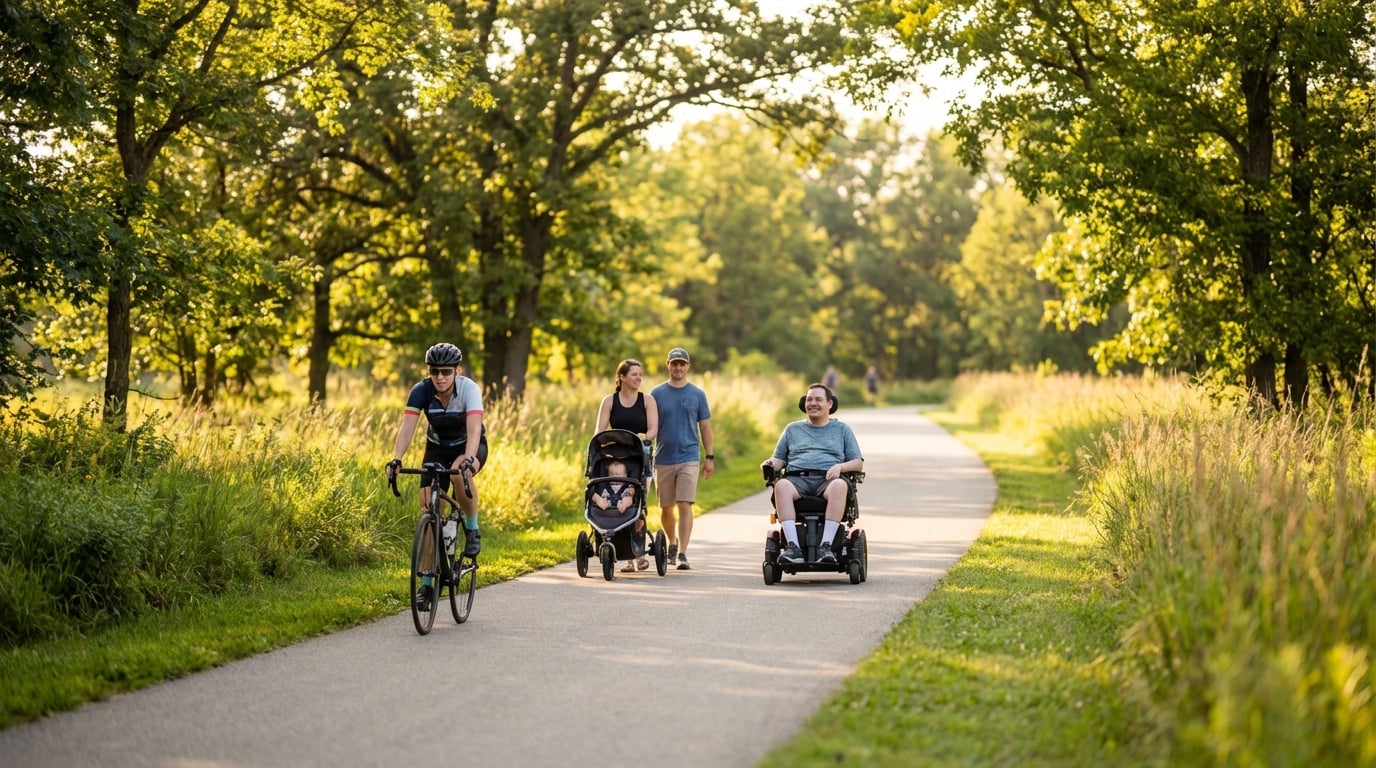

Great Parks of Hamilton County has launched the final phase of construction on a nearly four-mile multi-use trail that will connect Glenwood Gardens and Winton Woods, with completion expected in fall 2027. The 12-foot-wide paved pathway, designed to be ADA accessible, will accommodate walkers, runners, cyclists, skaters, wheelchairs and strollers, creating the first safe pedestrian link between two parks that physically touch but have never offered visitors a way to travel between them without using local roads or vehicles, according to details shared by Great Parks.
Ben Helmes, project delivery manager for Great Parks of Hamilton County, explained the significance of bridging this gap. “The two parks actually do physically touch one another, but there’s never been a safe pedestrian link between the two,” Helmes said. “This project really gives opportunities for our park guests to walk, bike, run or use the trail however they’d like to travel between the two parks. The trail also creates a lot of neighborhood connections so there’s a lot more opportunities for people to use non-motorized modes of transportation to get to school, to work, to shopping, as well as using the parks and the trail for recreation.”
For campground owners, RV park operators and glamping resort managers in the greater Cincinnati region, this expanding trail network represents a concrete opportunity to enhance property appeal and attract guests seeking car-free recreation options. Properties located near established trail systems consistently report higher guest interest, particularly among cycling enthusiasts, hiking families and nature-focused travelers. Operators should begin updating marketing materials to highlight access to this growing regional network, as modern travelers increasingly search for outdoor recreation opportunities when selecting accommodations on digital booking platforms.
The trail extends from Glenwood Gardens to the Harbor Loop Trail in Winton Woods and connects into the West Fork Mill Creek Greenway Trail. The first phase opened in July 2025, establishing a connection between Glenwood Gardens and a Metro bus stop at the intersection of Springfield Pike and Glendale Milford Road. The current construction starts where the Greenway meets Glenwood Gardens, heading west through the park toward Winton Woods before feeding into the Harbor Loop multi-use path.
Helmes described the variety of scenery awaiting trail users once construction wraps up, noting visitors will see Winton Lake, a meadow, prairie and wetland area, forested sections, residential areas, and connections to neighborhood shopping areas near Glenwood Gardens.
Installing bike wash stations, secure bicycle storage and basic repair tool stations near trail access points has become an expected amenity at trail-adjacent properties. Partnering with local bike rental companies or offering on-site rentals can generate ancillary revenue while making trails accessible to guests who travel without their own equipment. Social media content featuring guests enjoying nearby trails generates organic engagement and serves as authentic marketing material when visitors share their experiences online.
The construction timeline spans approximately two years, with site work having begun in the fall. The project requires extensive site preparation and grading, along with engineering of several major structures including a bridge and multiple retaining walls. Crews will work adjacent to several roadways throughout the construction period, reflecting the complexity of connecting urban park spaces while maintaining traffic flow.
Private outdoor hospitality operators planning property expansions or trail development can apply lessons from this methodical public project approach. Phased construction, similar to how Great Parks completed the bus stop connection before tackling the main trail corridor, allows operators to generate revenue from completed sections while continuing broader development. Proper site grading and drainage engineering prevents costly erosion problems and extends the usable lifespan of paths and roads on campground properties. Multi-use path design accommodating walkers, cyclists, golf carts and accessibility devices requires wider clearances but serves a broader guest demographic. Fall and winter construction timelines often minimize guest disruption while taking advantage of lower contractor demand.
Great Parks has been planning this project for years, carefully routing the trail around existing mature trees and taking advantage of opportunities to run alongside existing roadways where possible. Helmes addressed the inherent tension between conservation and public access. “Those two are often at odds, but … (we’re) really trying to be as careful as possible with where we’ve routed the trail, how we can work around existing mature trees, (and) where we can take advantage of running alongside existing roadways. I think we’ve done a good job balancing the need to conserve our natural areas, but also make them accessible, to invite people to appreciate nature, which is an important part of our our mission.”
Sustainable trail construction methods, including permeable surfaces and native plant buffers, reduce long-term maintenance costs and appeal to environmentally conscious guests. Eco-conscious travelers increasingly prefer properties that promote non-motorized transportation options, making trail connectivity a selling point for sustainability-focused marketing efforts.
The project is funded by more than $7 million in federal and local grants, underscoring the significant public investment in regional trail infrastructure. This trail serves as a key connection in the Mill Creek Triangle trail planning effort, which is currently in feasibility study phases. That larger initiative would create a 40-mile loop around Hamilton County connecting Cincinnati to parks including Winton Woods and Sharon Woods, dramatically expanding recreational opportunities throughout the region.
Operators monitoring similar public investments in their own markets can prepare to leverage them for business advantage. Diverse funding mechanisms make larger improvements feasible, and private operators may explore state tourism grants, conservation easement programs or Small Business Administration loans for similar improvements at appropriate scales. Creating internal trail networks that connect campsites to amenities improves guest satisfaction and encourages longer stays. Connecting private property trails to adjacent public trail systems, where permitted, dramatically increases property value without requiring operators to maintain the full network. As regional trail connectivity continues to emerge as a significant factor in guest destination selection, properties that develop trail-related amenities and marketing materials position themselves competitively as these networks expand across the country.
