

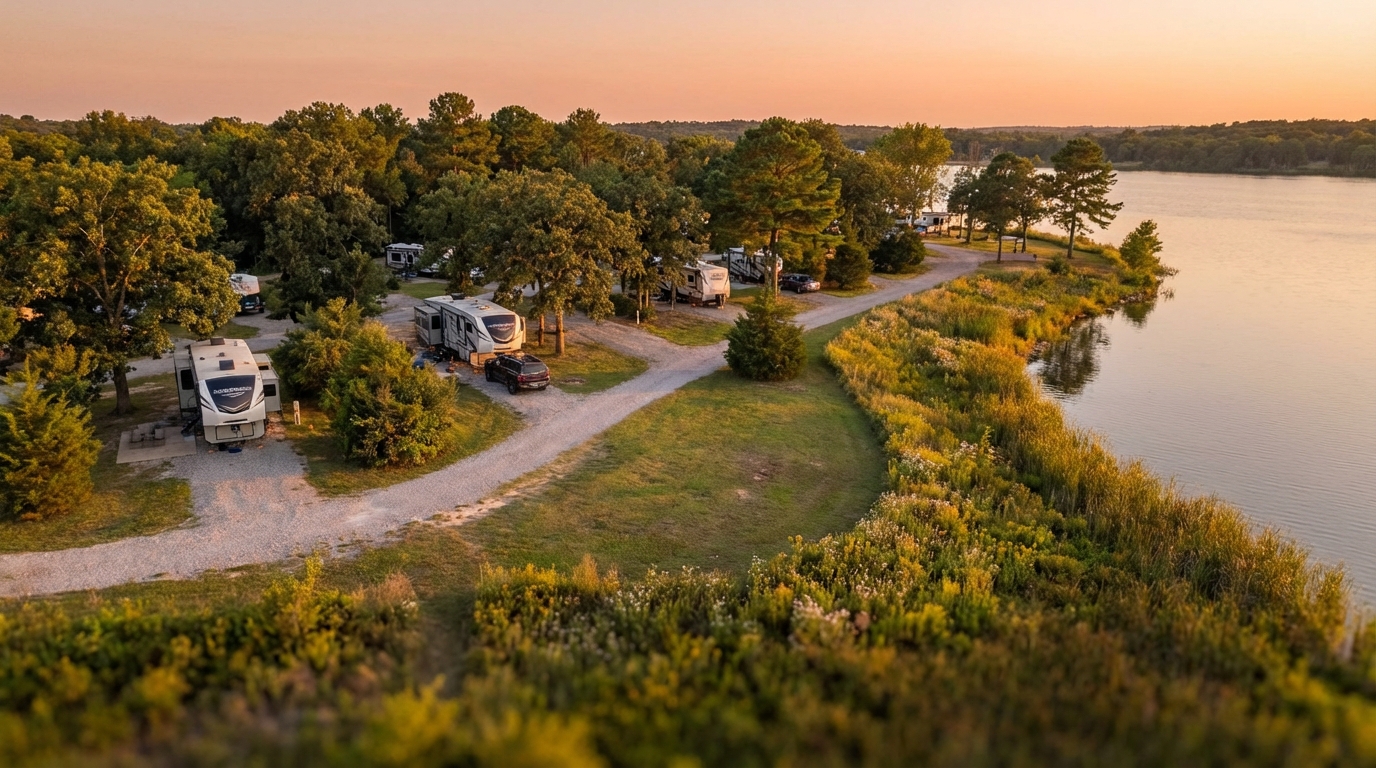

The Aitkin County Board of Commissioners finalized amendments to the Aitkin County Shoreland Management Ordinance recently, establishing new regulatory standards that directly affect how campground and RV park operators can develop and expand within the county’s shoreland districts. The second reading and final adoption concluded a public hearing process that began earlier in the month, replacing the previous regulatory framework with updated requirements that are now immediately applicable to all new permit applications. For outdoor hospitality operators considering expansion or new development in Aitkin County, these changes signal a significant change in how shoreland projects will be evaluated and approved.
The amendments update multiple sections of the ordinance, including Section 2.7 revising essential definitions and Section 4.25 updating the classification list for land uses. Most significantly for the outdoor hospitality industry, campgrounds and RV parks are now explicitly grouped with other high-density developments. This classification subjects these properties to strict standards regarding density, structure setbacks and impervious surface coverage. The revisions were developed collaboratively by Aitkin County Environmental Services staff, the Ordinance Committee and the Minnesota Department of Natural Resources Area Hydrologist.
These new classifications create immediate compliance considerations for property owners. Operators facing impervious surface limitations under the new standards have several widely accepted strategies to achieve compliance while maintaining profitable operations. Gravel pads and crushed stone driveways are generally recognized as permeable alternatives to asphalt or concrete and are commonly accepted by regulatory bodies as compliant surfaces. Permeable pavers along with grass-grid systems allow water infiltration while supporting vehicle weight. Reinforced turf systems can handle occasional vehicle traffic while reducing impervious surface calculations or providing pervious surface credits, making them practical solutions for access roads and overflow parking areas. These permeable surface approaches help operators meet regulatory requirements without sacrificing site capacity or guest convenience.
The board also approved administrative changes to Section 9.82 regarding Open Space and Common Open Space requirements, along with updates to Section 7.22 concerning vegetation alterations. These sections carry particular weight for RV park operators, as they dictate mandatory preservation of green spaces and limit land alteration to protect water quality. Under the ordinance, RV parks operating as commercial planned unit developments must maintain designated open spaces permanently, a requirement reinforced by newly adopted language ensuring consistency with state environmental standards.
Site design best practices can help operators navigate these open space and vegetation requirements effectively. Clustering amenity buildings and infrastructure in designated areas helps maximize overall open space percentages across a property. Incorporating rain gardens and bioswales between sites serves the dual purpose of stormwater management and meeting vegetation preservation requirements. Maintaining buffer zones of native vegetation along shorelines is a standard practice that typically satisfies both setback and open space mandates simultaneously, allowing operators to address multiple regulatory concerns with a single design approach.
Environmental compliance requirements increasingly align with guest expectations, creating opportunities for operators to transform regulatory obligations into competitive advantages. Natural landscaping and preserved vegetation are frequently cited in guest reviews as desirable amenities, particularly among camping and outdoor recreation demographics. Shaded sites with mature tree canopy command premium pricing at most campgrounds and are naturally preserved under vegetation alteration restrictions. Waterfront and nature-adjacent sites with protected viewsheds typically generate higher occupancy rates and repeat visitation.
Properties emphasizing environmental stewardship often attract partnerships with outdoor brands and sustainable tourism organizations. Eco-friendly certifications and green hospitality designations are becoming recognized differentiators in the outdoor hospitality market. Operators can further enhance guest engagement through emerging technology integration, including digital trail maps and nature identification apps, wildlife cameras in open space areas that generate compelling marketing content, and interpretive signage explaining conservation efforts. Social media content featuring natural settings consistently generates higher engagement, allowing operators to leverage preserved landscapes for marketing purposes. Operators in Aitkin County can position mandatory compliance with these environmental preservation standards as intentional sustainability commitments, transforming regulatory requirements into marketable property features that resonate with environmentally conscious camping demographics.
From an operational cost perspective, native vegetation requires significantly less maintenance, irrigation and chemical treatment than manicured lawns. Preserved tree cover reduces cooling costs for park buildings and improves guest comfort during summer months. Natural stormwater management through preserved landscapes reduces long-term infrastructure maintenance expenses compared to engineered drainage systems, providing ongoing financial benefits beyond initial compliance.
The legislative process moved through the Aitkin County Planning Commission in late 2025, with the first reading before the Board of Commissioners occurring on Jan. 6. The adoption effectively replaced the previous regulatory framework with these updated standards. All new permit applications for shoreland alterations, including those for expanding or establishing campgrounds and RV parks within the county’s jurisdiction, must now comply with the new requirements.
For operators evaluating expansion or new development, density management approaches deserve careful consideration. Many successful operators offset reduced site counts by upgrading remaining sites to premium categories with higher nightly rates. Offering seasonal or annual leases on a portion of sites can provide revenue stability when overall density is limited. Adding alternative accommodations such as cabins or glamping units in wooded areas often falls under different density calculations than traditional RV sites when these units are classified as permanently affixed structures rather than recreational camping vehicles; mobile units such as tiny homes on wheels or shepherd huts are typically regulated the same as traditional RV sites.
Existing operators seeking permit renewals should evaluate current site layouts against the new requirements. Properties that previously operated under the former regulatory framework may need to adjust expansion plans or site configurations to comply with the updated standards. New developments and expansions within Aitkin County’s shoreland jurisdiction must incorporate compliance strategies from the project planning phase, as the standards are immediately enforceable.
The adoption of these amendments reflects a broader trend in shoreland regulation that outdoor hospitality operators across Minnesota and similar jurisdictions may encounter. By approaching compliance proactively and viewing environmental preservation requirements as opportunities rather than obstacles, operators can align their properties with both regulatory mandates and evolving guest expectations for nature-immersive experiences. The outdoor hospitality industry increasingly recognizes that guests seek authentic connections with natural environments, making regulatory compliance and business strategy more complementary than ever before.
