

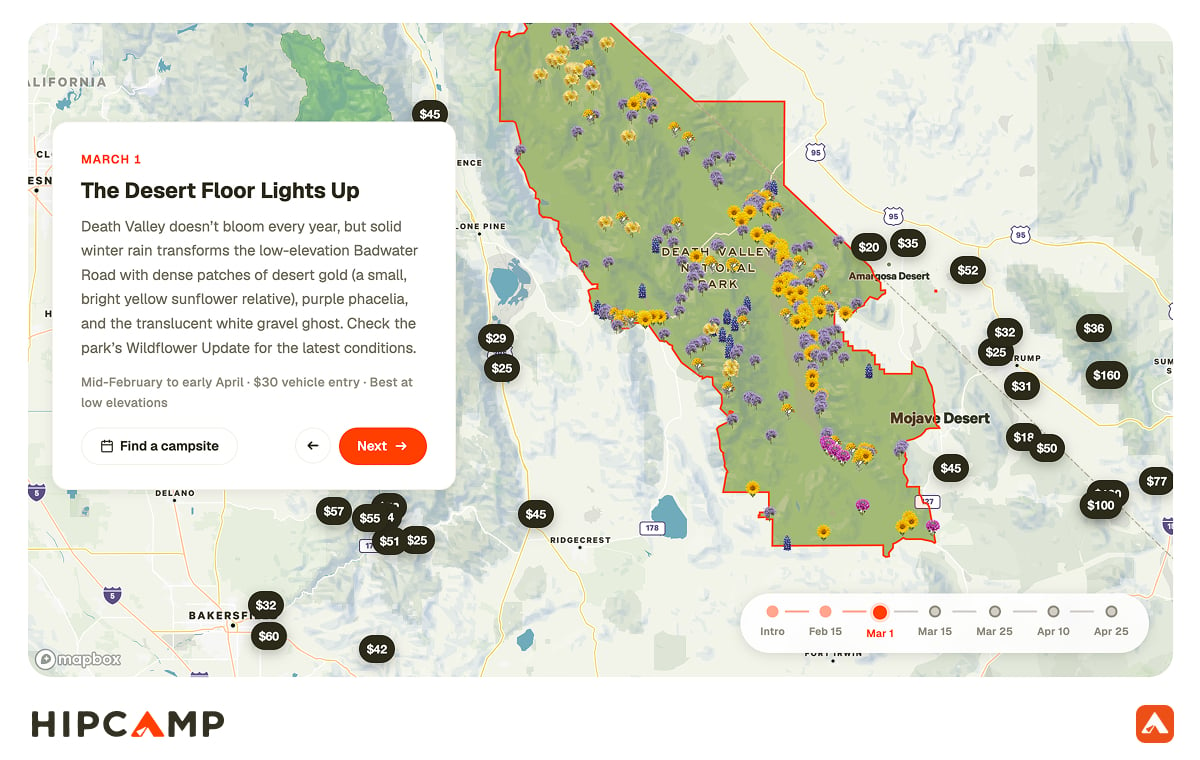

Hipcamp has launched an interactive 2026 California Superbloom Forecast built from more than 150,000 research-grade observations submitted through the iNaturalist platform between 2021 and 2025, providing travelers with data-driven predictions about when and where wildflowers are expected to bloom across the state.
The forecast is designed to help campers and road travelers plan spring trips around California’s short wildflower bloom windows by combining bloom likelihood projections with destination-level travel and visitation information.
The interactive map allows users to view predicted bloom timing by location and identify nearby campsites available through the platform.
The forecast analyzes publicly available iNaturalist data documenting where and when wildflowers were observed during recent seasons. The information is used to estimate peak bloom periods across multiple destinations, enabling travelers to align trips with expected bloom conditions.
“When people record what they’re seeing on iNaturalist, they’re contributing to a growing scientific picture of nature over time,” Carrie Seltzer, head of engagement at iNaturalist, said in a press release.
“That data about what’s blooming where and when is publicly available, which means it can be helpful in all kinds of ways—like helping people get to know what’s around them and making an impact for science and conservation,” Seltzer added.
The company reported rising travel demand associated with wildflower viewing in several California destinations.
According to Hipcamp, spring bookings are up 64% year over year for Death Valley, up 22% for the greater San Diego region, including the Anza-Borrego Desert area, and up 19% for the greater Los Angeles area, including the Santa Monica Mountains.
“All the search and booking activity we’re seeing on Hipcamp says people really want to see this in person,” said Alyssa Ravasio, founder and CEO of Hipcamp.
“But catching blooms in full glory is notoriously hard to time. That’s why we built the California Superbloom Forecast; so you can plan a weekend away with better odds, camp nearby, and enjoy it responsibly,” Ravasio added.
Hipcamp has also introduced a wildflower map layer within its mobile app. The feature overlays wildflower hotspots identified from the same observation dataset onto the platform’s campsite search map, allowing users to see bloom areas while browsing available camping options.
The tools are intended to help travelers plan trips by viewing predicted bloom windows, considering travel conditions and visitation patterns, identifying wildflower hotspots in the app, and booking campsites located near bloom areas.
Hipcamp also encouraged visitors to follow responsible travel practices during peak wildflower seasons, including staying on designated trails, respecting closures, packing out trash and adhering to Leave No Trace principles.
Featured image by Hipcamp
