

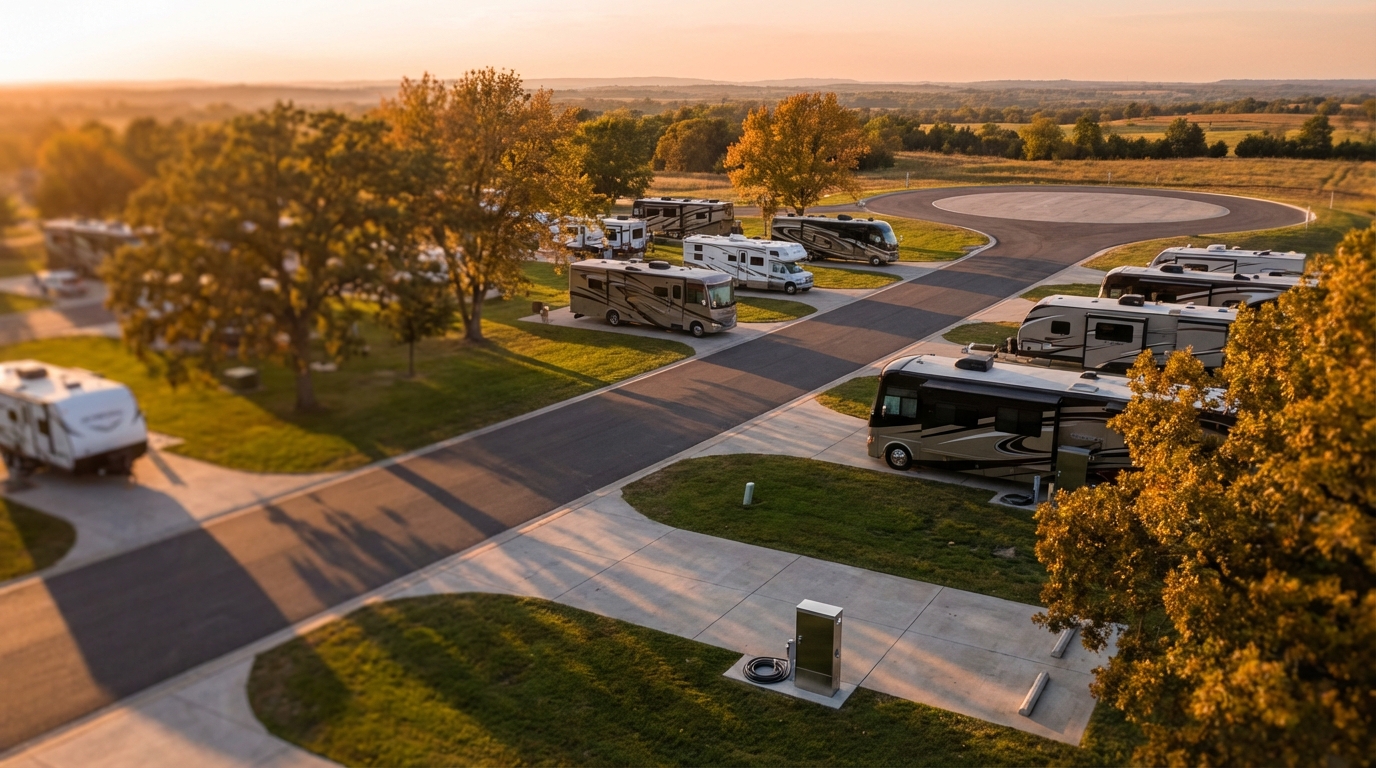

The Pierce County Joint Planning Advisory Board voted unanimously on Jan. 12 to table a recommendation on comprehensive RV park zoning updates, delaying action to incorporate mandatory underground electrical requirements into what would be the first major overhaul of the county’s regulations since 2002. Board members Timothy Griffis, Adam Hart and Daniel Washington agreed to revisit the proposed ordinance at their next meeting after County Commission Chairman Neal Bennett, attending as an audience member, intervened with a recommendation that fundamentally changed the direction of the electrical infrastructure provision.
The original draft proposed raising overhead electrical pole height from 14 feet to 18 feet to accommodate the 15-foot average roof height of modern recreational vehicles. Bennett suggested the county should instead require all electrical service be installed underground rather than offering park operators a choice. “I don’t think you should give them the option,” Bennett said regarding overhead electrical lines. The board concurred and directed that the text be revised before returning for a vote.
The shift toward mandatory underground electrical service carries practical implications for park operators planning future developments. Underground electrical infrastructure typically requires higher upfront installation costs compared to overhead systems. Parks with buried electrical lines may experience fewer service interruptions from storm damage, fallen trees and wind-related outages. Underground systems also eliminate visual clutter from poles and wires, creating cleaner sightlines throughout park properties.
County Code Inspector Chris Bond, who drafted many of the updates, said the main goal was to “clean up the preexisting ordinances” and bring them in line with those in surrounding communities. A central component of the proposed text amendment involves increasing the minimum land area required for new RV parks from one acre to five usable acres. Bond emphasized that the “usable acres” distinction was important, according to The Blackshear Times, to prevent developers from attempting to crowd high-density parks onto small parcels partially comprised of wetlands or otherwise unusable land.
The distinction between total acreage and usable acreage in the proposed ordinance addresses past attempts to develop unsuitable parcels. Prospective developers evaluating land purchases in Pierce County will need to account for wetlands, flood zones and other features that may reduce usable acreage below the apparent total when assessing compliance with the new requirements.
The proposed ordinance also addresses safety and access logistics by mandating that cul-de-sacs be widened from the previous standard of 70 feet to 90 feet. This change ensures adequate turning space for emergency vehicles, trash trucks and buses. The requirement reflects the fact that modern RVs have grown substantially larger than models from two decades ago, necessitating updated infrastructure standards.
Existing park owners operating under the 2002 framework may find their properties grandfathered under current regulations if the new ordinance is adopted.
The planning board tabled the recommendation until its next meeting to incorporate the underground utility revision. That meeting is scheduled for 10:30 a.m. Monday, Feb. 9, in the courthouse annex on Nichols Street, according to the planning board’s calendar. Once the Planning Advisory Board finalizes the text and votes on a recommendation, the ordinance will move to the Pierce County Board of Commissioners for a final decision.
The county continues operating under its existing 2002 framework until the new ordinance is formally adopted. The ongoing revision process signals a shift toward stricter density and infrastructure requirements for future developments in the region.
