

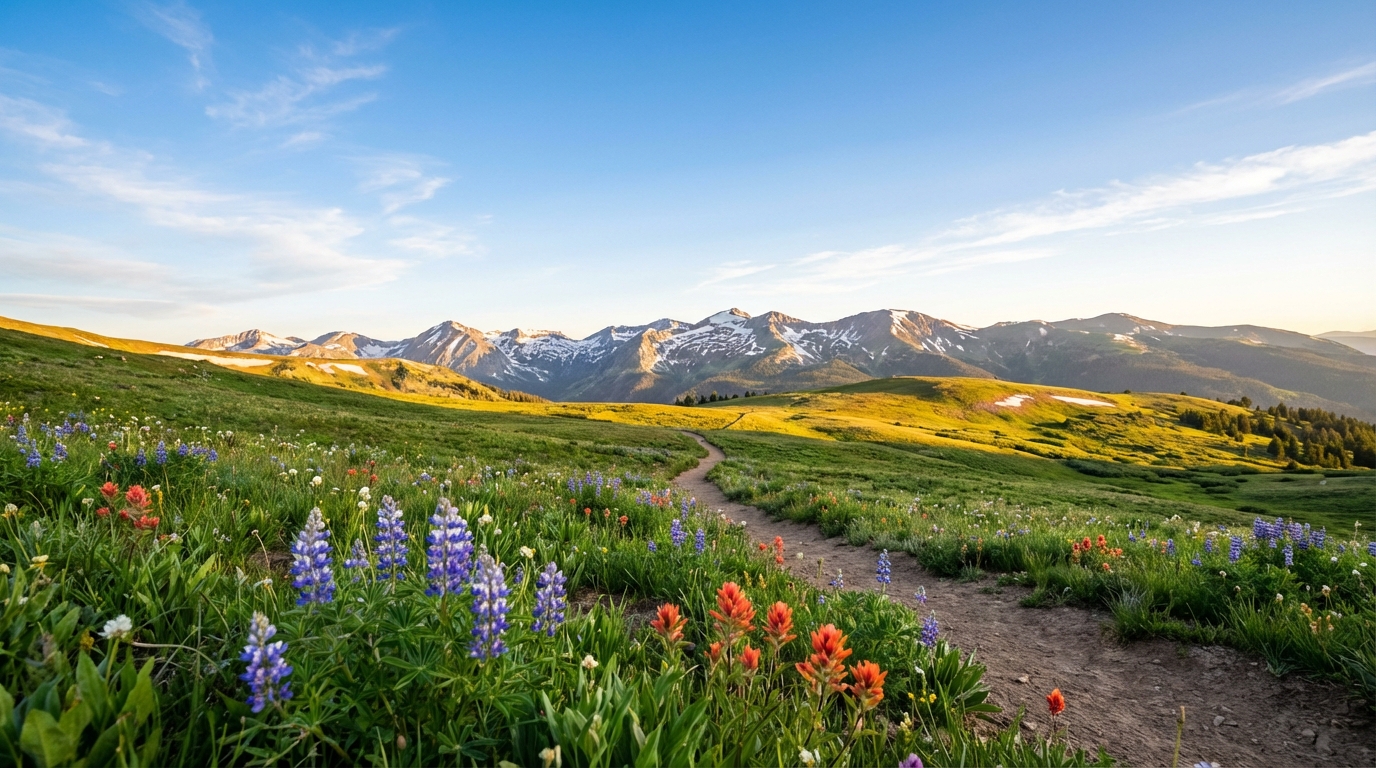

Colorado’s tourism industry is banking on a robust summer season to offset a winter marred by drought and unseasonably warm temperatures, with early booking data suggesting travelers are simply shifting their mountain vacations rather than canceling them altogether. On-the-books occupancy for May through August is up 4 percent in Colorado and Utah compared to the same period last year, according to an Inntopia market briefing report covered by the Aspen Times, while average daily rates have climbed 7.9 percent across the region. That pricing strength is driving an early revenue gain of 12.1 percent, marking some of the strongest figures since the post-pandemic surge of 2022 and 2023. Yet economic pressures, including a 31 percent spike in gas prices and a 29.5 percent decline in international bookings, threaten to temper what otherwise appears to be a promising rebound for mountain destinations.
The winter that preceded this summer optimism proved punishing for Colorado and Utah resorts. February snowfall arrived too late to salvage what Inntopia’s briefing described as an already troubled season, with ongoing drought and atypically warm temperatures keeping visitors away from ski slopes. Colorado and Utah, which account for 60 percent of Inntopia’s 17 participating mountain destinations, bore the brunt of the downturn. February revenue for resorts in these two states fell 5.5 percent compared to the prior year, while the rest of the West, including California, Nevada, Idaho, Wyoming, and Montana, posted a 6.5 percent revenue increase during the same period. For the full winter season spanning November through April, Colorado and Utah revenue dropped 7 percent year-over-year, and absolute occupancy in February sat at 71 percent, some 8 percent lower than the previous February.
Tom Foley, director of business intelligence for Inntopia, acknowledged that mid-month snow provided a modest boost but could not reverse the season’s trajectory. “Mid-month snow helped give a little kick to bookings for arrivals in February and, combined with the summer reservations, kept the booking pace very close to flat,” Foley said. “But there is no escaping the overall decline in occupancy.”
The silver lining emerged as winter bookings faltered and summer reservations surged. Mountain vacations appear to be postponed rather than eliminated, with travelers opting for warmer months when snow conditions prove unreliable. Most transactions processed in February were for arrivals in May and beyond, and guests are now booking stays just under 50 days before arrival compared to the 37.8-day lead time recorded during the same period last year. This extended booking window, combined with rate increases across all four summer months, points to genuine demand rather than last-minute scrambling.
“There are a couple of things that appear to be driving the rates, but one of them is there appears to be some version of pent-up demand,” Foley explained. “That is just folks that might have (otherwise) traveled during the winter, perhaps booking for the summer months, saying, ‘If I’m going to go to the mountains and snow conditions aren’t there, I might as well go up for the warm weather conditions and do some good mountain biking.'”
Foley emphasized that current summer rates represent a notable milestone for the region’s hospitality sector. “These are some of the strongest rates for any season that we’ve seen since the early post-pandemic demand spike in 2022 and 2023,” he said. “That combination is currently driving an early revenue gain of 12.1% which is also higher than any time since the post-pandemic bounce.”
This pent-up demand and willingness to shift travel plans creates a significant opportunity for outdoor hospitality operators positioned to capture these redirected visitors. With guests booking farther in advance and demonstrating willingness to pay premium rates, properties across the outdoor hospitality sector can capture revenue from visitors redirecting their mountain trips from winter to summer. Dynamic pricing that adjusts based on real-time demand has become increasingly common as operators seek to optimize revenue without deterring cost-conscious guests. Partnerships with local outfitters for guided hiking, fishing or wildlife viewing experiences give guests compelling reasons to book with properties that offer more than just a site. Properties with full hookups, modern amenities and resort-style features can compete directly with traditional lodging while maintaining operational cost advantages, and the experiential nature of camping and glamping appeals to families and groups seeking memorable vacations that feel distinct from standard accommodations.
Despite the encouraging summer indicators, Colorado’s performance trails that of other western states. The rest of the West is experiencing a 5 percent increase in summer occupancy compared to Colorado and Utah’s 4 percent gain, a gap Foley attributed to the relative maturity of summer tourism markets elsewhere. “That is not particularly surprising, given the fact that (other western states) are focused on summer, and the rest of the West is much stronger for summer than Colorado and Utah are,” Foley said. “It really is the maturity of the summer markets elsewhere.”
Rate sensitivity also appears to be steering some travelers toward alternative destinations. Winter visitors accustomed to spending approximately $800 per night in Colorado and Utah may be selecting other western locales where summer rates average closer to $550 per night. “What happens is we see shifts take place around what’s a tolerable rate, and it’s possible that winter travelers who are accustomed to maybe spending $800 a night on average in Colorado and Utah during the winter are going to the rest of the West and spending a little closer to $550 a night for a summer’s day,” Foley noted.
Economic headwinds pose perhaps the most significant threat to summer tourism momentum. Political tensions and inflation have eroded consumer confidence, with grocery prices up 3.1 percent and dining costs rising 3.9 percent. Most concerning for travel-dependent businesses is the 31 percent surge in gas prices over the past month, driven by intensifying conflict with Iran. “Gas prices are currently up 31% from where they were a month ago,” Foley warned. “Any supposition that this will not impact consumers across the consumer marketplace is misguided, and we expect that it will impact travel, not just by car, but that’s going to impact jet fuel as well.” International bookings remain depressed at 29.5 percent below year-ago levels, though a slight uptick from Canadian visitors improved the figure from the previous month’s 34 percent decline. Length of stay has also contracted from an average of 3.03 nights to 2.83 nights, though Foley characterized this as a typical seasonal pattern. “Length of stay tends to be a little bit shorter during the spring than during winter seasons,” he said. “That’s just the nature of the shorter stay as a season starts to wane, and people are booking for dates in April where they might come for a weekend instead of five days.”
These shortened stays and economic pressures require outdoor hospitality operators to adapt their strategies accordingly. As travelers trim trip durations and delay reservations due to elevated travel costs, reducing or eliminating minimum night requirements during shoulder seasons has helped some properties capture last-minute bookings from travelers seeking quick getaways. Midweek specials and Sunday-through-Thursday packages appeal to flexible travelers avoiding premium weekend rates. Self-service check-in kiosks and mobile key systems allow properties to accommodate same-day arrivals without requiring additional staffing, while efficient housekeeping protocols between shorter stays help maintain profitability when guests turn over more frequently. Pet-friendly accommodations and trail access attract a loyal segment of travelers who prefer quieter periods, and digital waitlist features allow properties to capture overflow demand and fill last-minute cancellations efficiently.
The short-term rental market is simultaneously undergoing significant disruption that outdoor hospitality operators should monitor closely. Active listings in urban markets have surged substantially year-over-year, while resort towns are experiencing occupancy drops and recalibrating budgets accordingly. Many jurisdictions are redirecting short-term rental lodging tax revenue away from tourism marketing to fund local infrastructure, housing and emergency services. This policy shift coincides with a broader softening in the short-term rental market, and local and regional tourism groups have trimmed overall revenue expectations, acknowledging that the unsustainable highs of pandemic years have plateaued.
The rapid expansion of short-term rental inventory creates both challenges and opportunities for outdoor hospitality properties. These properties typically offer a lower price point per night compared to vacation rentals, making them attractive to budget-conscious travelers affected by economic headwinds. Unlike urban short-term rentals that often feel transactional, well-managed campgrounds and RV parks create community through shared amenities, organized activities and common gathering spaces. Glamping properties emphasizing locally sourced materials and connections to surrounding landscapes offer experiences mass-market rentals cannot replicate. Guest loyalty programs and membership models build repeat visitation and reduce dependence on fluctuating transient demand. As municipalities redirect lodging tax revenue toward housing and infrastructure, properties demonstrating community benefits through local hiring, environmental stewardship and infrastructure investments may find favorable positioning. Staying informed about evolving short-term rental regulations helps operators anticipate market shifts that could redirect travelers toward traditional outdoor hospitality options.
Colorado’s high-country destinations are pivoting from chasing record-setting visitor numbers to focusing on long-term resilience and sustainable tourism. Industry leaders now track metrics such as shoulder-season occupancy, trail congestion and workforce retention alongside traditional hotel tax revenue. For outdoor hospitality operators investing in sustainable operations, upgrading electrical systems to accommodate modern RVs with higher amperage requirements positions properties for the growing full-time and long-term RV traveler segment. Adding sustainable infrastructure such as solar charging stations, water reclamation systems and native landscaping aligns with destination-wide sustainability initiatives. Developing workforce housing on or near property helps address regional housing shortages while ensuring reliable staffing during peak seasons. Properties that demonstrate environmental stewardship may find themselves well-positioned as destinations seek partners aligned with sustainable tourism models. The upcoming summer season will serve as a critical test of whether the industry can maintain financial health while adapting to new market realities, and operators who understand shifting consumer behavior and position their properties as value-driven, experience-focused alternatives to traditional lodging stand to benefit as the market continues to evolve.
