

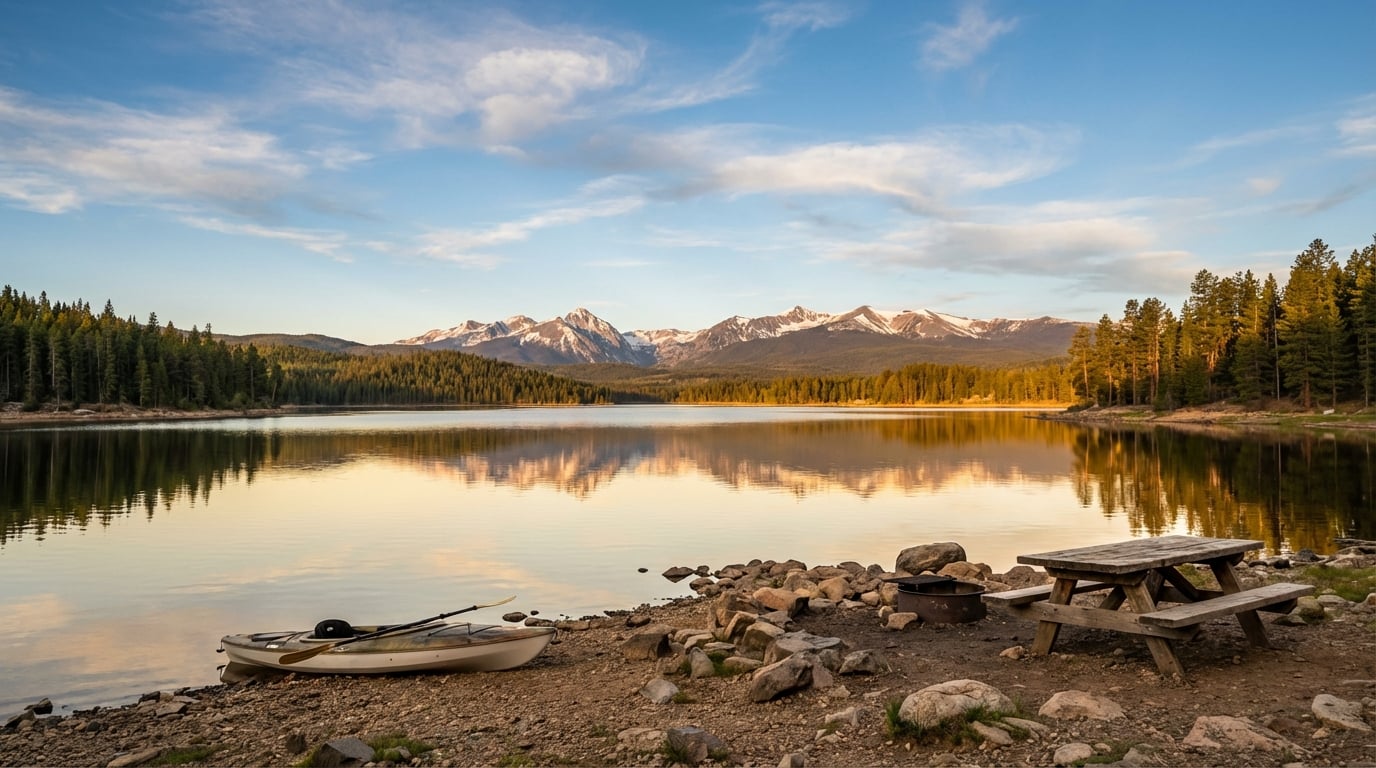

Colorado Springs City Council has approved the expansion of recreational opportunities at the Rosemont Reservoir State Wildlife Area on Pikes Peak, a decision that allows planning to continue for a new public campground at the site.
The approval marks a key step in a collaborative effort between Colorado Parks and Wildlife (CPW) and Colorado Springs Utilities to expand public access while maintaining oversight of watershed protection and utility operations.
According to CPW, the initiative is intended to balance recreation with the protection of critical watershed resources and the continued safe operation of utilities infrastructure in the area.
Under the current framework, CPW will be responsible for establishing and designing the proposed Rosemont campground. The agency will also oversee on-site management and stewardship, with a focus on ensuring public safety and resource protection.
Rosemont Reservoir is located approximately 12 miles southwest of Colorado Springs on the south side of Pikes Peak, according to CPW.
The site is part of the Rosemont Reservoir State Wildlife Area, which has historically had limited public access due to its function as a municipal water supply. The newly approved expansion signals a shift toward increased recreational use under managed conditions.
According to KRDO, CPW has indicated that it is considering the addition of basic campsites, day-use parking areas, non-motorized boating access, and ADA-accessible restrooms as part of the proposed campground. If planning and development proceed as anticipated, the campground could open by July 2026.
For outdoor hospitality operators, the development illustrates how public agencies are approaching campground expansion in environmentally sensitive areas.
The emphasis on watershed protection, ADA compliance, and on-site management may offer insight into evolving regulatory expectations and design considerations for new campground projects.
The project also reflects continued public-sector investment in basic camping infrastructure, which could influence regional supply dynamics and visitor distribution in the Pikes Peak area once the site opens.
As planning advances toward a potential 2026 opening, additional details regarding site capacity, reservation systems, and operational policies are expected to be clarified.
