

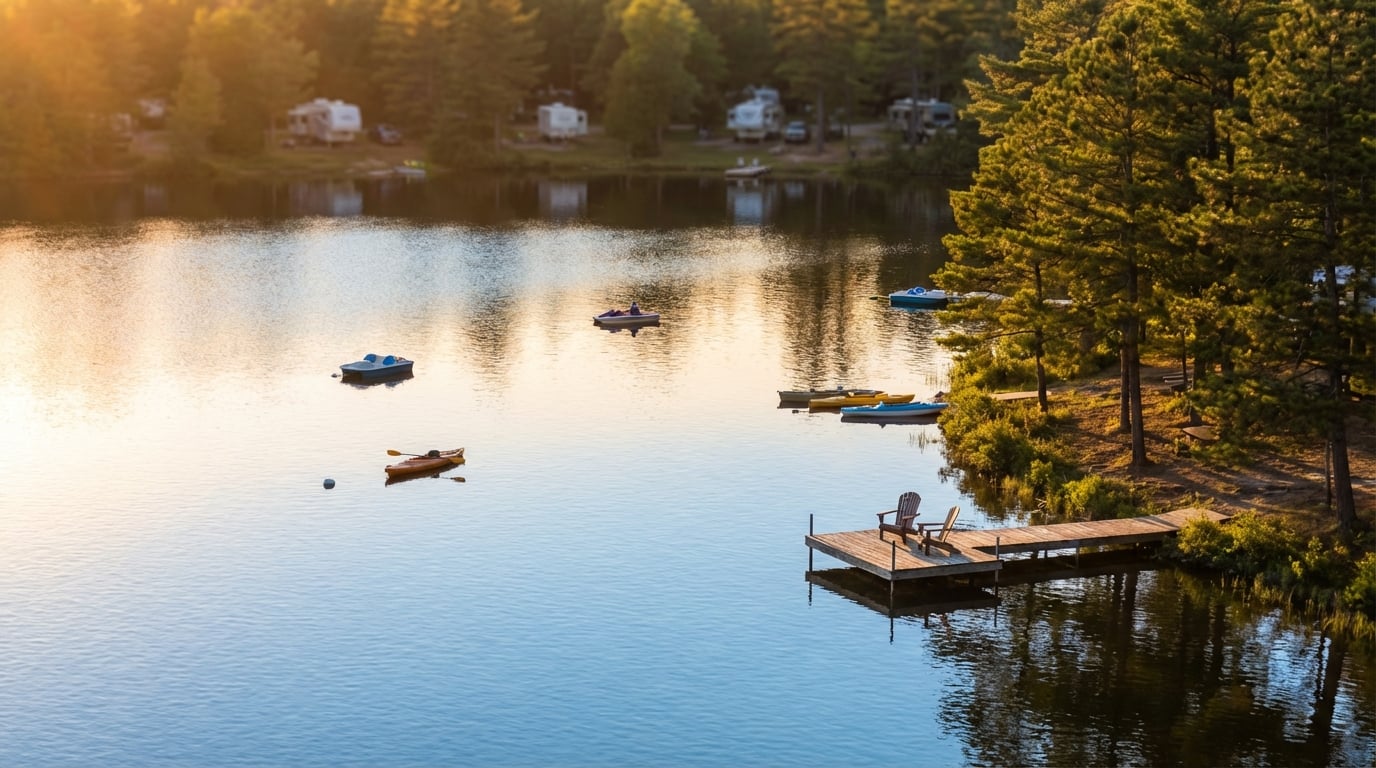

Alabama legislators opened the 2026 regular session with a slate of bills targeting boating regulations and licensing reforms that could reshape how waterfront campgrounds, RV parks, and glamping resorts approach marine programming and guest services across the state. The session convened on January 13, 2026, with lawmakers introducing measures addressing marine event permitting exemptions, vessel registration fee consolidation, and waterway management—all carrying direct implications for outdoor hospitality operators with shoreline amenities or water access.
House Bill 157, sponsored by Representative Paul Lee, stands as the centerpiece legislation for waterfront property operators. The bill proposes exempting regattas, motorboat races, marine parades, tournaments, and exhibitions with 35 or fewer vessels from state permit requirements. Under the proposed changes, event sponsors would assume responsibility for ensuring adequate protection from marine traffic interference and hazards. The measure has been referred to the House Committee on Public Safety and Homeland Security, with a proposed effective date of October 1, 2026.
The 35-vessel threshold aligns with the realistic scale of activities most campgrounds and RV parks would host, from fishing tournaments and kayak races to paddleboard exhibitions. Waterfront outdoor hospitality properties have long recognized that on-water activities serve as significant differentiators for attracting and retaining guests. Properties with marina access or shoreline amenities may see higher occupancy rates during peak boating seasons compared to landlocked competitors, and this legislation could remove a key barrier to launching such programming.
Operators considering marine event development may benefit from preparing now, well ahead of the potential October 2026 effective date. Partnering with local boating clubs or fishing organizations can help share operational responsibilities while tapping into established participant networks. Successful waterfront events typically require coordination with neighboring property owners and local emergency services regardless of state permitting requirements. Industry best practices suggest liability coverage specifically addressing watercraft activities should be reviewed annually with insurance providers before launching any new marine programming, and staff training in first aid and emergency response represents a common standard, with specialized water rescue certification representing a common standard for designated waterfront personnel.
Companion legislation addressing vessel registration also emerged during the session’s opening days, according to Alabama Political Reporter coverage. House Bill 79, sponsored by Representative Danny Crawford, and Senate Bill 35, sponsored by Senator Steve Kitchens, both aim to consolidate vessel registration fees and provide for fee distribution across the state. The House version was referred to the Ways and Means General Fund Committee, while the Senate version was sent to the County and Municipal Government Committee. Senate Bill 35 also received floor action during the first week of session.
Many outdoor hospitality properties located near popular waterways have expanded their service offerings to include boat storage, dock rentals, and watercraft rental fleets. Properties offering seasonal or annual boat storage often provide registration renewal reminders as a value-added service to long-term customers. Clear signage displaying state registration requirements helps out-of-state guests understand compliance obligations when launching vessels, and front desk staff trained in basic boating regulation questions can significantly improve guest satisfaction. Campground management software increasingly includes modules for tracking stored vessels, rental fleet maintenance schedules, and guest watercraft registrations—positioning properties as knowledgeable resources for boating guests rather than simply providing water access.
Environmental measures impacting recreational waterways also advanced during the opening week. House Bill 181, introduced by Representative Marques, would require entities dredging more than one million cubic yards of material annually in coastal areas to ensure at least 70 percent of that material is beneficially used. The bill is pending before the House Ports, Waterways and Intermodal Transit Committee. Senator Elliott introduced Senate Bill 119 as a companion measure, which was referred to the Senate County and Municipal Government Committee.
Separately, House Bill 212 and Senate Bill 64 address invasive aquatic plant removal by Tennessee Valley Authority contractors. These measures would require contractors to clean up stray plant material to prevent regrowth and waterway obstruction—a concern for properties dependent on navigable waters for guest recreation.
Lawmakers also introduced House Bill 271 on January 15, 2026, proposing lifetime special hunting and fishing licenses for totally and permanently disabled residents. Current law requires disabled residents to renew these special licenses annually, creating an administrative burden the bill seeks to eliminate. The measure was referred to the House Committee on Agriculture and Forestry. Campgrounds and RV parks increasingly serve guests with disabilities, and staff awareness of accessible recreation licensing options helps provide better guest information and demonstrates a property’s commitment to inclusive outdoor experiences.
Additional marine-related legislation introduced during the first week includes House Bill 254 by Representative Phillip Stringer, which would require law enforcement to have probable cause before stopping and boarding vessels. That measure was referred to the House Public Safety and Homeland Security Committee. Representative Wilcox introduced House Bill 277 to authorize oyster aquaculture licensees to harvest and serve oysters for product tasting, while Representative Brown filed House Bill 38 to create the Alabama Seagrass Restoration Task Force. Senator Sessions introduced a companion seagrass measure in Senate Bill 124. Representative Brown also filed House Bill 39 addressing seafood dealer license fees for residents holding other fishing licenses.
The annual session is limited by law to 30 session days within a 105 calendar day period, meaning the session must conclude by April 20, 2026, as reported by Alabama Political Reporter. The Legislature generally meets Tuesday through Thursday each week, with 449 bills including pre-filed legislation introduced to date. Lawmakers reconvened for Day 4 on Tuesday, January 20, with the House meeting at 1 p.m. and the Senate at 3 p.m.
Waterfront outdoor hospitality operators should monitor these bills as they progress through their respective committees over the coming months. The October 2026 effective date for House Bill 157 provides a planning runway for properties interested in developing marine event capabilities. Digital reservation systems that bundle boat slip rentals with campsite bookings create the streamlined checkout experiences guests increasingly expect, and properties that proactively position themselves as helpful resources for boating compliance will differentiate their offerings in an increasingly competitive market. Operators staying informed about these administrative changes can better assist guests navigating registration requirements while capturing new revenue opportunities as laws take effect.
