

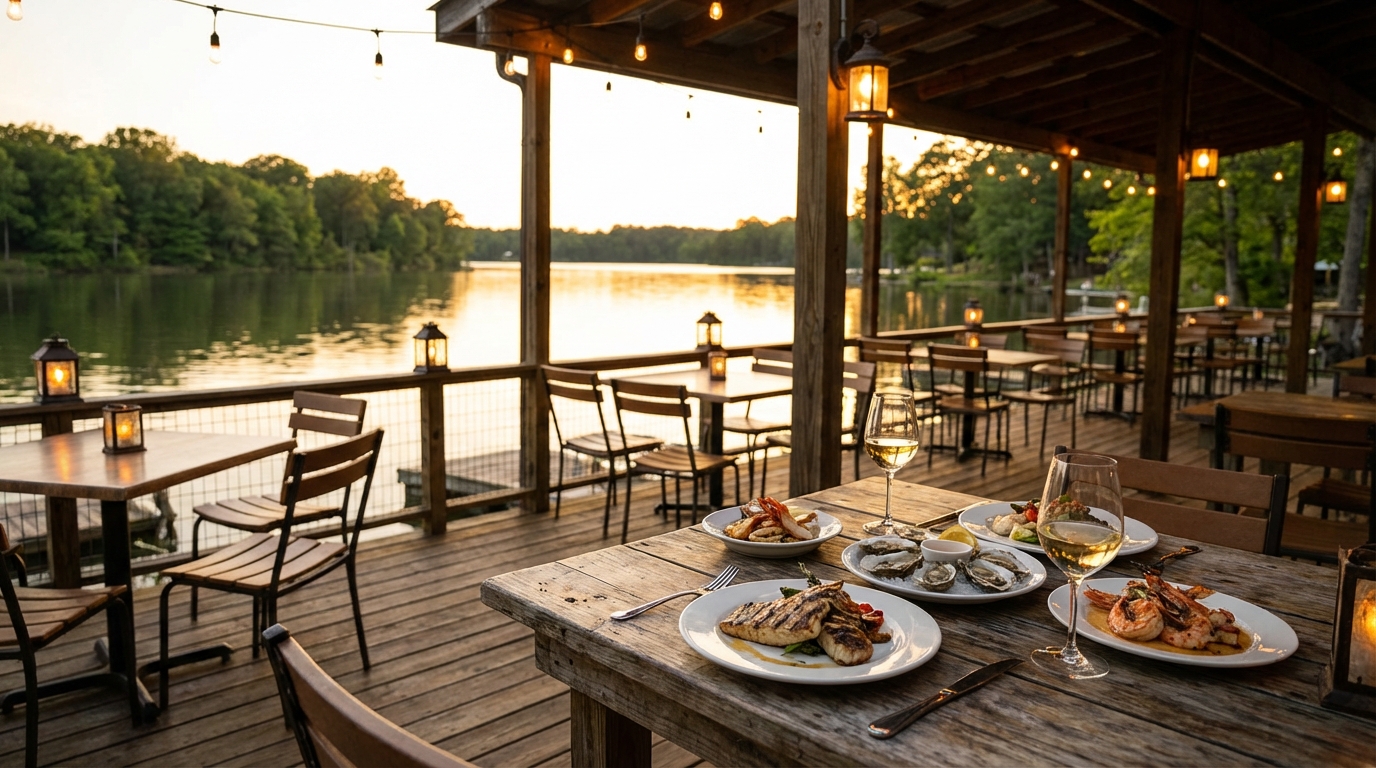

A waterfront restaurant partnership at Joe Wheeler State Park in Rogersville, Alabama, has been praised by state park officials as a “win-win” that enhances the guest experience. Brenda and Tim Dison, owners of Lash’s Seafood, became the official restaurant operator at the state park in late 2025, and the Alabama State Parks Division has since highlighted the venture as an example of how strategic partnerships can elevate the guest experience beyond basic overnight accommodations.
“We want to offer a first-class experience at all of our state parks, and the addition of Lash’s Seafood at Joe Wheeler State Park has definitely enhanced our guests’ experience,” said Matthew Capps, Alabama State Parks Director, in a state parks release. “Whether it’s the expanded menu options or the incredible service, Lash’s provides a ‘wow’ factor. That’s why it’s a win-win for everyone.”
The success at Joe Wheeler State Park offers valuable lessons for campground and RV park owners evaluating similar arrangements. The partnership illustrates several principles that tend to produce successful outcomes. Quality food and beverage offerings can transform a property from simple overnight accommodation into a destination experience. When structuring such partnerships, property owners should consider whether flat lease arrangements or revenue-sharing models better align incentives between both parties. Revenue-sharing agreements typically encourage food service operators to maximize sales while giving property owners a stake in the restaurant’s success. Lease terms generally range from three to five years with renewal options, providing stability while allowing flexibility to adjust based on performance.
The personalized service philosophy at Lash’s Seafood demonstrates the type of operational flexibility that benefits both restaurant and park reputation. State officials specifically noted an instance where owner and chef Brenda Dison accommodated a guest’s off-menu request for smothered chicken, a dish not listed among the restaurant’s offerings. When asked if she could prepare the special request, Dison’s response was immediate: “Absolutely.” The dish arrived at the table minutes later.
This commitment to guest satisfaction reflects the importance of selecting food service partners who share a property’s hospitality values. Effective food service partnerships also require clear delineation of responsibilities regarding utilities, maintenance, staffing, and hours of operation. Properties that establish written agreements covering seasonal hour adjustments, maintenance responsibilities, and guest complaint resolution processes tend to experience fewer operational conflicts. Successful partnerships typically include provisions for regular quality reviews and guest feedback collection, with many property owners incorporating guest satisfaction metrics into partnership agreements to ensure food service standards remain consistent with the overall brand experience.
The restaurant serves breakfast, lunch, and dinner from Thursday through Sunday, with a menu featuring fresh seafood, hand-cut steaks, burgers, sandwiches, and more. Diners enjoy views of the Tennessee River from a dining room that received significant upgrades when workers replaced all windows in the lodge and restaurant last year, creating broader waterfront views. The Disons prepare each dish with the same care and attention that made the original Lash’s restaurant a regional favorite since they opened it in Rogersville in 2020.
“We want people to come to the park. We want to be a place where people can enjoy a wonderful meal, relax and experience everything the park has to offer,” said Brenda Dison, explaining why opening a second location at the state park felt like a natural fit.
Business at the park restaurant has been strong, and officials are considering additional dining room renovations to add more seating as demand grows. This mutual investment pattern, where the park commits to infrastructure improvements while the restaurant delivers on service, demonstrates a partnership structure that outdoor hospitality operators should consider replicating. Both parties actively investing in enhancing the guest experience creates alignment that isolated operations cannot achieve.
With boating season approaching, the Disons are exploring the possibility of adding a tiki-style hut near the water so boaters can grab food without leaving the shoreline. Properties located on lakes, rivers, or coastal areas have significant opportunities to differentiate themselves by developing boater-friendly amenities. When adding waterside food service, operators should account for point-of-sale systems that work in outdoor environments, staff training on marine safety basics and dock etiquette, and signage indicating dock depths, tie-up procedures, and maximum docking times to help manage turnover during peak periods.
Beyond these operational considerations, adding waterfront structures like tiki bars or dockside service areas typically requires permits from environmental and waterway management agencies. Working with local authorities early in the planning process helps avoid costly delays. Structures should be designed to withstand water-related wear and weather exposure, with materials selected for durability in marine environments. Many waterfront properties successfully generate additional revenue by welcoming day-use boaters who may not be overnight guests, though this approach requires separate entrance considerations, clear pricing structures for dock usage, and staff trained to provide consistent service levels.
Plans may also include adding live local music in the future to further enhance the resort atmosphere. “We want to be a place where people come to relax, eat great food and have a good time,” Dison said. Adding live music and entertainment to waterfront dining has become a popular strategy for creating memorable experiences rather than simply providing basic services. Operators should consider sound ordinances and neighbor relations when planning entertainment schedules, and acoustic performances often provide ambiance without the volume concerns associated with amplified bands.
The partnership extends beyond the main restaurant to include catering for group bookings at the park’s convention center, which can accommodate 300 guests for a reception or banquet, 200 for classroom seating, and 500 for theater seating. The park encourages groups to host events at the lodge with Lash’s catering, demonstrating how integrated food service operations can support a property’s broader event and hospitality business. This additional revenue stream shows the full potential of partnerships where restaurant operations become woven into every aspect of a property’s guest services.
Visitors to Joe Wheeler State Park can spend days hiking scenic trails, playing golf, boating on the lake, or relaxing at the lodge before finishing the day with a meal by the water. “We have a resort right here in our backyard that everyone should come see,” Dison said. For outdoor hospitality operators considering their own food service partnerships, the collaboration at Joe Wheeler State Park offers a clear lesson: quality dining can elevate an entire property’s appeal and transform it from accommodation into an experience destination that guests seek out and remember.
