

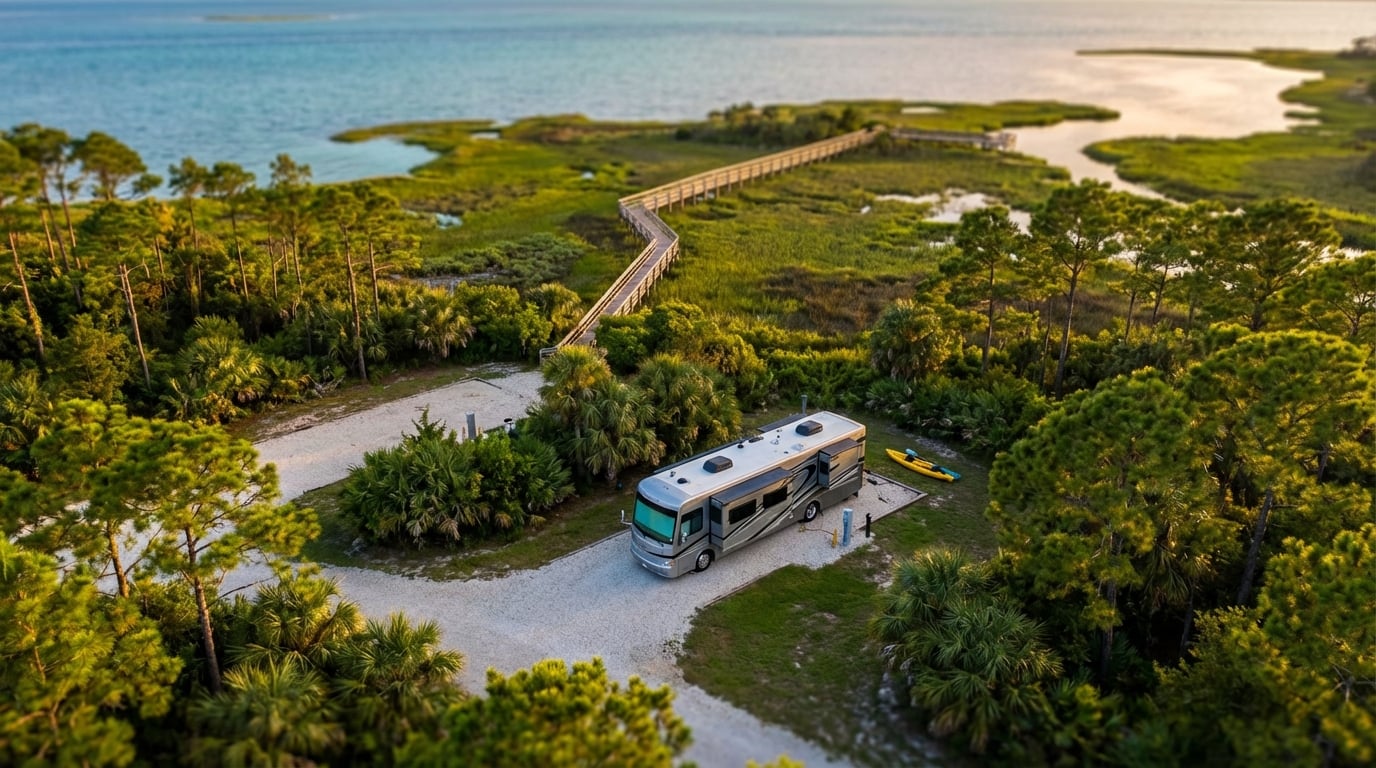

Alabama’s state park system is undergoing a transformation of historic proportions, with $228 million in infrastructure projects either completed or actively under construction across the state. Chris Blankenship, commissioner of the Alabama Department of Conservation and Natural Resources, delivered a comprehensive update to the Conservation Advisory Board in March 2026, outlining investments that span coastal trail networks, expanded campgrounds and enhanced boating access facilities. For private outdoor hospitality operators throughout the Gulf Coast corridor, these developments signal both heightened competition and substantial opportunity as regional visitation prepares to surge.
Among the most significant projects advancing in Baldwin County are the newly renovated Gulf State Park Pavilion in Gulf Shores and the development of a campground at Meaher State Park in Spanish Fort. The Gulf State Park Campground expansion, being constructed on the grounds of the park’s former golf course, represents a creative repurposing of underutilized land that private operators may find instructive when evaluating their own expansion possibilities. Another significant project for the broader region is the $24 million Fort Morgan Trail Extension, which will connect directly with Gulf State Park and provide access to Canal Road in Orange Beach when it opens in late summer.
Private campground and RV park owners operating in the Gulf Shores, Orange Beach and Spanish Fort corridors should recognize that enhanced state parks attract more visitors to a region, with many travelers preferring private facilities for extended stays, premium amenities or when public campgrounds reach capacity. The Fort Morgan Trail Extension and campground expansion represent significant visitor draws, creating spillover effects that benefit well-prepared operators. Properties adjacent to trail systems can create access points or trailhead parking, positioning themselves as strategic base camps for outdoor recreation enthusiasts seeking convenient access to the expanded trail network.
Operators evaluating their readiness for increased regional traffic should assess their capacity for larger recreational vehicles. Modernized state facilities often attract newer, larger RVs that require updated electrical service and wider pull-through sites. Properties that invest in infrastructure improvements now will be positioned to capture demand from travelers whose expectations have been elevated by state-of-the-art public facilities.
Water-based recreation investments represent another major component of the infrastructure initiative. “We have about $66 million in boating access projects that are complete, near completion or underway and The Week’s Bay Viewpoint Ramp in Baldwin County is in design and permitting and will begin construction this fall,” Blankenship told the Conservation Advisory Board. The Week’s Bay project will further enhance the region’s appeal to anglers, kayakers and recreational boaters.
Private operators near boat ramps and waterway access points can differentiate their properties by offering boat and trailer parking, fish cleaning stations, or kayak and paddleboard rentals. Cross-promotional partnerships with state park visitor centers for brochure placement and referral programs help capture overflow guests who find public facilities at capacity. Operators adjust their pricing calendars to capture increased demand during facility grand openings and peak visitation windows, optimizing seasonal rates to reflect the influx of visitors drawn by new amenities.
The state’s collaborative approach to outdoor recreation development extends beyond direct infrastructure investment. “The Alabama Wildlife Federation has leased our Five Rivers facility (on the Mobile Causeway) and is making improvements. That should be reopened to the public very soon. I think this will be a great partnership moving forward,” Blankenship said. This partnership model demonstrates how organizations can work with state agencies to enhance recreational offerings while sharing operational responsibilities.
Private operators can establish similar collaborative relationships with public agencies, positioning their facilities as complementary to public assets rather than direct competitors. Complementary amenity development remains essential for differentiation. Full hookup sites, premium Wi-Fi capable of supporting streaming services, laundry facilities and on-site convenience stores represent services that state parks typically do not provide, creating clear value propositions for travelers choosing between public and private accommodations.
The funding pipeline supporting these developments shows no signs of slowing. The ADCNR’s State Lands Division is overseeing more than $45 million in GOMESA funding from offshore oil and gas production in the Gulf of Mexico, awarded in 2025, with an additional $40 million in funding expected for 2026. This sustained investment signals a broader commitment to outdoor recreation infrastructure that will continue reshaping visitor expectations across Alabama’s Gulf Coast.
Large-scale public park renovations often establish new baseline expectations for facility quality, pushing private operators to consider their own modernization priorities. Sustainable infrastructure improvements resonate with environmentally conscious travelers and reduce long-term operational costs. Solar-powered lighting for pathways, common areas and RV sites demonstrates environmental stewardship while lowering utility expenses. Electric vehicle charging stations accommodate the growing segment of travelers with hybrid or electric tow vehicles, an amenity that increasingly influences booking decisions.
Technology integration has become essential rather than optional for competitive outdoor hospitality operations. Mobile check-in systems and digital reservation platforms reduce front desk bottlenecks and improve the guest arrival experience. Wi-Fi infrastructure capable of supporting streaming services is now considered essential by most RV travelers, particularly full-time RVers and remote workers who rely on connectivity for daily life. Digital wayfinding and interactive property maps enhance guest navigation, especially at larger properties where first-time visitors may otherwise struggle to locate their sites or amenities.
Accessibility improvements expand the potential guest base while ensuring regulatory compliance. ADA-compliant pathways, restroom facilities and designated accessible sites reflect universal design principles that benefit all guests. The Alabama State Parks investment emphasizes enhanced accessibility throughout its facilities, which will elevate visitor expectations for private operations as well.
The $228 million investment represents one of the most substantial commitments to Alabama’s outdoor recreation infrastructure in the state’s history. Private outdoor hospitality operators throughout coastal Alabama and the Mobile Bay corridor have a clear window to prepare for increased regional visitation. With the Fort Morgan Trail Extension opening in late summer and multiple boating access projects advancing toward completion, operators who invest in parallel upgrades now position themselves to capture growing demand from travelers drawn to a region increasingly defined by expanded outdoor recreation amenities.
