

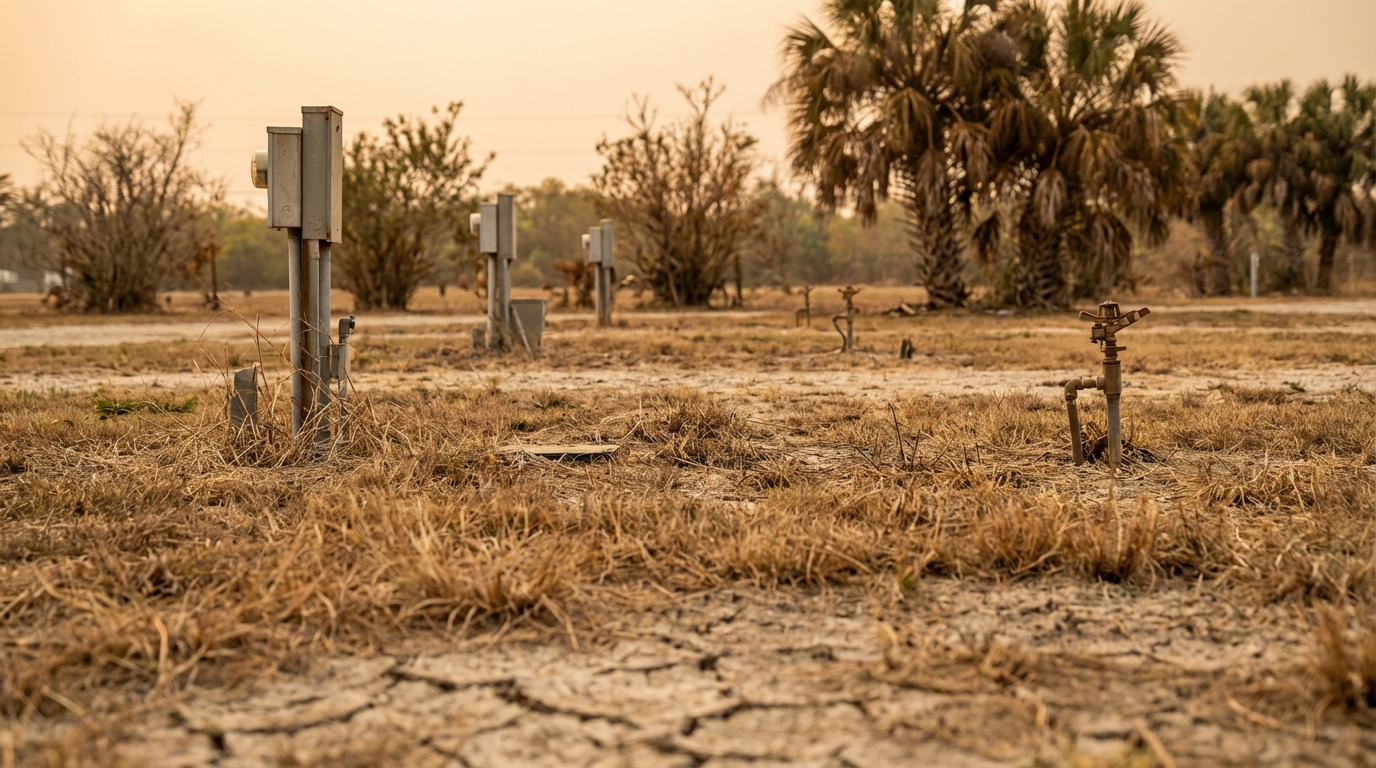

Drought conditions fueled by weeks of dry weather and below-average rainfall have tightened water supplies across north central Florida, impacting residents, local businesses, and public parks.
According to an article by The Independent Florida Alligator, the St. Johns River Water Management District declared a moderate water shortage on February 10, which escalated to a severe status on March 5.
According to the U.S. Drought Monitor, Alachua County is currently experiencing extreme drought conditions. While the region typically averages 52 inches of rain over a 12-month period, only 37 inches were recorded from March through February.
Due to the worsening conditions, officials extended a countywide burn ban through March 13. The district has also transitioned from voluntary conservation to mandatory restrictions to protect the Floridan aquifer system, which serves as the primary source for drinking, farming, and landscaping water.
Irrigation is now limited to just one day per week, a significant decrease from the two days typically allowed during daylight saving time. Clay Coarsey, director of the Water Supply Planning and Assessment Division at the St. Johns River Water Management District, emphasized that communication is the most important part of the effort to ensure everyone is aware of the restrictions.
Coarsey stated that it is really important for all stakeholders to pitch in and do their part to manage the shortage. Stacie Greco, water resources program manager for Alachua County, added that while conservation is promoted year-round, complying with these restrictions is especially vital during a shortage.
Greco noted that the county is encouraging people to consider not irrigating at all, as landscapes may not have fully recovered from the cooler season. Alachua County has requested that residents and businesses report wasteful watering or leaking irrigation systems via a helpline or online form.
The impact is already visible at Paynes Prairie Preserve State Park, where water levels have dropped significantly. Darby Guyn, recreation leader for Sweetwater Wetlands Park, observed that the water is “a good 3, 4 feet down” at the neighboring prairie, which has pushed more wildlife, including bison and horses, into stable wetland areas.
Jacob Amlong, owner of Crossroads Farm & Apiary, reported that higher temperatures and low rainfall have forced the farm to water more than usual. Amlong noted that continued restrictions could affect long-term plans for water-intensive crops, stating it is “one of those things you have to keep in the back of your mind” when considering future investments.
For campground owners and outdoor hospitality operators, these conditions present significant operational challenges, ranging from increased fire risks and burn bans to strict irrigation limits that affect park aesthetics. Monitoring water usage and maintaining infrastructure to prevent leaks is now a critical business necessity to ensure long-term sustainability and compliance with state environmental mandates.
