
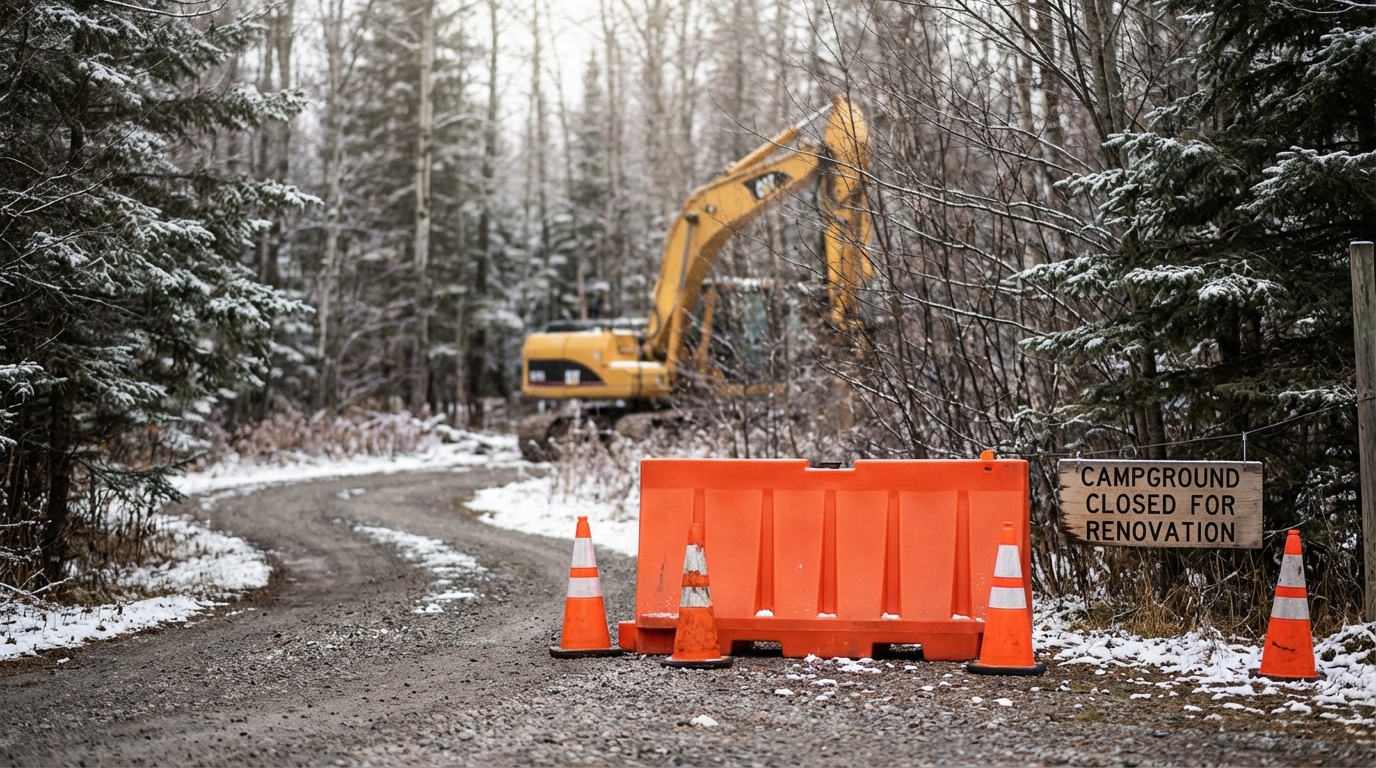

Mirror Lake State Park in Wisconsin will shutter its two largest campgrounds for approximately six months beginning Feb. 1, 2026, as a major road construction project forces the closure of Sandstone Ridge and Cliffwood campgrounds along with the park’s accessible cabin, boat launch and boat landing parking lot. The extensive infrastructure work, scheduled to commence during winter 2026, presents both operational challenges and instructive lessons for outdoor hospitality professionals navigating their own large-scale improvement projects.
The reservation system shows both Sandstone Ridge and Cliffwood campgrounds tentatively closed from Feb. 1 through early August 2026, though park staff are working with contractors to minimize the duration of these closures. The collaboration may yield opportunities for some campsites to open on weekends or in sections not under active construction, offering a model for phased accessibility during major projects. Any sites that become available will not appear in the reservation system until late 2025 at the earliest, and campers can use the Notify Me feature on the reservation website to receive email alerts when bookings open.
The Notify Me tool exemplifies a broader communication strategy that private campground operators should consider implementing during extended closures. For operators facing similar infrastructure disruptions, the park’s proactive guest notification approach offers a template to adapt for their own properties. Managing guest expectations during prolonged facility shutdowns requires proactive outreach across multiple channels. Operators benefit from creating dedicated construction information pages on their websites that clearly outline affected dates, impacted amenities and alternative options available to guests.
Email campaigns targeting guests with existing reservations prove most effective when sent at multiple intervals. Notifications sent immediately upon announcement, again at ninety days before arrival and once more at thirty days out help ensure no guest arrives unaware of changed conditions. Social media platforms serve as valuable real-time update channels, with many successful properties creating weekly video updates showing construction progress to build transparency and maintain engagement.
Reservation system tools such as waitlists and notification features have become standard for managing demand during partial availability. These tools help operators capture rebooking interest and automatically fill openings when construction zones reopen ahead of schedule. Clear signage at property entrances and throughout operational areas, combined with trained front-desk staff equipped with scripted responses to common construction questions, ensures consistent messaging across all guest touchpoints.
The park’s accessible cabin faces a tentative closure from May through early August 2026. Park staff are committed to reducing the closure period where possible, and the cabin may open on weekends or when Cliffwood Campground is not under active construction. Guests can request reservation dates during the closure period, and staff will backfill available dates if the project finishes ahead of schedule. For current availability information, guests can contact the park directly at 608-254-2333 or visit the DNR cabin availability page.
This approach of accepting reservation requests during closures while backfilling dates as work concludes represents a guest-friendly policy that other operators may consider. Private operators facing similar infrastructure projects can maintain booking momentum while managing expectations through such flexible reservation systems. The strategy helps retain customer loyalty during temporary disruptions and keeps potential guests engaged rather than seeking alternatives elsewhere.
The boat landing parking lot and boat launch face expected closures from approximately Feb. 1 through mid-June 2026. Hikers will find the Echo Rock Trailhead inaccessible during road construction and should use the Ishnala Trail as an alternative access point. A retaining wall replacement project at the beach will occur simultaneously, potentially limiting or closing beach access, though the beach picnic area will remain open throughout the construction period. Separately, the Turtleville Trail remains closed through March 2026 for timber harvest operations, and the Wild Rice Trail stays closed through completion of a lake dredging project continuing into 2026.
Large-scale infrastructure projects at campgrounds and RV parks demand careful planning to balance necessary improvements with revenue protection. Scheduling major construction during shoulder seasons or off-peak months reduces guest impact significantly. Winter months typically offer the optimal window for road work, utility installation and site expansion at northern-tier properties where camping demand naturally decreases.
Segmenting construction zones allows portions of a property to remain operational while other areas undergo improvement. This approach maintains cash flow and keeps staff employed, though it requires careful traffic management and clear physical barriers between guest areas and active work sites. Pre-construction planning should include assessment of alternative access routes, temporary parking solutions and backup amenity options to preserve some level of guest service.
The Mirror Lake State Park project demonstrates several strategic infrastructure planning principles effectively. The winter 2026 start date capitalizes on lower visitation periods, while the phased approach allows potential weekend openings and section-by-section availability as work progresses. The park is bundling multiple improvements into a consolidated timeline, combining road construction with retaining wall replacement at the beach and ongoing trail work. The decision to maintain beach picnic area access during the retaining wall project illustrates how operators can preserve guest amenities even during significant construction.
Campground and RV park owners planning their own road improvements, utility upgrades or facility expansions should consider the comprehensive approach demonstrated by this project. Implementing flexible reservation policies that accept bookings during closure periods, developing phased construction schedules that allow partial operations, and deploying automated guest notification systems all contribute to successful infrastructure projects. Coordinating major work during a single extended closure often proves more effective than multiple shorter disruptions spread across several seasons, reducing overall guest impact while achieving necessary property improvements. The primary closure window runs from February through early August 2026 for the campgrounds, with reservation releases expected late 2025.