
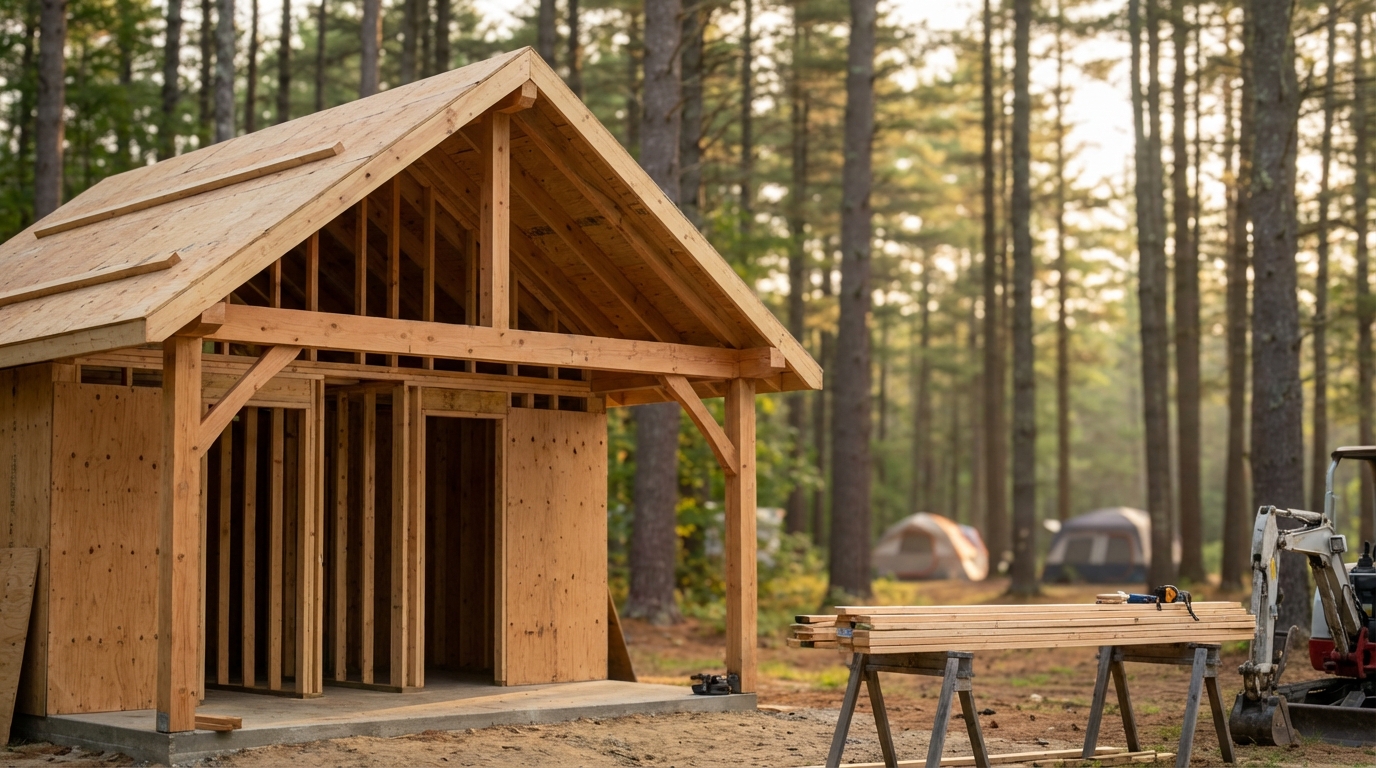

Rhode Island’s Burlingame State Campground has postponed the release of 2026 camping season reservations as construction crews work to build six new shower and restroom facilities across the property, with state officials indicating that updates will follow after March 1, 2026, and the campground expected to operate at roughly half its normal capacity throughout the upcoming season.
The spacious campground sits adjacent to Watchaug Pond in Charlestown and features approximately 700 campsites along with 20 cabins, according to Rhode Island State Parks campground listings. Guests typically enjoy restrooms with shower facilities, a playground, arcade, freshwater beach, boat ramp, canoe rentals, and hiking trails, while the property borders both the Burlingame Management Area and Kimball Wildlife Sanctuary. Ocean beaches including Misquamicut State Beach, Charlestown Breachway and East Matunuck State Beach are located near the campground, making the location a draw for campers seeking both freshwater and saltwater recreation.
The construction project encompasses six entirely new shower and restroom facilities designed to enhance the camping experience through modern, sustainable, and accessible amenities. The project is anticipated to reach completion by April 2027, meaning the work will span multiple camping seasons before guests can enjoy the finished upgrades.
The scope of this infrastructure project highlights considerations that campground and RV park operators may find relevant when evaluating similar investments at their own properties. Operators pursuing restroom upgrades often consider water conservation technology, including low-flow fixtures, sensor-activated faucets, and efficient shower heads that may reduce consumption without sacrificing guest comfort. Energy-efficient LED lighting paired with motion-sensor systems can help minimize electricity usage in buildings that see around-the-clock traffic during peak season. Properties pursuing these upgrades may find that ADA-compliant facilities exceeding minimum standards serve as competitive differentiators, particularly when attracting multigenerational families and guests with mobility considerations.
The Reserve America booking system for Burlingame is not expected to open until construction zones are finalized, with officials anticipating availability after March 1. The 2026 camping season start date at the facility remains to be determined, and campsite restrictions stemming from the ongoing work will remain in effect for the entire season.
Operators facing comparable situations at their own properties may find value in alternative approaches to reservation management during construction periods. Some campground owners implement phased reservation releases, opening bookings for unaffected sites first while marking construction-adjacent areas as pending or unavailable. This strategy allows eager campers to secure spots while operators finalize the boundaries of active work zones. Waitlist management systems and priority booking windows for returning guests also help maintain customer loyalty when availability drops significantly.
Transparent and proactive guest communication proves essential whenever operational capacity is reduced due to infrastructure work. Early notification systems that reach previous guests and waitlisted campers before reservation windows open help set appropriate expectations. Dedicated website landing pages explaining construction timelines, affected areas, and anticipated completion dates give prospective visitors the information they need to plan accordingly. Tiered communication strategies spanning email, social media, and on-site signage ensure the message reaches guests through their preferred channels.
Setting realistic expectations about noise levels, limited amenities, and access restrictions during construction prevents disappointment upon arrival. Guests who understand what to expect may be more likely to rate their experiences favorably than those caught off guard by unexpected disruptions, making upfront communication an investment in long-term satisfaction and repeat visits.
The extended project timeline at Burlingame underscores the importance of realistic scheduling for operators planning significant upgrades. When construction spans multiple camping seasons and requires operating at reduced capacity for an extended period, thoughtful reservation and communication strategies become critical to maintaining guest satisfaction throughout the transition. Infrastructure improvements deliver long-term benefits, but the journey from groundbreaking to grand opening demands careful planning at every stage.
Rhode Island State Parks has opted to delay the entire reservation release until construction areas are determined rather than implementing a phased approach. Private campground owners facing similar projects might weigh the tradeoffs of this strategy against zone-based booking systems that allow partial reservations to proceed while planning continues in affected sections of the property.
The investment in upgraded amenities at Burlingame reflects growing camper expectations for quality facilities. Sustainable design choices in restroom and shower construction affect both operational costs through reduced utility consumption and guest perceptions of environmental responsibility. As outdoor recreation continues attracting visitors who prioritize eco-friendly practices, properties demonstrating commitment to sustainability through their infrastructure may gain an edge in an increasingly competitive market.
Campers interested in securing sites at Burlingame for the 2026 season should monitor Rhode Island State Parks announcements following March 1, with the official season start date remaining subject to further updates. For outdoor hospitality professionals watching this project unfold, the situation offers lessons applicable to any property contemplating major facility upgrades, from communication timing to reservation system flexibility to the long-term value of investing in modern, accessible, and sustainable guest amenities.