
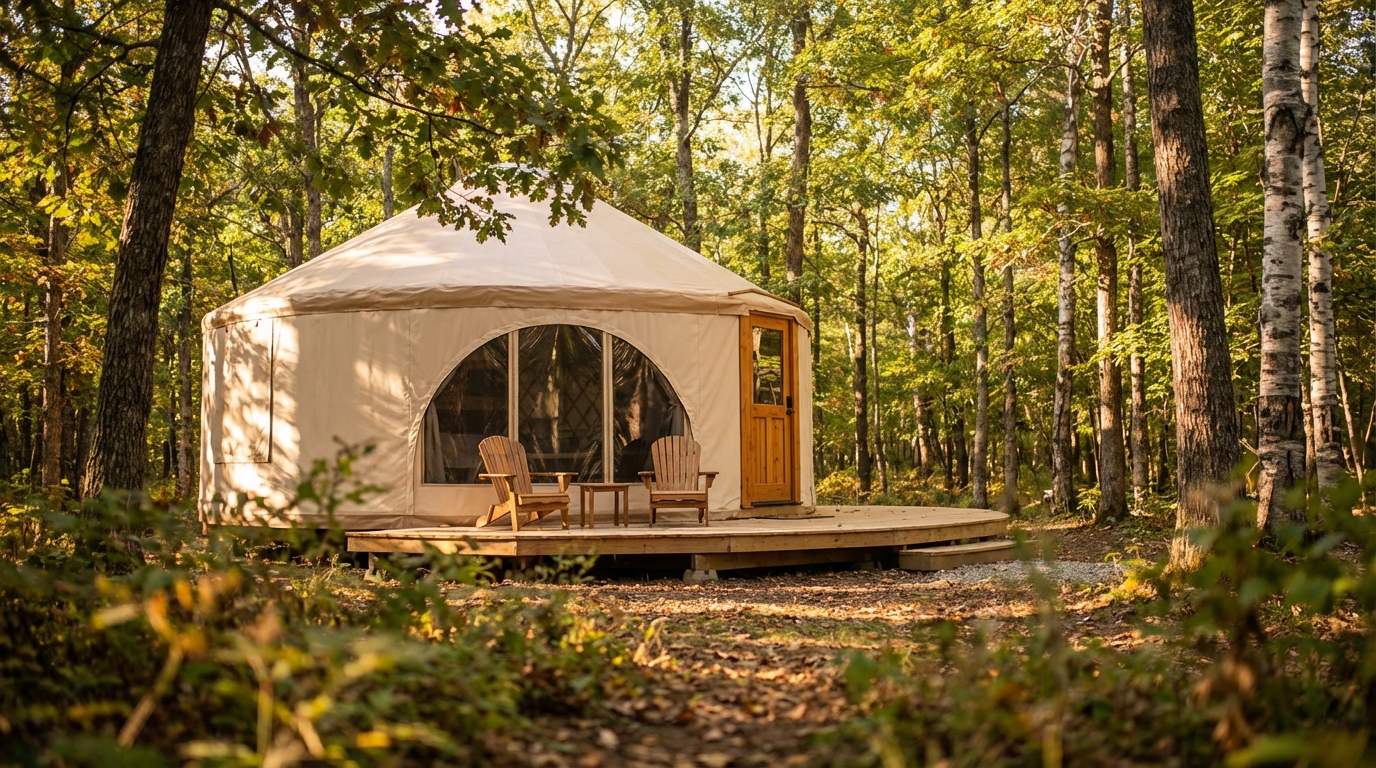

Table Rock State Park in Branson, Missouri, has expanded its premium accommodation offerings with five new yurts now available for reservations, building on nearly a decade of success since the park introduced its first full-service glamping unit in May 2017. The Missouri Department of Natural Resources will host a ribbon-cutting ceremony on Monday, March 2, 2026, at 11 a.m. in Campground 2 to formally celebrate the expansion, though guests can already book stays in the new units through the state parks reservation system, according to the department’s official announcement.
For campground and RV park owners watching public land agencies invest in upscale outdoor accommodations, this expansion offers a useful case study in phased implementation. Rather than committing significant capital to an untested concept, Table Rock State Park began with a single yurt in 2017, measured guest response and occupancy patterns, then scaled up based on demonstrated demand. The department confirmed that high occupancy rates and positive guest feedback from the original yurt prompted the need for this expansion, providing private operators with a validation model worth replicating.
The new yurts deliver a comprehensive amenity package that bridges traditional camping with modern lodging expectations. Each unit features two bedrooms, with the first containing a queen-size bed and the second outfitted with twin bunk beds. A queen-size sleeper sofa in the living room provides additional sleeping capacity, making the accommodations suitable for families or small groups seeking comfortable outdoor getaways without sacrificing convenience.
Climate control represents one of the most significant features for operators considering similar investments. The yurts include both air conditioning and heating, creating fully climate-controlled environments that remain comfortable regardless of season. For private campground owners struggling with revenue fluctuations tied to weather patterns, this detail carries substantial business implications. Climate-controlled premium units extend the usable season well beyond traditional camping months, generating shoulder-season revenue when tent camping typically experiences steep declines.
Kitchen facilities in the new yurts rival what guests might expect from vacation rental properties. Each unit comes equipped with a four-burner electric stove and oven, a full-size refrigerator, a microwave, a coffee maker, and a toaster. A full bathroom with tub and shower completes the interior amenities, eliminating the need for guests to use shared campground facilities. This level of accommodation attracts demographics who might never consider traditional camping, including families with young children, older travelers, and those entirely new to outdoor recreation.
Entertainment amenities reflect evolving guest expectations for outdoor accommodations. The yurts feature televisions in both bedrooms and the living room, with DirecTV service providing access to local channels. While some outdoor hospitality purists might question whether television belongs in a glamping unit, the inclusion acknowledges a broader shift in what today’s guests expect even when seeking nature-focused experiences. Operators developing their own premium units should consider how technology integration enhances rather than detracts from the outdoor appeal of their properties.
The technology conversation extends beyond entertainment systems. Reliable Wi-Fi is now considered a baseline amenity rather than a premium feature across the outdoor hospitality sector, particularly for extended stays and guests who work remotely. Smart climate control systems that balance guest comfort with energy efficiency represent another consideration, reducing operational costs while maintaining the comfortable environment that distinguishes glamping from traditional camping. Digital reservation systems and contactless check-in options improve guest convenience while reducing administrative burden, creating efficiencies that become increasingly valuable as properties add complex accommodations requiring more intensive management.
Premium accommodations like these yurts command significantly higher nightly rates than traditional tent or RV sites, often generating substantially more revenue per square foot of developed land. However, operators should factor ongoing costs into their pricing strategies. Full-service units require different maintenance protocols than traditional sites, including housekeeping between guests, appliance upkeep, and utility management. These operational considerations must inform both initial investment decisions and long-term financial projections.
Reservations for the new yurts can be made through multiple channels. Guests may contact the Missouri State Parks Reservation Call Center at 877-422-6766, with representatives available from 7 a.m. to 7 p.m. Online booking is available at www.icampmo.com, offering the digital convenience that modern travelers increasingly expect. For private operators competing for the same glamping audience, ensuring booking infrastructure matches or exceeds the convenience offered by public facilities has become essential.
The park itself is located at 5272 State Highway 165 in Branson, Missouri. Those seeking additional lodging information can visit the park’s dedicated lodging page, while general inquiries can be directed to 417-334-4704. The accessibility of this information through multiple channels demonstrates how state park systems have evolved their guest communication strategies, setting expectations that private operators must meet.
This yurt expansion represents one component of a broader initiative across Missouri’s state park system. The project falls under Missouri state park revenue bond projects, with additional information available through the department’s revenue bonds information page. When public land agencies commit resources to expanding premium glamping options, it signals validated consumer demand that private operators can capitalize on in their own markets. The investment suggests confidence in sustained interest for accommodations that blend outdoor experiences with modern comforts.
For outdoor hospitality professionals evaluating their own property development strategies, the Table Rock expansion illustrates how starting small, measuring results, and scaling based on evidence can minimize risk while maximizing return on investment. The journey from one yurt in 2017 to five units in 2026 demonstrates patience and data-driven decision-making, qualities that serve operators well regardless of whether they manage public lands or private campgrounds. As glamping continues to attract travelers who seek nature without sacrificing comfort, properties offering well-equipped premium accommodations position themselves to capture an expanding segment of the outdoor recreation market.
