


Mississippi Governor Tate Reeves announced on January 18, 2026 his intention to redirect Gulf Coast Restoration Funds away from small municipal infrastructure projects toward large-scale regional tourism and economic development initiatives, a strategic shift that could reshape funding opportunities for outdoor hospitality operators along the Mississippi Gulf Coast. The announcement arrived as the state legislature advanced a bill to create a standalone tourism department, signaling a coordinated effort to elevate the region’s profile as a premier destination for projected visitor numbers exceeding 45 million.
The Governor’s January 18 announcement urged lawmakers to move funds away from localized projects such as water and sewer system improvements, which have historically absorbed significant portions of settlement money. Instead, Reeves advocated for directing resources toward projects capable of attracting major external investors and stimulating job creation across the entire coastal region. The emphasis centers on treating the Gulf Coast as a cohesive destination rather than a collection of individual cities and counties competing for limited resources.
Tourism currently ranks as Mississippi’s fourth-largest industry, with an economic impact reaching $18.1 billion in 2024. The sector supports more than 130,000 jobs across hotels, restaurants, and tourism services statewide. Reeves has positioned these large-scale infrastructure improvements as essential for maintaining the Gulf Coast’s competitive standing among domestic and international travelers, particularly as the region works to diversify its appeal beyond the gaming industry.
For outdoor hospitality operators along the Gulf Coast, this funding realignment presents opportunities for those who position strategically. RV parks and campgrounds that partner with neighboring properties, local attractions, and tourism boards present more compelling cases for regional impact than standalone projects. Creating a corridor of outdoor hospitality options along the coast demonstrates broader visitor appeal and extended length of stay potential, aligning with the Governor’s vision of cohesive regional development.
Operators should also prioritize documenting their economic contributions within their communities. Tracking and communicating data on average guest spending at local restaurants, attractions, and retail establishments strengthens the case that campgrounds and RV parks serve as economic engines rather than isolated businesses. Properties demonstrating how their guests contribute to the broader regional economy tend to be viewed more favorably when tourism development priorities are established.
These operational strategies take on added significance given the specific infrastructure priorities under consideration for the 2026 budget cycle. The Gulf Coast legislative delegation has proposed a major overhaul or replacement of the Mississippi Coast Coliseum. New investments in Blue Economy tourism projects are also prioritized, designed to diversify the region’s appeal and capitalize on its natural coastal assets. The Governor has argued that industrial expansion in sectors like shipbuilding and operations at Stennis Space Center directly supports tourism infrastructure, creating a growth cycle requiring workers equipped for both high-tech and service-oriented roles.
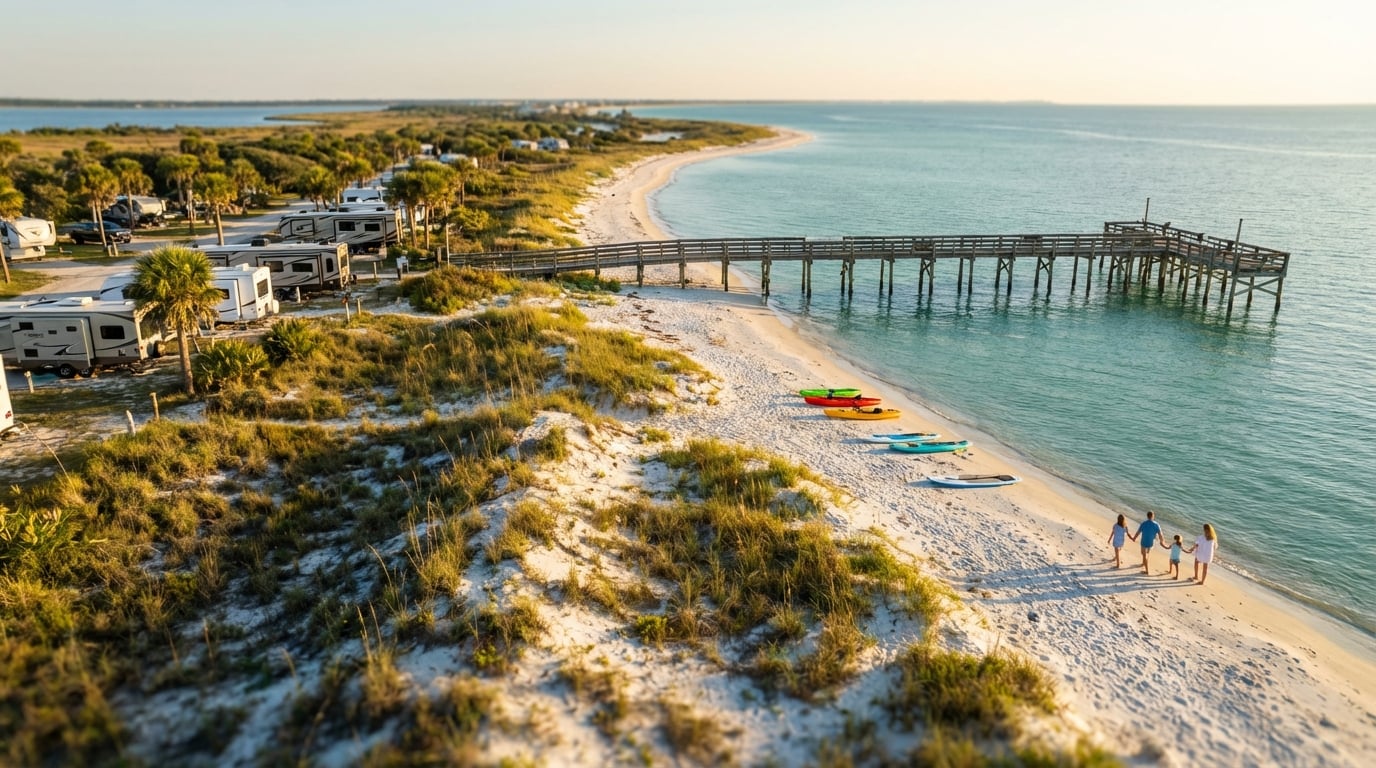
Blue Economy tourism, which encompasses sustainable economic activities connected to oceans, coastlines, and waterways, represents a significant growth opportunity for coastal outdoor hospitality properties. Campgrounds and RV parks can enhance their appeal by incorporating water-focused amenities such as kayak and paddleboard rental stations, fishing pier access, boat launch facilities, and guided eco-tours. Properties offering convenient access to water-based activities may see stronger occupancy rates and can often command premium pricing in competitive markets.
Digital guest engagement platforms can further enhance water-based programming for coastal properties. Mobile apps and digital kiosks that provide real-time tide charts, weather conditions, and water activity booking capabilities streamline the guest experience while generating valuable data on activity preferences. Properties implementing these digital tools can better anticipate demand for equipment rentals and guide services, optimizing staffing and inventory decisions while delivering the seamless experience modern travelers expect.
Sustainable infrastructure investments also resonate with Blue Economy priorities. Common approaches include installing living shoreline features rather than traditional seawalls, implementing stormwater management systems that filter runoff before it reaches waterways, and creating interpretive nature trails that educate guests about coastal ecosystems. These investments often qualify for environmental grants and attract the growing segment of eco-conscious travelers seeking meaningful connections to natural environments.
Waterfront glamping concepts represent another avenue for differentiation. Glamping units that maximize ocean views and coastal breezes appeal to travelers seeking premium outdoor experiences, and properties developing such accommodations position themselves at the intersection of sustainability and luxury that Blue Economy tourism emphasizes. Operators expanding into these offerings should anticipate staffing needs for water safety, equipment maintenance, and naturalist programming, with cross-training existing staff and partnering with local outfitters serving as common approaches.
Separately, the Mississippi Senate passed SB 2016, known as the Mississippi Tourism Reorganization Act, during the third week of January 2026, according to Travel and Tour World. This legislation creates a standalone Mississippi Department of Tourism, separating it from the Mississippi Development Authority. The new department will officially assume responsibility for state tourism efforts beginning July 1, 2026, with a dedicated Tourism Advertising Fund sourced from sales tax revenues collected from restaurants and hotels. A new Tourism Marketing Advisory Board will include representatives from five distinct tourism regions: the Hills, Delta, Capital/River, Pines, and Coastal areas.
Governor Reeves vetoed similar legislation in a prior session due to lack of accompanying appropriations. However, he signaled in mid-January that he is open to signing the bill this year under specific conditions, requiring the legislature to ensure sufficient funding for both the new tourism department and the Mississippi Development Authority. The Governor expressed concern about preventing resource dilution that could render both entities ineffective. The bill now moves to the House of Representatives for consideration before potentially reaching the Governor’s desk.
With Mississippi’s new five-region tourism marketing structure taking shape, outdoor hospitality operators in the Coastal region who engage now with the planning process may influence how regional tourism priorities develop. Establishing relationships with regional economic development offices and participating in tourism planning sessions positions properties favorably when funding opportunities emerge. Campgrounds and RV resorts pursuing development funding should align proposed improvements with documented tourism growth areas, including infrastructure supporting both overnight guests and day visitors such as event spaces, waterfront access points, and eco-tourism facilities.
The outcome of these legislative and funding decisions will shape Gulf Coast tourism development for years to come. As SB 2016 awaits House consideration, outdoor hospitality operators monitoring these developments can prepare to align their investment strategies with emerging regional priorities. The Governor’s emphasis on cohesive regional development rather than fragmented municipal projects signals a new approach that rewards operators who think beyond their property boundaries, positioning collaborative ventures and documented economic contributions as essential elements of successful engagement with the evolving funding landscape.
