

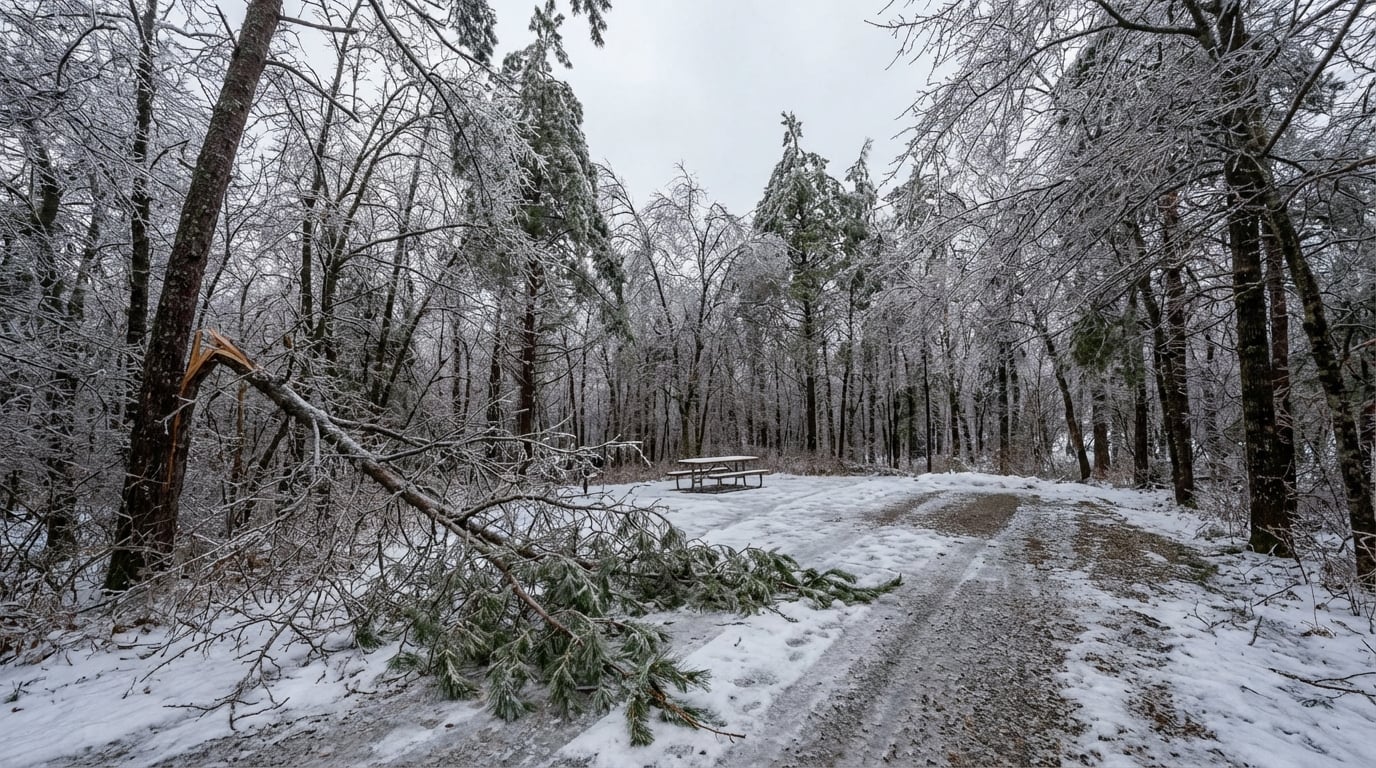

Mississippi officials announced the emergency closure of nine state parks across the northern region of the state on Jan. 26, 2026, after a devastating ice storm left facilities without power and water while creating hazardous conditions from downed trees and scattered debris. The Mississippi Department of Wildlife, Fisheries, and Parks confirmed that all existing reservations at the affected locations have been cancelled through Monday, Feb. 2, 2026, with automatic full refunds issued to impacted guests requiring no action on their part.
The closures affect Wall Doxey State Park, J.P. Coleman State Park, Tishomingo State Park, Trace State Park, Tombigbee State Park, George P. Cossar State Park, Hugh White State Park, John W. Kyle State Park and Leroy Percy State Park. MDWFP Executive Director Andre Hollis emphasized that the primary concern is visitor safety, noting that infrastructure damage in the northern part of the state is significant. Park officials and maintenance crews are monitoring utility restoration efforts while working to clear roads and facilities of dangerous debris, with the department assessing conditions daily and announcing any extensions based on safety and recovery progress.
The scale and duration of these state park closures offer important lessons for the private sector. The Mississippi closures underscore why private campground and RV park operators, particularly those in southern states, need robust emergency preparedness plans in place before severe weather strikes. Ice storms in regions where infrastructure is not designed for extreme cold often cause disproportionate damage, leaving operators scrambling to respond. Developing a comprehensive emergency action plan with specific protocols for winter storms, including decision trees for closures, guest communication procedures and staff safety measures, is considered foundational for any outdoor hospitality operation.
Maintaining backup power systems such as generators is a recognized necessity for properties with full hookup sites, as those that can sustain essential services during outages typically recover guest confidence faster than those left without alternatives. The state park scenario demonstrates that even well-resourced public facilities require days or weeks to recover from ice damage, making it clear why private operators must have their own robust plans ready to execute at a moment’s notice.
The department’s decision to proactively cancel all reservations through Feb. 2 and issue automatic full refunds reflects a guest-first approach during the emergency. Affected visitors will receive their money back without needing to contact park officials or submit any paperwork, streamlining what could otherwise become a frustrating process during an already difficult situation.
This guest-first refund approach provides a model worth examining for private operators. For private operators, how cancellations and refunds are handled during emergencies can significantly impact reputation and long-term customer retention. Offering automatic refunds for property-initiated closures, as the Mississippi state parks did, is generally viewed as best practice for maintaining guest trust. Clear cancellation policies that specifically address weather-related closures and distinguish between guest-initiated cancellations and safety-driven property closures are essential for setting expectations before problems arise.
Campground management software that integrates reservation systems with communication tools enables operators to quickly identify affected bookings and send batch notifications, allowing for rapid response when conditions deteriorate. Documenting weather conditions and closure decisions with dated photographs, weather service reports and decision logs protects operators during disputes and supports insurance claims should they become necessary.
The park closures align with broader emergency responses across Mississippi, where Gov. Tate Reeves issued a State of Emergency effective through at least Jan. 27, 2026. The ice storm also prompted closures of other public services, including the Natchez Trace Parkway, numerous county health departments and driver service bureaus in northern and central regions of the state. Residents have been urged to avoid travel and stay off roads as emergency teams work to address the widespread impact of freezing rain, sleet and ice accumulation.
The widespread closures across Mississippi demonstrate how interconnected regional infrastructure can compound challenges for outdoor hospitality properties during severe weather. Establishing relationships with local utility providers and tree removal services before emergencies occur helps expedite restoration efforts, and proactive vendor agreements are standard in hospitality risk management. Creating tree hazard assessment programs with regular inspection and pruning near power lines, campsites and roadways is broadly accepted as essential preventive maintenance to reduce storm damage and liability exposure.
The department stated it will provide daily assessments and announce any further cancellations or extensions based on conditions and recovery progress. Private campground and RV park owners must balance guest satisfaction with business sustainability in ways that government-funded state parks do not face, making advance preparation even more critical.
Offering guests the choice between full refunds or credits with small bonus value incentives can help operators manage cash flow during crisis periods while satisfying customers who may prefer flexibility over immediate reimbursement. Following up with affected guests after a crisis passes with personalized invitations to rebook can convert negative experiences into long-term loyalty, transforming a disappointing situation into an opportunity to strengthen customer relationships.
Nine Mississippi state parks remain closed as crews work to restore safety across the northern region, with guests holding reservations through Feb. 2 set to receive automatic refunds. For private outdoor hospitality operators in ice-prone regions, this event serves as a reminder that robust emergency preparedness and guest communication protocols can minimize downtime and protect both safety and business continuity. Operators who wait until a crisis to determine their approach often face both financial strain and reputational damage, while those with clear policies and efficient systems already in place can weather the storm and emerge with their guest relationships intact.
