

The U.S. Forest Service is moving forward with multiple recreation infrastructure projects across Michigan’s Ottawa National Forest that will bring significant campground upgrades, improved lake access and enhanced visitor facilities throughout 2026 and beyond. The initiatives span the western Upper Peninsula, with the Silver Branch Vegetation Management Project incorporating campground improvements alongside ecological restoration work, the Lake Ottawa Pavilion closing for a full season of rehabilitation, and the Black River Recreation Area undergoing infrastructure enhancements focused on safety and accessibility.
The Silver Branch project covers approximately 40 miles from north to south along the eastern edge of the Ottawa National Forest, extending from the Sturgeon River Gorge Wilderness Area south to U.S. 2 near Iron River along the Wisconsin border. According to Bridge Michigan, the multi-faceted proposal includes improvements to campgrounds and lake access points, wild rice seeding efforts and habitat restoration for the protected Kirtland’s warbler. The project is projected to last around 30 years with periodic reviews, and if approved following an objection period anticipated in March, work is expected to begin in June.
Trevor Hahka, district ranger in the Bessemer, Iron River and Watersmeet Ranger Districts of the Ottawa National Forest, emphasized that the initiative focuses on ecological balance rather than timber production. “Active management in overstocked or aging stands prevents decline and promotes long-term forest health,” Hahka said. The Forest Service completed an environmental assessment determining no significant impact from the project, and no activities are proposed in designated wilderness areas.
The Silver Branch project’s combination of recreation infrastructure upgrades with ecological stewardship reflects an approach increasingly seen in outdoor recreation development. Private campground operators have adopted similar practices in recent years, including designating buffer zones around sensitive habitats, partnering with local conservation organizations, and marketing eco-friendly practices as amenities that appeal to environmentally conscious guests.
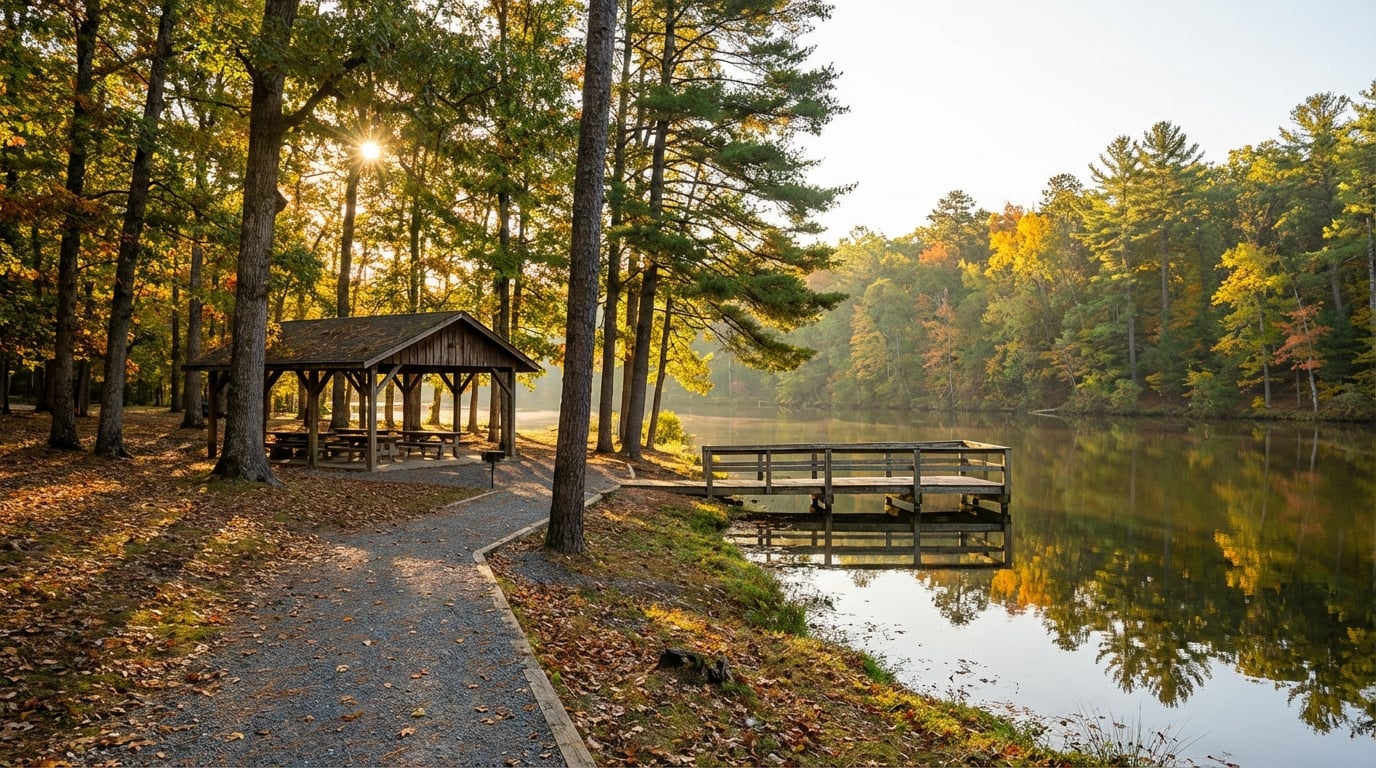
At Lake Ottawa Campground, one of the forest’s focal points for developed recreation, the historic pavilion will remain closed for the entire 2026 season while extensive interior and exterior rehabilitation work takes place. The broader campground, which features paved access roads and pressurized water systems that distinguish it from more rustic forest options, will remain operational throughout the construction period.
Extended facility closures present a common challenge in the outdoor hospitality industry, requiring operators to balance renovation needs with guest relationships and business continuity. Industry practices for managing such projects typically include announcing closures six to 12 months in advance to give guests time to adjust travel plans, providing regular progress updates through email, social media and website banners, and offering early booking opportunities or loyalty discounts for reopening seasons. The Lake Ottawa situation demonstrates how phased renovation approaches allow portions of facilities to remain operational while other sections undergo work.
Separately, the Black River Recreation Area Improvement Project addresses aging infrastructure throughout the popular Black River corridor. The initiative is designed to improve visitor safety, increase accessibility and repair damaged facilities while ensuring the recreation area can sustain increased visitor use and protect surrounding natural resources.
The accessibility focus at Black River reflects growing industry expectations around inclusive design and sustainable infrastructure. ADA-compliant pathways, parking and restrooms have become baseline expectations rather than optional upgrades at many campgrounds and RV parks. Accessible fishing piers and lake access points with proper gradients expand potential guest bases, while clear wayfinding signage with high-contrast lettering assists guests with visual impairments. Paved access roads reduce long-term maintenance costs while improving accessibility, and pressurized water systems with modern fixtures reduce waste.
The Silver Branch project has drawn concerns from environmental groups, off-roaders and other stakeholders. The area includes habitat for the endangered northern long-eared bat, and the Environmental Law & Policy Center along with a coalition of organizations sent a letter and 73-page document to the Forest Service expressing concerns about invasive species spread, water runoff and habitat impacts for gray wolves and northern long-eared bats. Kelly Thayer, senior policy advocate at the Environmental Law & Policy Center, questioned the agency’s environmental determination. “It involves 25,000 acres of national forest clear-cutting and yet the determination has been that there would be no significant impacts from such activities. That’s just not plausible,” Thayer said. The coalition also raised concerns about the removal of trees more than 100 years old and wants to see the project boundary changed to better preserve wilderness areas, along with a full environmental impact statement.
Forest Service officials maintain they are following best practices to reduce water runoff and limit invasive species spread, with protective buffers around known northern long-eared bat roosts. According to the agency’s detailed breakdown, the project involves approximately 1,500 acres of clear-cutting and around 24,000 acres of modified clear-cutting that leaves certain trees — figures that align with Thayer’s combined 25,000-acre reference — plus approximately 57,000 acres of more targeted logging, totaling about 130 square miles of tree removal. Logging would be offered to private contractors through competitive bidding.
David Carter, a forestry professor at Michigan State University who reviewed the proposal, said it appeared to be a standard Forest Service project involving timber harvests, road maintenance and habitat restoration work that did not raise any red flags. “It’s just so stinking hard to do the work, period, but let alone have the additional hurdle of people thinking you’re trying to do harm to the landscape when usually it’s the exact opposite,” Carter said. Unlike national parks, national forests serve multiple purposes including recreation, wildlife habitat and timber production.
These federal infrastructure investments signal continued commitment to developed recreation amenities that draw visitors to Michigan’s Upper Peninsula. The projects highlight evolving standards in the outdoor recreation sector, particularly regarding accessibility compliance, sustainable systems, and the balance between facility modernization and environmental stewardship.
