

Communities across the United States are increasingly embracing outdoor recreation as a cornerstone of economic development strategy, moving beyond the traditional view of trails, waterways and public lands as mere tourism amenities. Michigan has emerged at the forefront of this movement, with multiple communities launching significant initiatives in early 2026 that demonstrate how investments in outdoor access can drive small business growth, attract workforce talent and reshape community identity. This shift reflects a broader national trend where outdoor businesses report steady demand as states and localities expand their commitments to recreation infrastructure.
Michigan formalized its approach to outdoor recreation through the establishment of the Michigan Office of Outdoor Recreation Industry, which coordinates policy, supports businesses and promotes access to the state’s extensive natural assets. Brad Garmon serves as director of this office, working to connect outdoor recreation with broader economic objectives. “Outdoor recreation is a critical part of Michigan’s economy and our quality of life,” Garmon said. “It supports jobs, attracts visitors, and helps make Michigan a place people want to stay.”
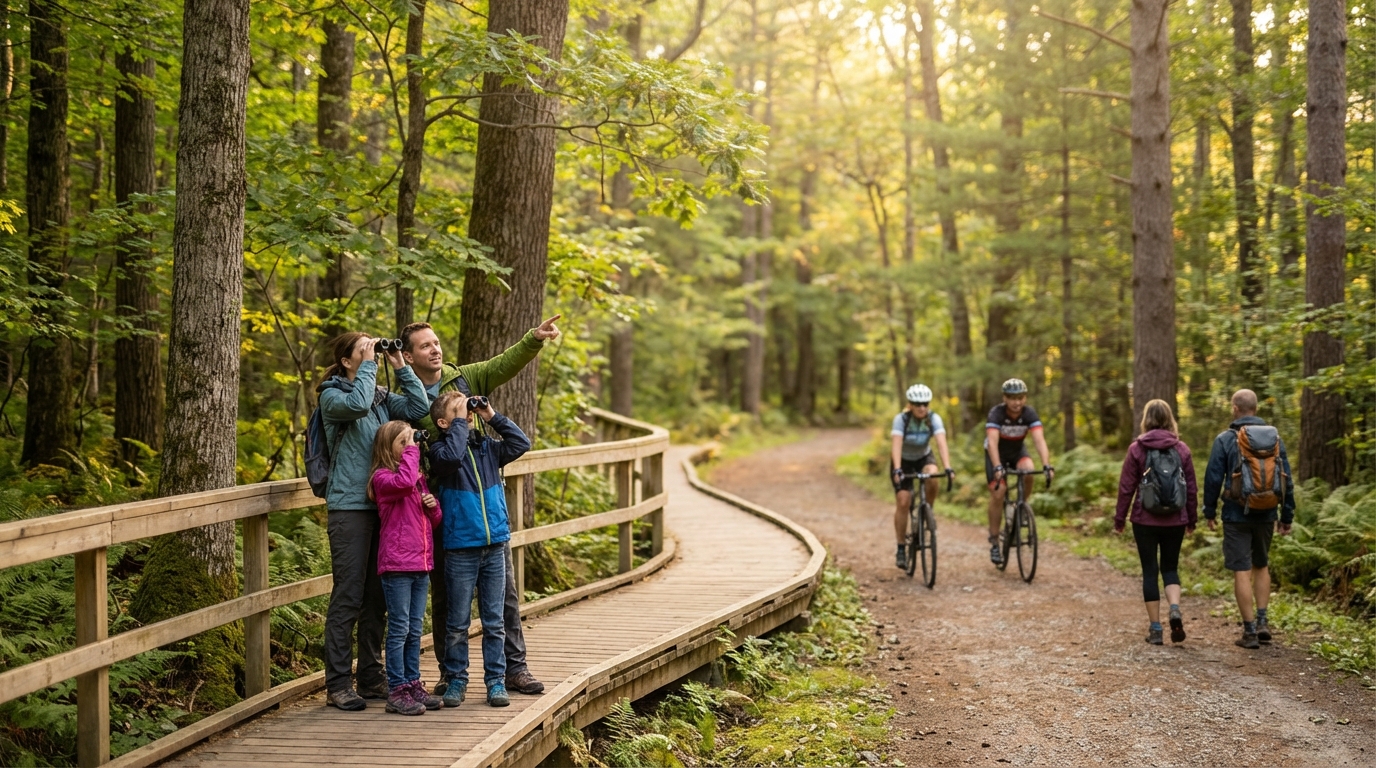
Oakland County became the first Bird City Michigan community of 2026, a designation that underscores a growing emphasis on integrating natural restoration with urban innovation. Local officials have stressed that birding and nature tourism actively support small businesses and outdoor recreation throughout the region, noting that healthy natural spaces prove crucial for both healthy people and a robust local economy. Community involvement through activities such as planting native trees, visiting parks and participating in birding events is viewed as an investment in both individual well-being and community vitality.
Community-level designations create ripple effects that extend beyond public lands, opening doors for nearby private businesses to capitalize on increased visitor interest and regional marketing momentum. For outdoor hospitality operators in nature tourism markets, designations like Bird City create strategic marketing opportunities. Campground and RV park owners operating near designated nature tourism areas can attract this growing visitor segment by creating bird-friendly habitats on their properties through native plantings, bird feeders and natural buffer zones between campsites, while developing partnerships with local birding clubs and nature organizations generates referral traffic.
In Michigan’s Thumb region, the city of Bad Axe witnessed significant public support in January 2026 for including a $1.5 million skate park renovation in its draft five-year parks and recreation plan. During a city council meeting, residents advocated strongly for the project, highlighting its importance as a community hub for exercise and emphasizing its potential to attract visitors and benefit local businesses. The proposed investment accounts for more than half of the total funding in the draft plan and aims to enhance park safety, accessibility and year-round usability.
Municipal planning processes like those in Bad Axe reveal how communities prioritize recreation investments and the factors that drive public support. Private outdoor hospitality operators can apply similar strategic thinking when planning their own amenity investments, recognizing that well-designed recreation facilities serve as community hubs generating economic activity beyond basic accommodation revenue. Monitoring local parks and recreation master plans helps property owners identify upcoming public investments that could drive increased visitation, allowing strategic timing of improvements.
Focusing investments on safety, accessibility and year-round usability aligns with guest expectations and reduces liability concerns. Multi-use recreation spaces serving diverse age groups maximize return on investment while broadening market appeal. Pump tracks, disc golf courses, pickleball courts and adventure playgrounds represent relatively affordable investments that significantly enhance property appeal in competitive markets.
Michigan’s initiatives reflect a broader state-level movement that has gained momentum over the past decade. More than 20 states have launched formal outdoor recreation offices or initiatives, many modeled on early leaders such as Utah and Colorado. These offices focus on coordinating policy, expanding access, supporting entrepreneurs and measuring economic impact. Arkansas has invested heavily in trail systems, river access and outdoor placemaking, particularly in Northwest Arkansas, with its long-standing commitment to trails closely tied to economic strategy. “Outdoor recreation has helped transform communities and attract talent,” said Mike Preston, former Arkansas Secretary of Commerce. “It’s not just about tourism. It’s about building places where people want to live and work.”
West Virginia created the Brad and Alys Smith Outdoor Economic Development Collaborative at West Virginia University to support outdoor businesses, guide policy and connect recreation to workforce development. “Outdoor recreation is a powerful economic engine for West Virginia,” said Brad Reed, former executive director of the collaborative. “It supports small businesses, creates jobs, and helps communities tell a new story about who they are and where they’re going.”
The ripple effects of public investment extend directly to private business opportunity. Towns investing in riverwalks, trail networks, climbing parks and paddling access report these assets often spark private investment in outfitters, lodging, restaurants and retail. Public investment lowers barriers to entry for businesses while coordinated marketing helps small operators reach new audiences. “When communities invest in access and infrastructure, businesses follow,” said Nicky Black, an outdoor outfitter. “It creates a virtuous cycle that benefits residents and visitors alike.”
Economic developers increasingly note that outdoor recreation intersects with workforce attraction, particularly as remote and hybrid work arrangements allow professionals to choose where they live. Access to nature, recreation and authentic experiences has become a differentiator in talent recruitment. “People are making lifestyle-driven location decisions,” said Rod Crider, president of the Rowan Economic Development Council in Salisbury, North Carolina. “Outdoor amenities are part of that equation.”
Continued collaboration between public agencies, nonprofits and private businesses is seen as essential as more states and communities formalize outdoor recreation strategies. “Outdoor recreation is no longer a side conversation in economic development,” Crider said. “It has become part of how communities compete for people, investment, and quality of life.”
The convergence of public investment, nature tourism designations and community advocacy signals continued growth in the outdoor recreation economy. For campground, RV park and glamping resort operators, this trend represents significant opportunity. Those who monitor and engage with local planning processes position themselves to benefit from community investments that drive visitation and enhance regional appeal. Understanding and participating in community recreation development allows private tourism businesses to align with rather than compete against public initiatives, creating a foundation for sustained growth as outdoor recreation assumes an ever more prominent role in economic development strategy nationwide.