

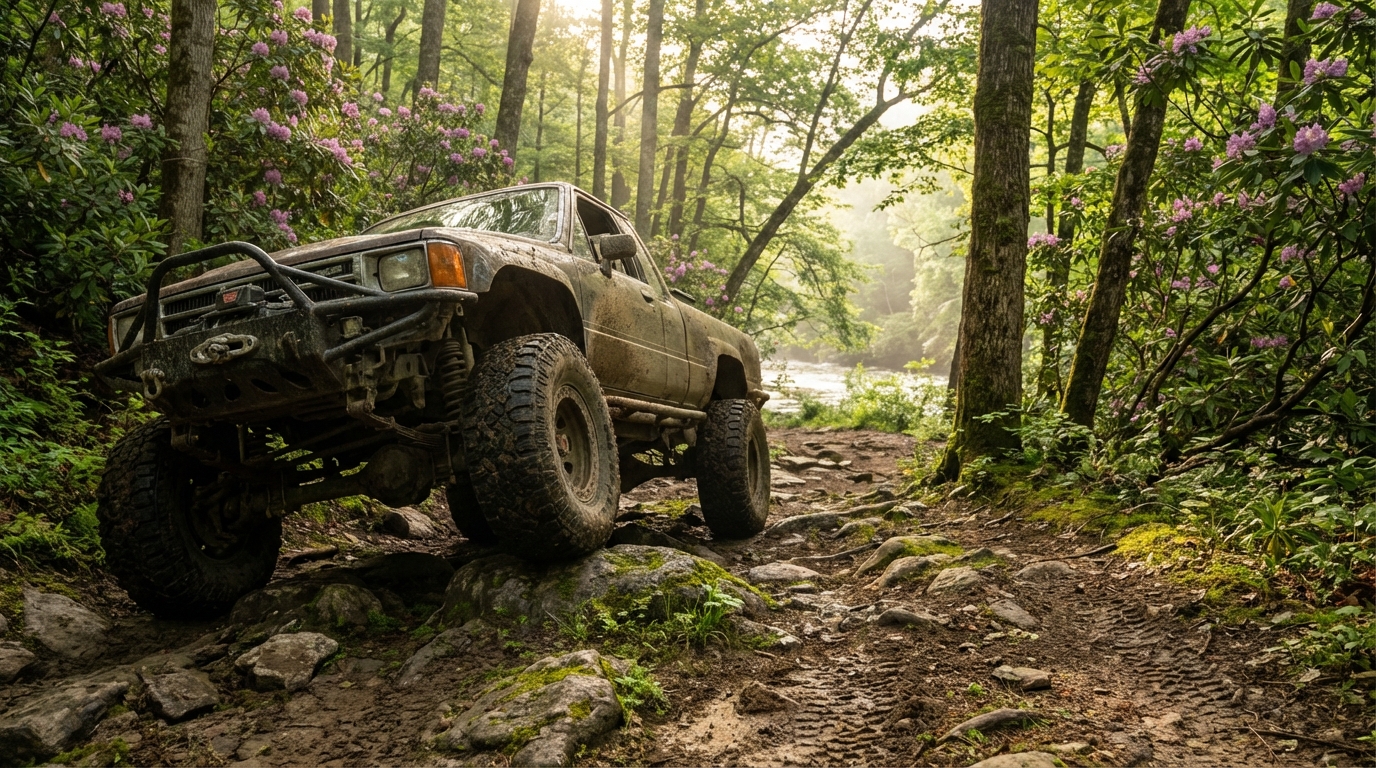

Trail 2103 at Wolf Den Run State Park has earned designation as Maryland’s first Jeep Badge of Honor trail, which positions the western Maryland destination as a potential draw for off-road enthusiasts nationwide.
The recognition, which was reported by the Garrett Republican, brings the total number of Badge of Honor trails across the country to 61 and opens new opportunities for nearby campgrounds, RV parks, and outdoor hospitality businesses seeking to capture a dedicated segment of adventure travelers.
The Jeep brand simultaneously designated trails in Minnesota and Washington alongside the Maryland addition, reflecting continued expansion of a program that rewards drivers with physical badges to display on their vehicles upon completing designated routes.
Trail 2103 emerged as one of the most highly requested additions based on owner feedback submitted through the program, demonstrating substantial existing demand from the off-road community. For outdoor hospitality professionals operating in the region near the West Virginia border, this designation signals an incoming wave of travelers who specifically seek out these trails and typically require overnight accommodations.
Jeep Badge of Honor trails attract a dedicated demographic of off-road enthusiasts who plan trips around completing designated routes. These travelers frequently organize multi-day excursions and often travel in groups, which can translate to multiple site bookings per visit for properties positioned as convenient basecamps.
Campground and RV park operators within reasonable distance of Wolf Den Run State Park now have an opportunity to market directly to this national audience of Jeep owners actively seeking their next trail conquest.
The trail itself winds through the Potomac River Area of the park, following the north branch of the Potomac River through rocky forest terrain.
Maryland Off-Highway Vehicle Alliance Board Member Ken Kyler nominated the route through the Jeep Badge of Honor phone application, highlighting its scenic qualities rather than technical difficulty. While Wolf Den Run State Park offers more challenging trails for experienced off-roaders, Trail 2103 was specifically selected for its natural beauty, including views of the Potomac River framed by rhododendrons and dogwoods that bloom during springtime.
Park Manager Donald Oates noted that these scenic qualities extend throughout the broader park landscape, which features unique rock outcroppings and rugged mountainous terrain encompassing meadows, wetlands, and various streams.
This diversity of ecosystems suggests visitors will seek immersive, multi-day experiences rather than quick day trips, creating extended booking opportunities for outdoor hospitality properties. The varied landscape also appeals to traveling companions who may prefer hiking, photography, or wildlife observation while others tackle the trail, making nearby accommodations attractive to mixed-interest groups.
Outdoor hospitality operators looking to capture this market should consider tailored amenities that address the specific needs of off-road enthusiasts.
Vehicle wash stations or designated rinse areas appeal strongly to this demographic, as drivers typically need to clean their vehicles after trail runs. Secure parking for trailers and support vehicles addresses another common requirement among Jeep owners who haul equipment to trail destinations.
Air compressor stations for tire pressure adjustments represent a low-cost addition that off-roaders frequently seek, while designated areas for minor vehicle maintenance add practical value for this mechanically inclined group.
Environmental stewardship represents a critical consideration for outdoor hospitality operators serving this market, particularly given the park’s diverse ecosystems of meadows, wetlands, and streams. Properties should ensure designated wash areas include proper drainage and filtration systems to prevent runoff contamination, protecting the same natural resources that attract visitors to the region.
Promoting Leave No Trace principles through signage and guest education reinforces responsible recreation practices, while partnering with local conservation groups demonstrates commitment to preserving the landscape. Eco-friendly infrastructure investments, such as permeable parking surfaces and native plant landscaping, align business operations with the environmental values increasingly important to outdoor recreation communities.
Infrastructure considerations extend beyond basic amenities for properties serious about serving this market segment. Reinforced or gravel-surfaced roads and parking areas better accommodate heavier off-road vehicles and trailers. Wider pull-through sites with adequate turning radius make properties more accessible to guests towing off-road rigs.
Well-lit and secure storage areas for recovery gear, spare parts, and accessories provide peace of mind for travelers carrying valuable equipment, while electrical hookups capable of supporting battery charging systems meet the practical demands of modern off-road vehicles.
Marketing strategies should emphasize proximity to the newly designated trail across all channels. Registering properties on the Jeep Badge of Honor app or related off-road community platforms increases discoverability among trail users actively planning trips.
Partnerships with local off-road clubs and organizations can generate referrals and group bookings, while highlighting the Badge of Honor designation in marketing materials helps capture search traffic from enthusiasts researching the area. Creating trail-specific packages that bundle accommodations with local area guides or maps adds perceived value and differentiates properties from competitors.
The nomination process through the Jeep Badge of Honor app demonstrates that this market segment is digitally engaged and actively seeking trail experiences through mobile platforms. Properties can leverage this by implementing online booking systems that allow guests to filter by trail proximity or off-road amenities.
Developing social media content showcasing the trail and surrounding attractions builds awareness among the off-road community, while encouraging user-generated content from guests who complete the trail creates authentic marketing material.
Hosting trail meetups or off-road community events builds loyalty and generates repeat visits, and creating common areas where guests can share trail stories fosters the community atmosphere this demographic values.
Maryland Office of Outdoor Recreation Director Sandi Olek noted that Maryland has experienced growing interest in off-highway recreation and referenced the positive economic impact such activities bring to nearby communities. This official acknowledgment of economic benefits validates the business opportunity for outdoor hospitality operators and suggests continued state support for off-road recreation development. Properties that position themselves early to serve this growing market gain competitive advantage as the segment expands.
Staff training represents another consideration for properties targeting off-road enthusiasts. Training front desk personnel on basic trail terminology and local route options improves guest interactions and positions the property as a knowledgeable local resource.
Maintaining relationships with local mechanics and towing services allows staff to provide valuable referrals when guests encounter vehicle issues. Keeping emergency contact information readily available and displaying maps with updated trail condition information demonstrates preparedness and professionalism that experienced off-roaders appreciate.
The expansion of programs like Jeep Badge of Honor reflects a broader national trend toward adventure-based outdoor recreation that shows no signs of slowing.
The program’s growth to 61 trails signals institutional support for off-road recreation and creates a built-in marketing channel for destinations that earn designation. Campground and RV park owners positioned near Trail 2103 can now market themselves as basecamp destinations for a national audience of Jeep enthusiasts specifically seeking to earn their Badge of Honor.
Properties that adapt their infrastructure, services, and marketing to accommodate this adventure-seeking demographic stand to benefit from both the immediate announcement and the long-term growth of off-highway recreation in Maryland, capturing guests who might otherwise book accommodations farther from the trail or skip the trip entirely.