

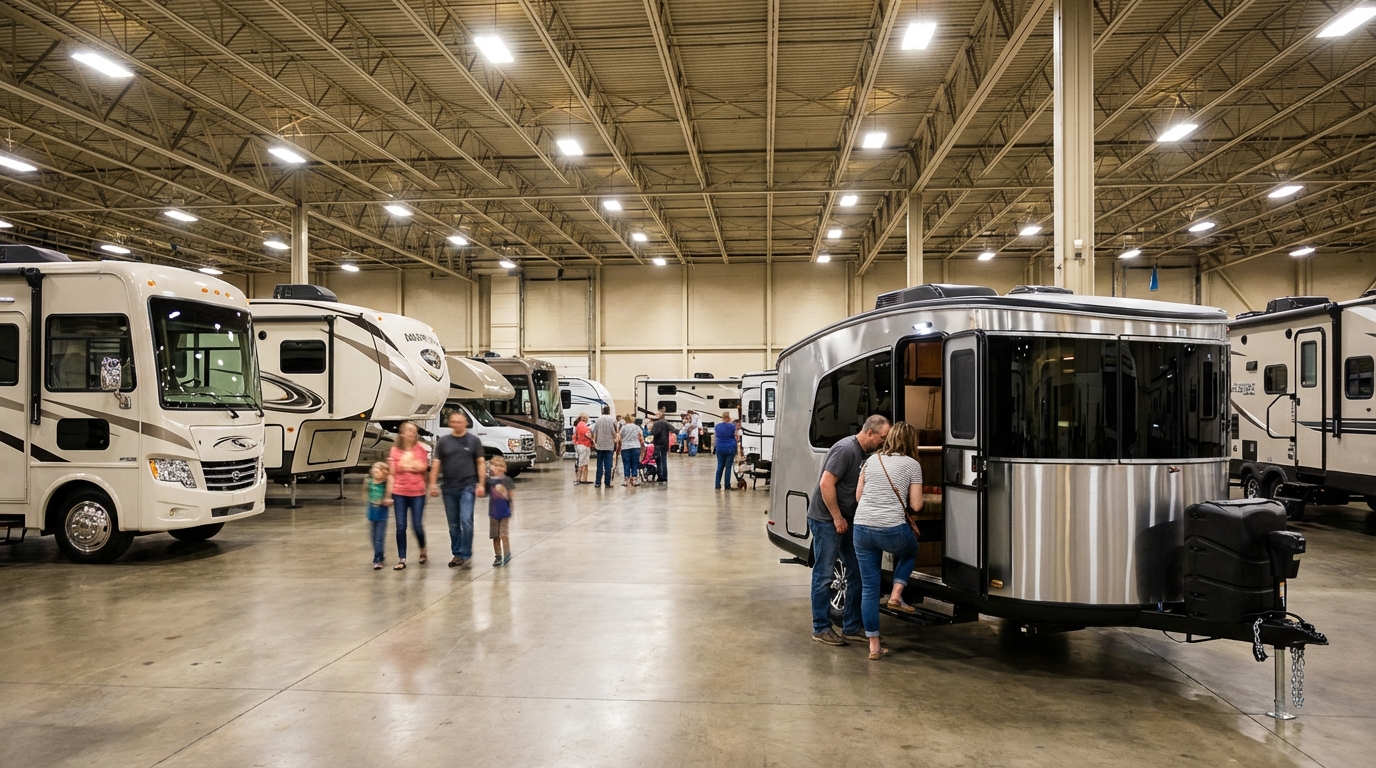

Indiana’s largest recreational vehicle show drew enthusiastic crowds to the Indiana State Fairgrounds West Pavilion in Indianapolis, where more than 120,000 square feet of indoor exhibition space showcased hundreds of new motorhomes, travel trailers, fifth wheels, and toy haulers from top manufacturers.
The Indy RV Expo 2026, which spanned two weekends in January with dates including Jan. 3–4 and Jan. 7–11, featured six dealers and numerous vendors participating in what served as both a major consumer event and a significant regional gathering for outdoor hospitality professionals tracking industry trends.
Attendees exploring the climate-controlled venue at 1202 E. 38th St. walked through dozens of units representing every major RV category. Class A motorhomes appeal to long-distance travelers seeking spacious, luxurious accommodations, while Class B campervans offer compact efficiency for solo adventurers or couples. Class C motorhomes strike a balance between comfort and affordability, and travel trailers provide towable versatility ideal for families. Fifth wheels deliver larger, often multi-level living spaces with extended amenities, and toy haulers cater to adventure enthusiasts transporting ATVs, motorcycles, or other recreational gear.
Among the models generating significant attention was the 2026 Hideout from Keystone, positioned as a weekend warrior option for families. This travel trailer sleeps up to nine people and features a master bedroom equipped with an Olympic queen bed, a large slide-out with a flush floor design, a jackknife sofa for additional sleeping or lounging space, and a well-equipped kitchen area suited for extended camping trips.
For campground and RV park operators, the design trends visible throughout the expo carry direct implications for infrastructure planning and capital improvements. Larger slide-outs, which have become standard on many travel trailers and fifth wheels like the Hideout, require wider site spacing to ensure guests can fully extend their units without encroaching on neighboring campers. Industry best practices suggest maintaining a minimum of 10 to 15 feet between occupied site boundaries, though many parks are reconsidering layouts to provide even more generous spacing as units continue to grow in size.
The trend toward higher sleeping capacities in family-oriented models means campground operators should anticipate increased per-site occupancy affecting water pressure, sewer capacity, and electrical load management. Installing 50-amp electrical service at a greater percentage of sites has become widely accepted practice, as larger units with multiple air conditioning units and residential-style appliances demand more power than older 30-amp connections can safely provide. Newer RVs increasingly feature smart home technology, including app-controlled climate systems and entertainment centers, driving guest expectations for reliable high-speed Wi-Fi connectivity throughout properties. Many successful parks have transitioned from basic shared networks to enterprise-grade systems with dedicated bandwidth allocations per site. Pull-through sites and level concrete pads are also becoming expected amenities rather than luxury features.
Beyond the vehicles themselves, the expo marketplace offered a comprehensive selection of parts, accessories, and lifestyle products relevant to both RV owners and outdoor hospitality operators. Solar power kits and energy management tools address growing interest in off-grid capability and sustainability. Outdoor furniture, grills, and awnings enhance the camping experience, while upgraded tow hitches and sway control systems improve safety for those towing larger trailers. Satellite systems and Wi-Fi boosters meet connectivity demands, and water filters, tanks, and pump systems support extended travel or boondocking adventures.
Camping and travel resources available at the expo included campground membership programs, regional travel guides highlighting Indiana state parks and surrounding destinations, RV clubs and owner communities, trip planning tools and route applications, and safety guidance for new campers entering the lifestyle. These resources connected consumers with the broader outdoor recreation ecosystem while creating opportunities for campground operators to reach engaged prospective guests.
Major RV expos serve as valuable networking hubs for outdoor hospitality professionals extending well beyond their consumer-facing purpose. Campground and RV park owners attending gain direct access to dealers, manufacturers, and industry vendors, creating opportunities to establish relationships that benefit their operations throughout the year. Building partnerships with local and regional RV dealers is a widely recognized marketing strategy, with many successful campgrounds developing referral relationships where dealers recommend their properties to new RV buyers while parks display dealer information at registration offices. New RV owners represent a prime demographic actively seeking destinations to enjoy their purchase.
Observing which models attract the most attention helps operators understand what types of rigs to expect at their properties in coming seasons, informing decisions about site configurations, amenity investments, and marketing messaging. For glamping resort operators, RV expos increasingly feature park model RVs and luxury towable units that blur the line between traditional camping and upscale accommodations. Networking with fellow campground owners facilitates knowledge sharing about operational challenges and best practices. With six dealers and numerous vendors present, the Indy RV Expo represents an accessible regional opportunity for Indiana-area campground professionals to cultivate valuable business relationships, particularly during weekday hours when exhibitors have more time for substantive conversations.
The show experience emphasized accessibility and education, with factory representatives on site to answer questions about build quality, design decisions, and upcoming models. Exclusive show-only deals, deep discounts, incentives, and special financing offers from dealers provided purchasing opportunities for serious buyers. Interactive displays and hands-on demonstrations allowed visitors to engage directly with products and technologies. The atmosphere was described as relaxed, welcoming, and family-friendly, with spacious aisles and staff who assisted newcomers without pressure.
Admission pricing provided reasonable access, with adults ages 17 to 59 paying $12 and seniors 60 and older paying $11. Children 16 and under entered free when accompanied by a paid adult, and online ticket purchases offered additional discounts. Buy one get one free admission was available Wednesday through Friday, Jan. 7–9. Parking cost $10 per vehicle at the Indiana State Fairgrounds. The venue offered easy access and ample parking, with proximity to local dining, entertainment, and accommodations. The facility was wheelchair accessible, though mobility devices were not available for rent. Pets were not permitted except for service animals. Visitors were encouraged to wear comfortable shoes given the large indoor space, bring a notebook or smartphone to record model numbers and features, come with a budget in mind, attend early to beat crowds, and take time comparing options.
Other show hours included Saturday, Jan. 10, from 10 a.m. to 8 p.m., and Sunday, Jan. 11, from 11 a.m. to 5 p.m. As Indiana’s largest RV show, the Indy RV Expo offered campground and RV park operators across the region a preview of the vehicles and trends their properties would accommodate in coming seasons, making the final day an opportunity worth considering for industry professionals seeking to stay ahead of evolving guest expectations.