

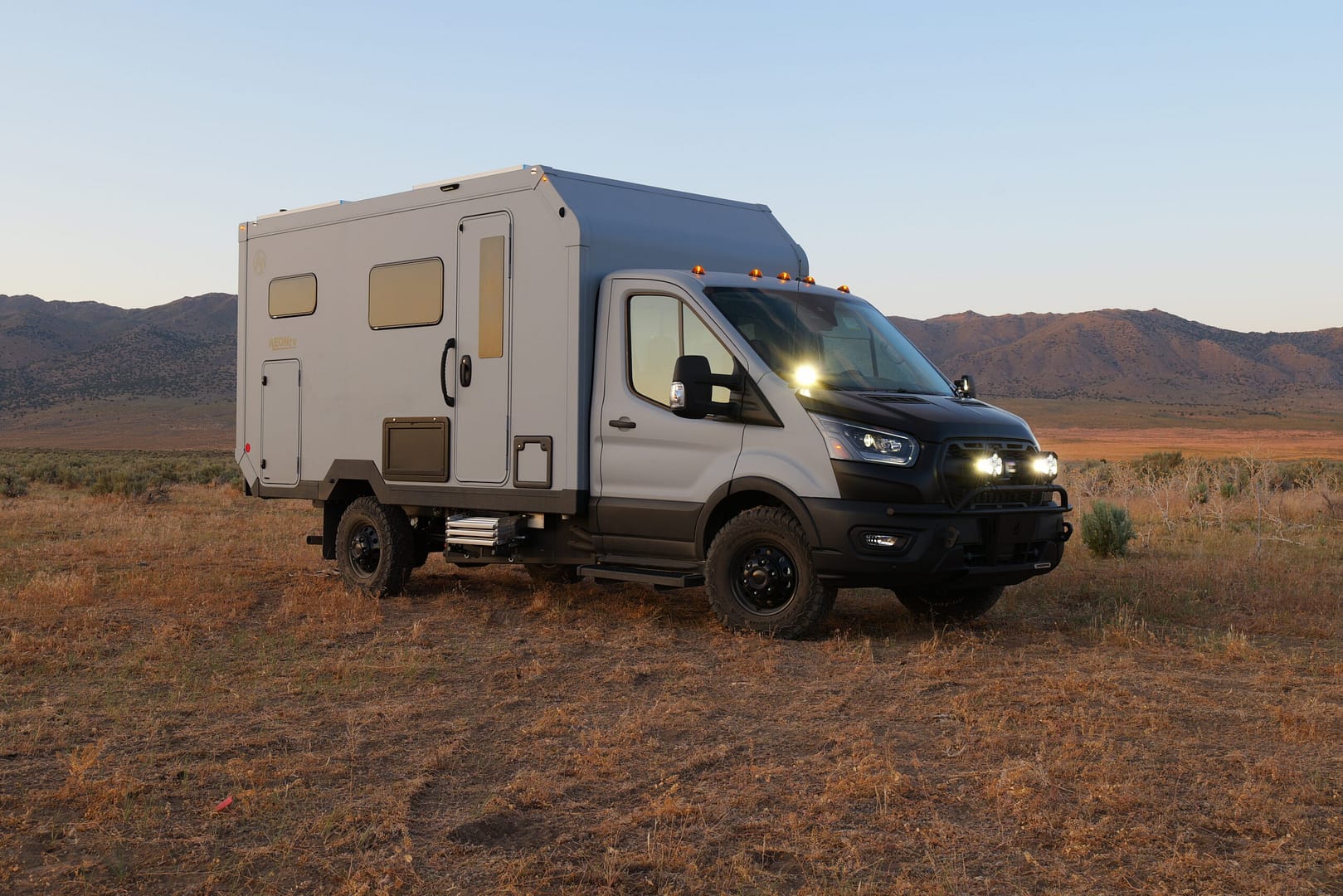

AEONrv has introduced its 2026 recreational vehicle lineup, featuring an updated version of its flagship off-road motorhome alongside the debut of the new AEONrv EXT, an extended-wheelbase model designed to increase passenger capacity, cargo space, and off-grid capability.
The announcement was made on June 24 from the company’s headquarters in Reno, Nevada, as the manufacturer marks five years in business and reports more than 140 vehicles currently on the road.
According to the company, the 2026 lineup represents a redesign of its construction approach and onboard energy systems. Both models feature a fully insulated fiberglass composite cabin with an average insulation rating of R-15 and eliminate wood from the interior cabinetry and side panels.
Instead, the cabinetry uses a structural foam core made from recycled plastic bottles, which AEONrv said reduces weight by up to 50% while improving durability and resistance to moisture.
The company has also maintained its all-electric approach by eliminating propane systems and generators. The 2026 models utilize Victron NG lithium battery technology, Victron Orion XS charging systems, and rooftop solar arrays.
The standard AEONrv includes up to 800 watts of rooftop solar and a 5.12 kWh lithium battery system, expandable to 15.36 kWh, while the new AEONrv EXT comes standard with 1,200 watts of rooftop solar and a 10.24 kWh battery system, also expandable to 15.36 kWh.
AEONrv said the updated energy platform is intended to provide longer off-grid operation while reducing vehicle weight, allowing owners to carry additional equipment such as bicycles, outdoor recreation gear, and water supplies without exceeding payload limits.
“Over the last five years, we’ve learned that adventure means something different to every customer,” said Jim Ritchie, Founder and CEO of AEONrv.
“Some want a highly capable vehicle for two, while others want room for family, friends, bikes, skis, and longer journeys off the beaten path. With the introduction of the AEONrv EXT and our most advanced lineup yet, we’re giving customers more flexibility to choose how they travel, where they go, and who comes along for the adventure, without sacrificing the all-season comfort, off-grid capability, and technology that define AEONrv.”
The newly introduced AEONrv EXT extends the platform by 18 inches and is built on the 2026 Ford Transit AWD 178-inch wheelbase chassis with an 11,000-pound gross vehicle weight rating. Learn more and reserve at aeonrv.com/ext.
Compared with the standard model, the EXT increases towing capacity from 3,500 pounds to 5,000 pounds and expands fresh water capacity from 59 gallons to 70 gallons while increasing gray water storage from 25 gallons to 35 gallons. The larger platform also accommodates sleeping for up to four people, a larger convertible dinette, and an expanded rear gear storage area capable of holding up to four bicycles.
The standard AEONrv measures 22 feet in length and is built on the Ford Transit AWD 156-inch cutaway chassis with a 9,950-pound GVWR. It sleeps two to three occupants and shares several platform features with the EXT, including Ford Intelligent AWD, a Van Compass two-inch suspension lift, all-terrain tires, a steel skid plate, and rear recovery points.
The standard 2026 AEONrv has a starting price of $229,500, while the AEONrv EXT starts at $239,500. Both models are available to order immediately, with the company noting that production capacity for the EXT will be limited and early reservations will receive priority build placement.
Consumers, dealers, media representatives, and industry professionals will have an opportunity to view the AEONrv EXT during Overland Expo Pacific Northwest, scheduled for June 26-28, 2026, at the Deschutes County Expo Center in Redmond, Oregon.
For manufacturers, dealers, campground operators, and outdoor hospitality businesses, the introduction of higher-capacity, all-electric adventure vehicles reflects continued investment in the premium off-grid RV segment.
As more consumers seek longer stays in remote destinations and public lands, RVs with increased energy independence, larger water capacities, and expanded storage may influence campground infrastructure planning, including demand for flexible campsite layouts, charging amenities, and facilities designed to accommodate self-sufficient travelers who spend extended periods away from traditional hookups.
Featured image by AEONrv
