


Maine’s outdoor recreation economy surged to a record $3.9 billion in value-added impact in 2024, accounting for 4 percent of the state’s total gross domestic product and supporting more than 32,000 jobs, according to data released March 5 by the U.S. Department of Commerce’s Bureau of Economic Analysis. The milestone represents the largest figure since tracking began, with the sector nearly doubling over that 12-year period and solidifying outdoor recreation as a cornerstone of Maine’s economic identity.
Jeff McCabe, director of the Maine Office of Outdoor Recreation, said the findings will shape the state’s approach to growing the industry. “These important measures, combined with the work to implement the state’s outdoor recreation roadmap, will guide strategic planning and investments for a strong and sustainable future,” McCabe said. The data helps inform stakeholders about economic activity spanning outdoor gear manufacturing, retail, skiing, camping, cycling and boating. A coalition that includes Maine Outdoor Brands, Maine’s Office of Outdoor Recreation, the University of Maine, Maine’s Bureau of Parks and Lands, Maine Technology Institute and the Maine Marine Trades Association unveiled a 10-year strategic roadmap in 2025 designed to expand the sector, support innovative businesses and create career pathways.
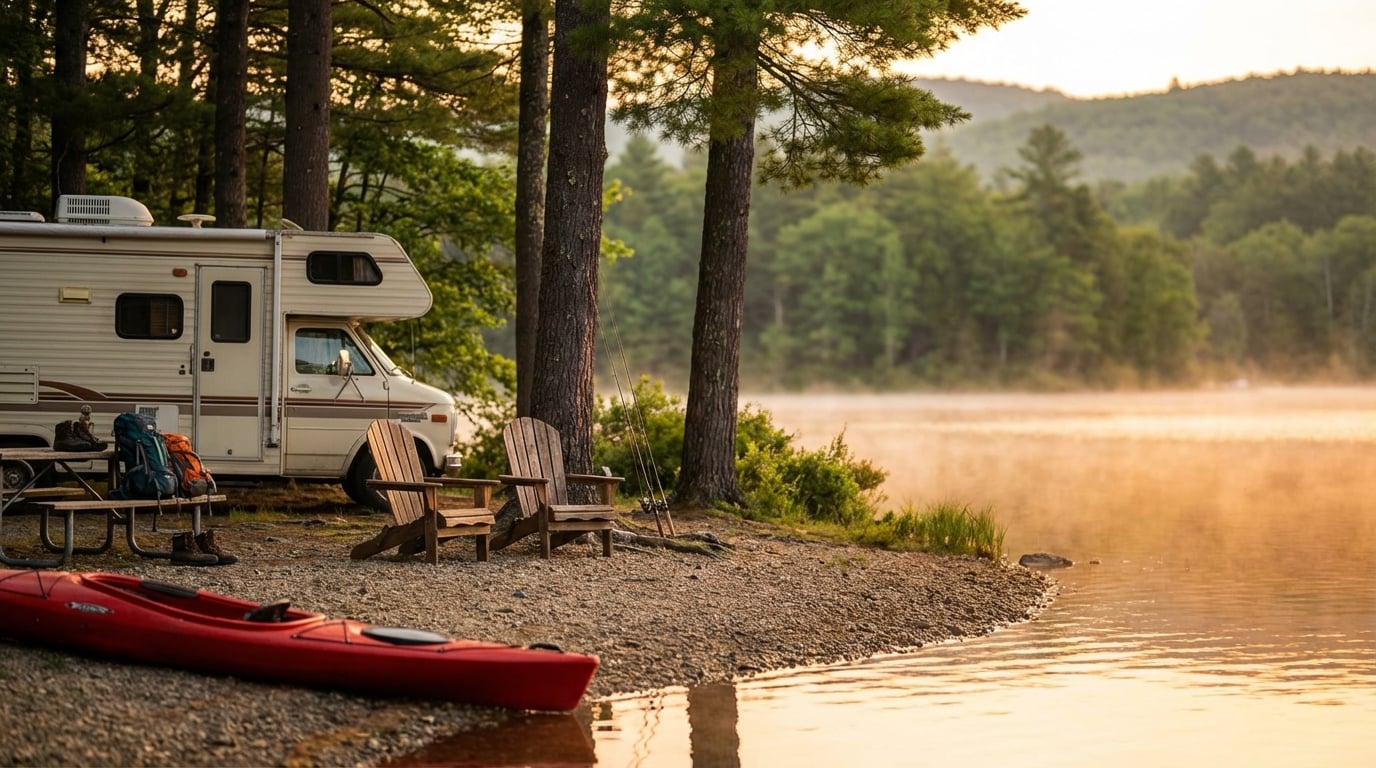
Boating and fishing led all activity categories, contributing $390 million to state GDP in 2024. Other significant contributors included RVing, snow activities, and hunting and shooting. For campground and RV park operators, these findings present clear opportunities to become facilitators of experiences rather than simply providers of accommodations. Establishing formal partnerships with local outfitters, fishing guides, boat rental companies and equipment retailers creates value for guests while generating referral income. Properties near water access points can generate additional revenue through kayak, canoe or paddleboard rentals, while selling fishing supplies, firewood, ice and outdoor essentials through a camp store captures spending that would otherwise leave the property.
Some operators find success with seasonal gear rental programs for snowshoeing or cross-country skiing during winter months. For outdoor hospitality businesses looking to differentiate themselves, hosting fishing clinics, outdoor skills workshops or guided nature walks transforms visits into memorable experiences and drives repeat visitation. By aligning their offerings with demonstrated consumer demand as reflected in the federal data, property owners can position themselves as gateways to Maine’s most popular recreation pursuits.
The record-breaking 2024 figure caps a steady climb over the past several years. In 2021, Maine’s outdoor recreation sector generated $2.8 billion in value-added impact, a 19.3 percent jump over the previous year, while supporting 26,090 jobs. The following year saw a 16.5 percent surge to $3.3 billion, with employment rising to 29,080. Growth continued at 9 percent in 2023, reaching $3.4 billion and supporting 29,863 jobs. While the overall trajectory remains upward, growth rates have moderated in recent years as the industry navigates broader economic pressures.
Jenny Kordick, executive director of Maine Outdoor Brands, said the data validates what industry participants observe daily. “The latest data reinforces what many of us see every day: Outdoor recreation is central to Maine’s identity and a powerful economic driver,” Kordick said. She acknowledged the challenges facing the sector, including inflation, interest rates, business uncertainty and shifting consumer behavior during post-pandemic recovery. Demand remains strong and participation remains high, but affordability may present barriers for some consumers. For recreation-focused businesses, profit margins are tight. Manufacturing-heavy segments such as RVing and boating were slightly lower nationally, while hunting, snowmobiling and tent camping showed some growth.
“Outdoor recreation supports our economy, quality of life and communities across the state. The opportunity ahead is enormous, and continued investment in access, outdoor infrastructure and innovative businesses will help ensure Maine remains a premier place to live, work and build a business connected to the outdoors,” Kordick said.
As Maine pursues its strategic roadmap for outdoor recreation growth, campground and RV park operators face decisions about where to direct capital improvements. Many property owners have found that expanding electrical capacity to accommodate larger RVs with 50-amp service attracts full-time RVers and luxury motorhome owners. Properties offering full hookups including sewer and water connections consistently command higher nightly rates than those with partial or no hookups, while pull-through sites reduce wear on guest vehicles and increase appeal to travelers towing large trailers.
Reliable high-speed internet access has transitioned from a luxury amenity to a baseline expectation for outdoor hospitality properties. Operators investing in robust WiFi infrastructure often see extended stays from digital nomads and remote workers, improving shoulder season occupancy. Solar lighting along pathways and in common areas can reduce long-term operational costs while appealing to environmentally conscious travelers. Some property owners are installing EV charging stations to serve the growing electric vehicle market, and water conservation fixtures and rainwater collection systems help reduce utility expenses while demonstrating environmental stewardship. ADA-compliant facilities expand the potential guest base and ensure regulatory compliance, with properties exceeding minimum accessibility standards often benefiting from positive word-of-mouth within adaptive recreation communities.
Nationally, outdoor recreation generated $1.3 trillion in economic output in 2024 and accounts for 2.4 percent of GDP while supporting 5.2 million jobs, according to the Bureau of Economic Analysis figures. Since 2012, outdoor recreation has grown 43.3 percent in real terms and 84.2 percent in nominal terms nationally. Maine’s 4 percent GDP share significantly outpaces the national average, positioning the state among national leaders in the outdoor recreation economy.
Digital guest engagement platforms allow campground and RV park operators to communicate activity recommendations and facilitate advance bookings for guided experiences. Implementing loyalty programs encourages repeat visits and builds a reliable customer base. Offering discounted weekly or monthly rates during shoulder seasons improves occupancy while appealing to snowbirds, seasonal workers and extended-stay travelers. As industry leaders note that affordability remains a concern for many recreation participants, properties that provide convenient access to activities and competitively priced gear rentals may capture guests seeking value-driven outdoor experiences.
The record $3.9 billion figure validates the sector’s resilience and essential contribution to Maine communities. For outdoor hospitality operators, the data presents clear opportunity to align offerings with demonstrated consumer demand. Properties positioning themselves as gateways to Maine’s most popular recreation pursuits can strengthen their role within the state’s growing outdoor economy, capturing additional market share through thoughtful infrastructure development and guest-focused programming that transforms overnight stays into memorable outdoor experiences.
