

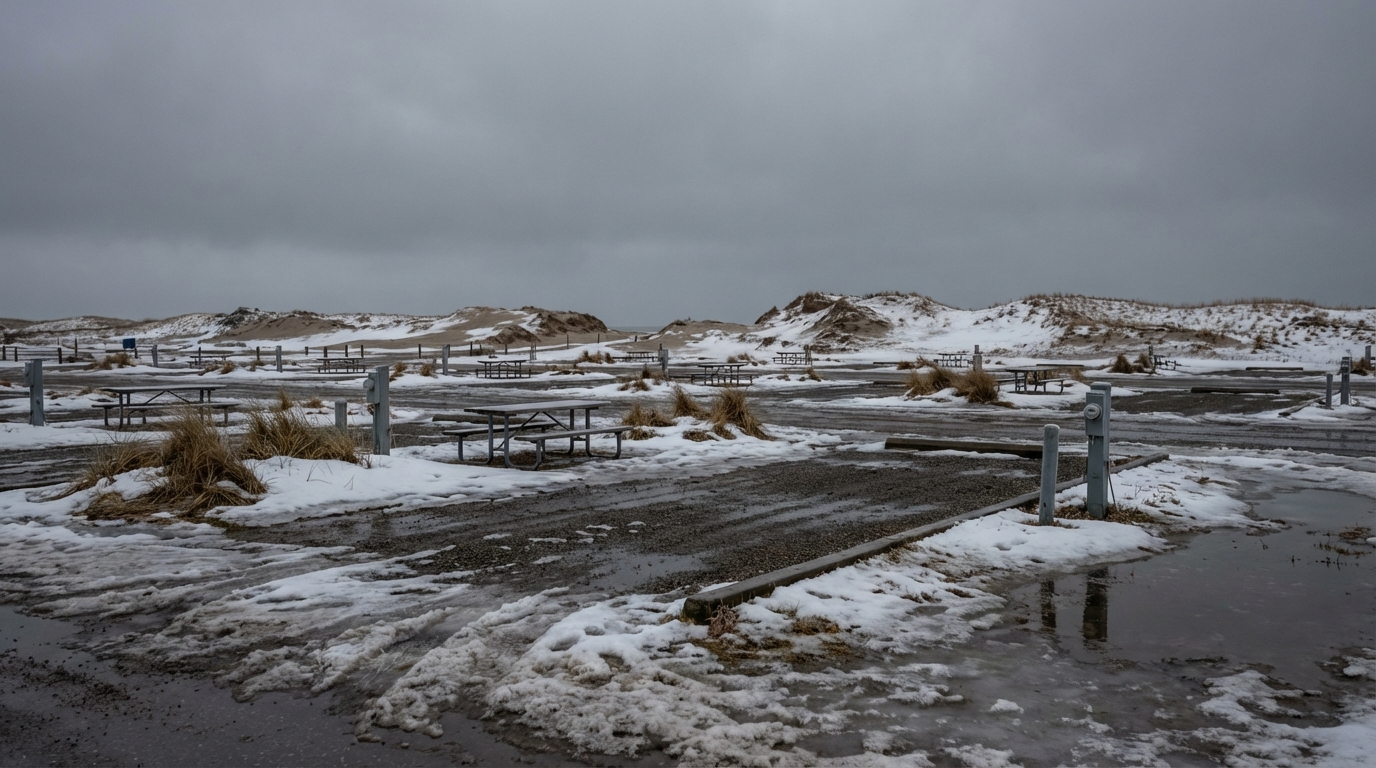

Oregon Inlet Campground at Cape Hatteras National Seashore welcomed visitors back on Wednesday, Feb. 4, 2026, ending a five-day closure that began when a severe winter storm brought snow, ice and hazardous travel conditions to North Carolina’s Outer Banks. The National Park Service coordinated the reopening as part of a broader restoration of visitor services across the barrier islands.
The campground’s return to operation coincided with a regional recovery effort spanning multiple agencies and jurisdictions. Dare County offices and facilities reopened at 8:30 a.m. on Wednesday, according to a Dare County announcement, while the Fessenden Center in Buxton resumed all activities and programs on the same date. National Park Service facilities at Cape Hatteras National Seashore, Fort Raleigh National Historic Site and Wright Brothers National Memorial also returned to normal operational hours, demonstrating the interconnected nature of emergency response across federal and local government entities.
For campground and RV park operators, the Oregon Inlet closure offers instructive lessons in emergency preparedness. The facility’s proactive shutdown, initiated before the storm arrived, reflects industry best practices for protecting guests and facilities while maintaining operational credibility.
Effective storm management requires documented emergency action plans with specific closure triggers and reopening procedures. The coordination between the National Park Service, county offices and transportation services demonstrates the type of relationship-building with local emergency management agencies that private operators should cultivate well before severe weather strikes.
Road conditions drove the extended closure timeline, with main thoroughfares across Dare County showing significant improvement while secondary roads, especially those north of Oregon Inlet, remained considerably covered with snow and ice. The North Carolina Department of Transportation planned to address those secondary roads on Wednesday, and rain was expected throughout the day with temperatures remaining above freezing, which Dare County officials noted should encourage additional melting. County officials urged residents and visitors to exercise caution when traveling due to persistent hazardous conditions.
The accessibility challenges underscore broader infrastructure considerations for operators maintaining year-round availability. Investments that enhance resilience through improved drainage systems for rapid snowmelt and reinforced road surfaces that withstand freeze-thaw cycles become critical for facilities operating during winter months. That Oregon Inlet Campground was operational during late January, rather than closed entirely for the season, reflects the growing industry trend toward extended seasonal operations that balance revenue opportunities against weather-related risks.
The storm’s severity extended far beyond campground operations, disrupting community services across the Outer Banks. Dare County Schools operated on modified schedules for Feb. 4, with Cape Hatteras Elementary and Cape Hatteras Secondary running on a two-hour delay. All schools north of the Oregon Inlet Bridge, including Dare Early College, shifted to remote learning for the day, illustrating the widespread impact that necessitated the extended campground closure.
Situations like this underscore why proactive guest communication stands as a cornerstone of professional storm management. Successful operators establish multiple notification channels including email alerts, SMS messaging, social media updates and website banners that can be activated quickly when weather threats emerge. Many campground management software platforms now include built-in communication tools allowing operators to reach all registered guests simultaneously with closure announcements and reopening updates. Clear cancellation and rebooking policies specifically addressing weather-related disruptions help maintain guest goodwill while protecting business interests during unexpected shutdowns.
The conditions that necessitated the prior shutdown were legitimate safety concerns rather than facility damage. Road accessibility directly impacts campground operations and guest safety, and the extended closure reflected a measured approach to resuming services only when travel conditions warranted.
Winter operations present unique challenges for outdoor hospitality businesses, requiring thoughtful strategies that account for weather unpredictability. Diversifying amenities to accommodate cold-weather campers, ensuring heated restroom facilities and providing electrical hookups capable of supporting space heaters all contribute to maintaining occupancy during traditionally slower periods. Digital booking platforms with dynamic availability management allow operators to quickly adjust their online presence when unexpected closures occur.
The restoration of services at Oregon Inlet Campground and other National Park Service visitor facilities marks the end of a challenging weather event that tested emergency response systems across the Outer Banks while demonstrating the value of advance planning and interagency coordination.
For campground operators in coastal or seasonally vulnerable regions, events like this underscore the importance of maintaining relationships with county officials, road maintenance crews and utility providers before emergencies occur. Those connections enable faster information sharing and coordinated response when severe weather strikes, ultimately protecting guests, preserving facilities and maintaining the trust that keeps visitors returning season after season.
