

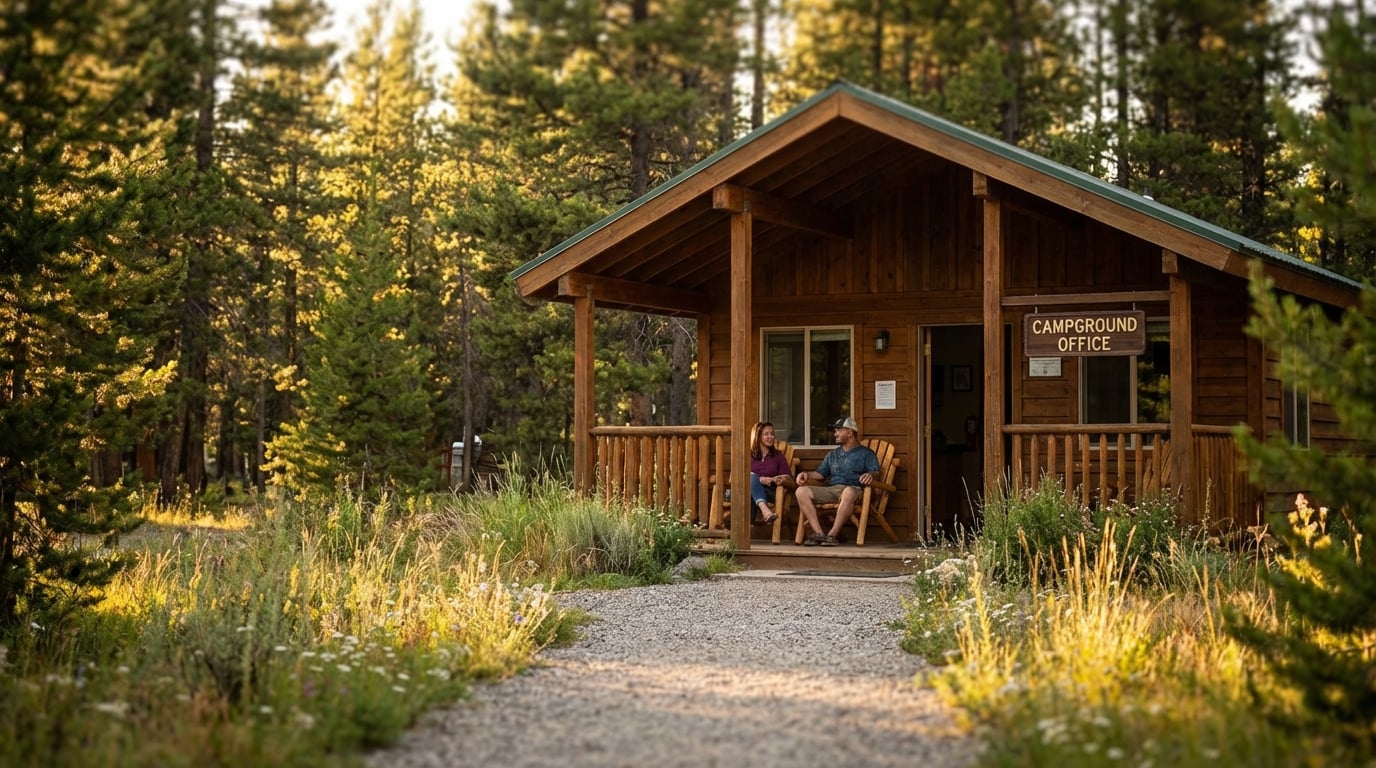

Burt County, Nebraska, will convene two public hearings next month to consider zoning regulation amendments that would formally add cabins to the official definition of a campground, a change that could reshape how outdoor hospitality operators approach accommodation diversification in the region. The Burt County Planning Commission will meet on Monday, Feb. 9, 2026, at 6 p.m. at the Burt County Courthouse in Tekamah, with the Board of Supervisors following on Wednesday, Feb. 11 at the County Boardroom. For campground owners evaluating expansion strategies and developers eyeing new projects, the outcome of these proceedings will determine whether cabin accommodations can be seamlessly incorporated into campground operations moving forward.
The proposed regulatory updates extend beyond the cabin definition change. According to the county’s official notice for the upcoming planning commission session, officials will also consider adding a Maximum Density Waiver Letter option and establishing provisions for Accessory Dwelling Units within the zoning framework. The Planning Commission hearing serves as a preliminary review before the Board of Supervisors takes up the zoning regulation amendments and the Burning Sage Acres conditional use permit application, though the two bodies’ agendas are not identical.
The inclusion of cabins within campground definitions reflects a broader industry shift toward diversified accommodation offerings that many operators have embraced in recent years. Adding cabin rentals to traditional campground operations has become an increasingly common strategy for boosting revenue per site and extending seasonal occupancy into shoulder months when tent camping demand typically declines. Cabins generally command higher nightly rates than standard RV or tent sites while attracting guests who might not otherwise consider camping as a lodging option.
For operators weighing whether cabin additions make sense for their properties, infrastructure planning requirements deserve careful consideration. Upgraded electrical service, dedicated water and sewer connections, and ADA-compliant accessible pathways represent baseline investments. Guest expectations also differ markedly from traditional campers, as cabin renters often anticipate amenities similar to hotel stays, including climate control, private bathrooms, and quality bedding. Maintenance demands shift as well, with permanent structures requiring ongoing roof inspections, pest control, and HVAC servicing that differ substantially from traditional campsite management.
From a zoning perspective, cabin classifications can vary significantly between jurisdictions. Some counties treat cabins as accessory structures while others categorize them as short-term rental units subject to entirely different regulatory frameworks. The Burt County proposal aims to resolve this ambiguity by explicitly placing cabins within the campground category, potentially streamlining the approval process for operators seeking to add such accommodations.
The hearings will also address a conditional use permit application that appears central to the broader regulatory discussion. Application 26-01CUP, submitted by Burning Sage Acres LLC and represented by Mark Templin, seeks approval to establish a campground on 13.49 acres in Summit Township. The property, identified as parcel 434903900 and located in E2NW4 28-21-10, represents the type of development that stands to benefit from clearer cabin classification rules.
Understanding the conditional use permit process is essential for outdoor hospitality professionals considering new developments or expansions. A CUP typically requires applicants to demonstrate that their proposed use will not negatively impact surrounding properties, traffic patterns, or community character. Engaging early with county planning staff before formal submission helps developers understand local concerns and requirements before investing significant resources in application preparation.
Best practices for CUP applications include preparing comprehensive site plans that clearly show proposed structures, access roads, utility connections, and setbacks from property lines. Documenting environmental considerations such as stormwater management, septic capacity, and wildlife corridor preservation strengthens applications. Gathering support from neighboring landowners through proactive communication about project scope and potential benefits can prove equally valuable. Many successful campground developers recommend budgeting additional time beyond standard permitting timelines, as conditional use applications often require multiple revisions based on public input and board feedback.
The Feb. 9 Planning Commission hearing will feature two additional conditional use permit applications alongside the Burning Sage Acres proposal. Application 26-02CUP, submitted by Karin J. Leslie, seeks approval to convert a garage to an ADU on 14 acres in Everett Township. Application 26-03CUP, filed by John C. and Joyce E. Brodersen and represented by Nick Brodersen, requests permission to spread biomass from Cargill in Arizona Township. The concurrent ADU application demonstrates Burt County’s broader effort to update regulations around non-traditional housing and lodging structures.
The timing of these regulatory discussions presents an opportunity for industry stakeholders to shape definitions that support responsible campground development while addressing legitimate community concerns. Operators in Burt County and similar rural markets should recognize that final regulatory language will either enable or restrict business expansion plans depending on how provisions are written. Attending public hearings and providing input during comment periods allows those with direct operational experience to contribute perspectives that planning officials may not otherwise consider.
Extended season potential represents a frequently cited argument for cabin integration that operators may present during such proceedings. Insulated cabins with heating systems can operate profitably in shoulder seasons when tent camping demand drops significantly, potentially transforming marginally viable properties into year-round destinations. This revenue stability benefits not only operators but also local economies that depend on visitor spending.
Those interested in participating in the upcoming hearings can contact Ann Chytka, the Burt County Planning & Zoning Administrator, for additional information. The Planning Commission will convene Feb. 9, 2026, at 6 p.m. at the Burt County Courthouse, 111 N. 13th St., Tekamah, Nebraska, with the Board of Supervisors hearing following on Wednesday, Feb. 11 at the County Boardroom. Operators and developers throughout the region should monitor these proceedings closely, as the regulatory framework established in Burt County may serve as a template for similar discussions in neighboring jurisdictions grappling with the same classification questions.
