

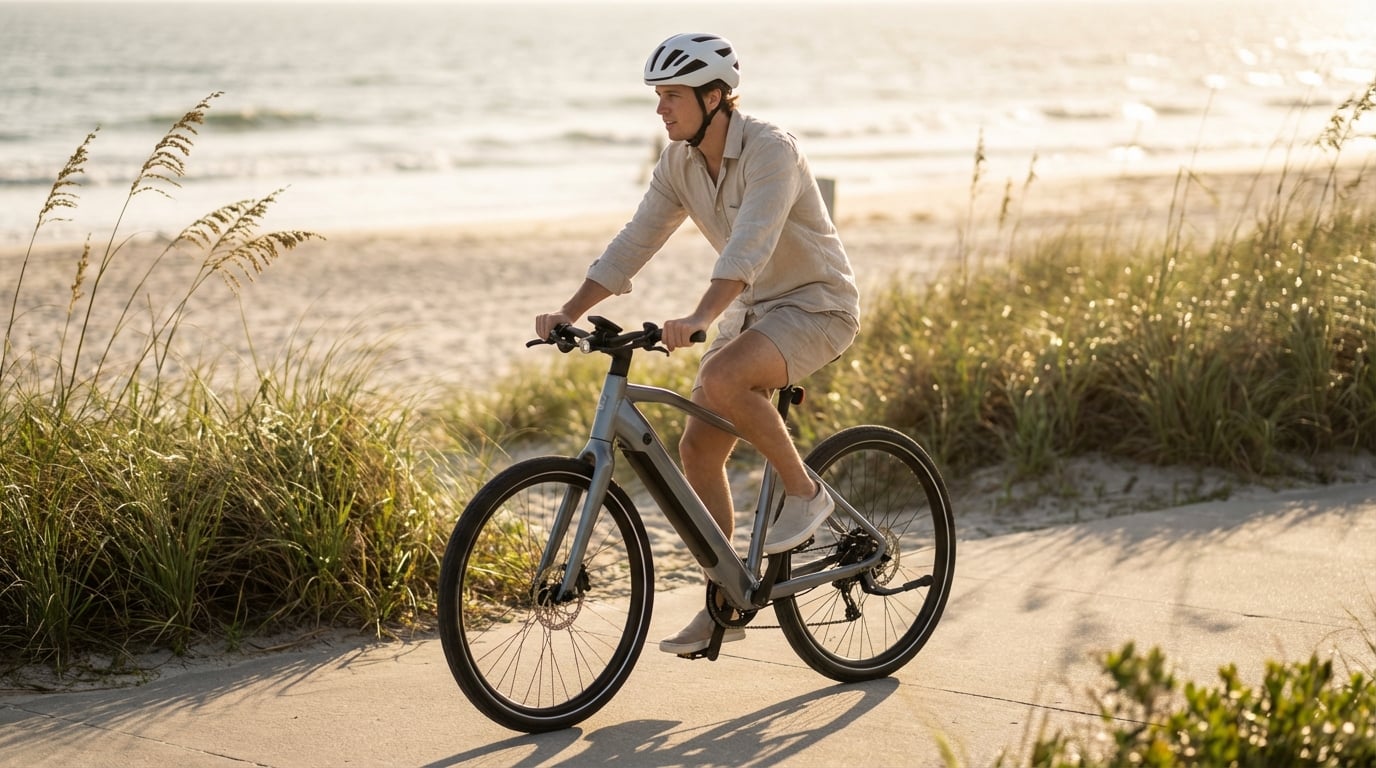

Gulf Shores City Council unanimously approved two new ordinances on January 26, 2026, establishing comprehensive regulations for electric bicycles and scooters that will reshape how rental companies and riders operate throughout the coastal Alabama city. The measures, which take effect March 1, 2026, create distinct frameworks governing rental operations and general e-bike usage in response to mounting safety concerns and increased accidents involving powered mobility devices. For campground and RV park operators across coastal tourism markets, these regulations signal a growing trend worth monitoring closely as similar rules increasingly appear in destination communities nationwide.
The new ordinances draw clear distinctions between requirements for everyday riders and stricter mandates targeting rental vendors. The dual approach reflects recognition that commercial operations present unique risks requiring enhanced oversight. Outdoor hospitality operators are increasingly finding that e-bikes and scooters have become common among guests, whether brought from home or rented from nearby vendors. Establishing clear internal property policies helps prevent accidents and liability issues before municipal regulations become a factor, positioning properties ahead of potential compliance challenges.
Under the rental-specific ordinance, vendors face significant fleet restrictions that fundamentally alter their business models. Class 2 and Class 3 e-bikes are now prohibited from rental inventories, leaving only Class 1 e-bikes, which are pedal-assist devices without throttles, as permissible options for commercial fleets. A notable exception allows Class 2 devices only if they are ADA-compliant and rented to individuals presenting valid disability placards, ensuring accessibility remains a priority within the regulatory framework.
Rental companies must also provide helmets to all customers and require every renter to view a city-prepared educational video covering safe operation practices and local laws. Age verification becomes mandatory, with renters required to be at least 18 years old. Those under 18 may still rent e-bikes, but only if a parent or legal guardian signs both a waiver and the rental agreement on their behalf.
For campground and resort operators considering e-bike rental programs as a revenue diversification strategy, these requirements offer a practical template. Selecting Class 1 pedal-assist bikes represents the most conservative fleet approach, facing the fewest regulatory hurdles in jurisdictions adopting similar rules. Documented maintenance schedules and pre-rental inspection checklists demonstrate due diligence, while liability waivers specifically addressing e-bike risks have become industry standard. Providing helmets even when not legally required is considered baseline safety practice across outdoor hospitality operations. Digital guest engagement platforms can streamline waivers, safety video viewing, and reservations while creating compliance documentation that proves invaluable during inspections. Operators should also verify their commercial insurance policies cover rental operations, as standard premises liability coverage may not extend to equipment rentals.
The ordinances impose strict location and behavior guidelines applicable to all e-bike riders, regardless of whether devices are rented or personally owned. E-bikes are explicitly banned from sidewalks throughout the city, including the pedestrian-heavy Gulf Place areas popular with tourists. Riders must use designated bike paths when such paths are available adjacent to roadways, and riding two or more abreast is prohibited unless on paths exclusively designated for bicycles. An accompanying resolution established a 10 mph speed limit on all city bicycle trails and paths to reduce conflicts between riders and pedestrians.
These municipal zoning decisions parallel internal management challenges RV park owners face when managing mixed-use pathways. Industry best practices include designating specific paths for e-bike use and clearly marking pedestrian-only zones, particularly around playgrounds, pools, and camp stores where foot traffic concentrates. Installing speed limit signage throughout properties has become common, with the city’s 10 mph limit serving as a reference point for internal roadways. Creating designated parking and charging areas for electric mobility devices prevents haphazard storage that blocks pathways or creates tripping hazards, while including micromobility rules in guest registration packets sets clear expectations from arrival.
The city codified specific age and equipment requirements targeting higher-speed devices capable of causing more severe accidents. Individuals under 16 are prohibited from operating Class 3 e-bikes, which can reach speeds up to 28 mph, though they may ride as passengers if the bike is designed to accommodate them. All Class 3 e-bike operators must wear properly fitted protective helmets regardless of age.
Training staff to recognize different e-bike classes and understand their speed capabilities enables more informed enforcement of property rules, a practice gaining traction across outdoor hospitality operations. Class 1 devices max out at 20 mph with pedal assistance only, Class 2 devices include throttles but maintain the same speed limit, and Class 3 devices can reach 28 mph. Understanding these distinctions helps staff identify potential safety concerns and educate guests appropriately.
Enforcement provisions give the regulations teeth that rental operators cannot ignore. Gulf Shores Police Department has been authorized to conduct regular inspections of rental inventories to verify compliance with fleet restrictions and operational requirements. Penalties include fines for individual riders who violate the ordinances, while non-compliant vendors face potential suspension of their business licenses, a consequence that could effectively shutter operations during peak tourist season.
For those running or considering rental operations, these inspection and license suspension provisions underscore the importance of maintaining documented compliance. Properties outside Gulf Shores should view these ordinances as a bellwether for likely regulatory trends in other coastal tourism markets. Proactive adoption of similar standards represents a prudent decision that positions operations ahead of potential future mandates while demonstrating commitment to guest safety.
The March 1, 2026, effective date establishes the compliance deadline for operators in Gulf Shores, who must now navigate this comprehensive framework. Those elsewhere in the outdoor hospitality industry can use the ordinances as a template for developing their own internal policies. Properties with existing micromobility policies will find municipal alignment easier when similar regulations arrive in their communities, and the city’s class-based, education-focused approach offers a model campground managers anywhere can adapt for mixed-use pathways shared by pedestrians, cyclists, golf carts, and e-bike riders.
