

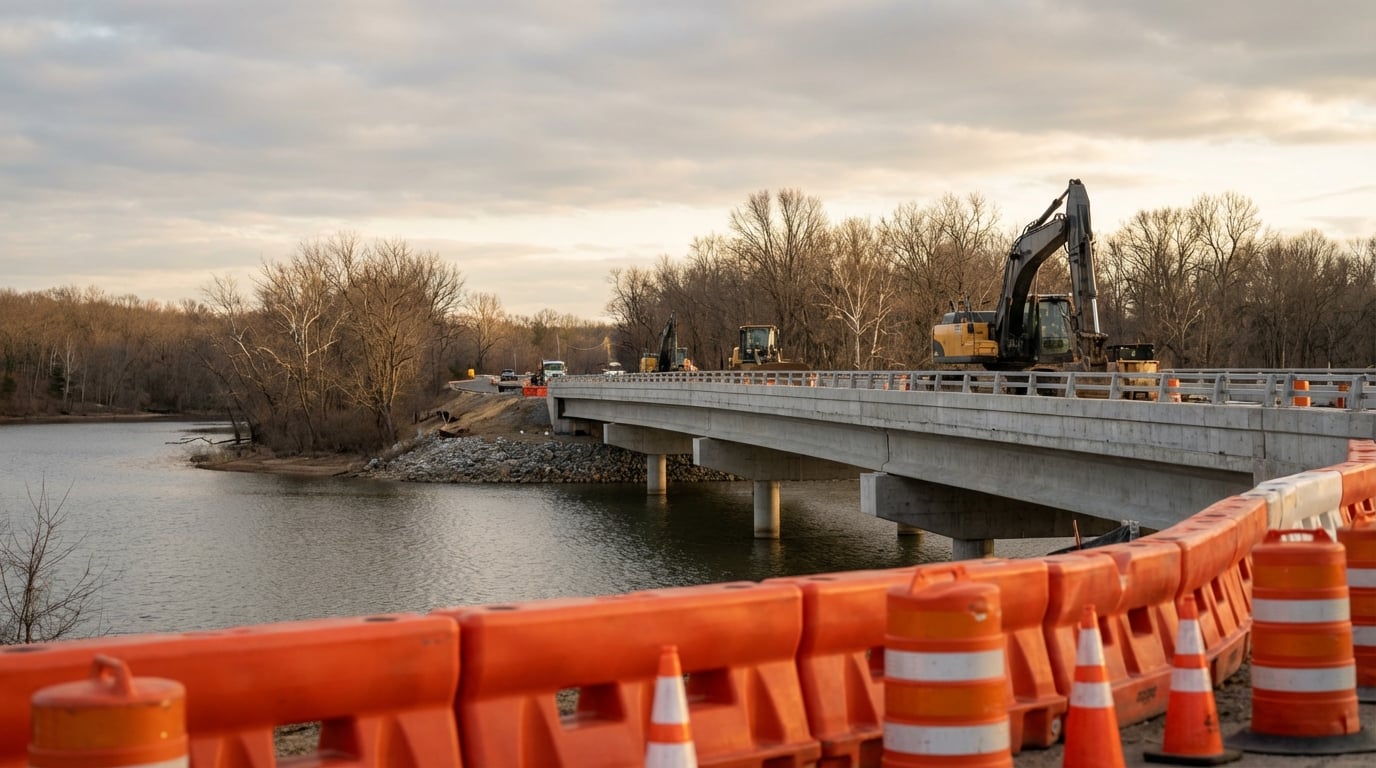

City Manager Craig Stephenson announced that the Lake Road bridge replacement project will tentatively begin Feb. 23, 2026, requiring a complete closure to all vehicle traffic for approximately 75 days, according to details shared at the Ponca City Board of Commissioners meeting on Jan. 26. The infrastructure project, which will extend through much of March and into early May, represents a significant consideration for outdoor hospitality operators in the Lake Ponca area as spring camping season approaches.
Mayor Kelsey Wagner called the Jan. 26 meeting to order, with Commissioners Stephanie Austin, Robert Bodick, Garrett Bowers and Annette Newcomb present. Stephenson also reported that the waterline is in place on First Street and crews are waiting on weather to begin street reconstruction. City crews worked all weekend and are beginning to clear street windrows downtown.
For recreational vehicle parks, campgrounds and glamping resorts operating near Lake Ponca or along Lake Road, this extended closure warrants attention to operational planning. Properties relying on Lake Road as a primary access point should begin updating guest communication materials now rather than waiting until construction begins. Businesses using this route for supply deliveries or staff commuting may need to adjust logistics schedules to account for longer travel times.
According to the city manager’s report, a well-marked detour route will be established to guide motorists around the construction zone while the bridge is out of commission. The closure is necessary to allow crews to replace the aging structure, and the city coordinated a pre-work planning meeting to finalize logistics before the start date. The replacement is part of Ponca City’s broader efforts to maintain and upgrade transportation infrastructure near Lake Ponca.
Effective pre-arrival communication during local infrastructure projects is essential for maintaining guest satisfaction and reducing negative reviews. Operators should consider sending updated driving directions to confirmed reservations at least one week before arrival and including detour information in confirmation emails and on booking platforms. Updating website landing pages and Google Business profiles with temporary access route information has become standard practice during extended road closures.
Property management systems often allow automated messaging that can be customized to include construction alerts, making it easier to keep guests informed without adding significant staff workload. Training front desk and reservation staff on alternative routes and estimated travel times ensures consistent information delivery. Providing printed detour maps at check-in is a low-cost courtesy that enhances the guest experience.
Installing temporary directional signage at key intersections near properties helps guide guests unfamiliar with detour routes, particularly those traveling in larger RVs or towing trailers who may have limited options for turning around. Clear communication about estimated additional travel time manages expectations before frustration sets in.
Beyond immediate guest communication concerns, the 75-day construction window coincides with pre-season preparation time for many outdoor hospitality properties in the Oklahoma region. Late winter and early spring traditionally represent shoulder season for many campgrounds, making this period ideal for capital improvements that would otherwise inconvenience guests during peak occupancy periods.
Operators often align major property improvements with periods of reduced guest traffic, and public infrastructure projects can inadvertently create such windows. Scheduling disruptive on-site projects like road resurfacing, utility upgrades or site expansion during periods of anticipated lower occupancy is considered an industry best practice that minimizes cumulative negative impact on annual revenue.
Municipal bridge replacements often serve as reminders for property owners to assess their own aging infrastructure, including private bridges, culverts and access roads. Regular inspection of internal roadways and drainage structures before peak season begins helps identify potential problems when they can be addressed without disrupting guest experiences. Properties with alternative access points may experience increased traffic as travelers seek routes around the Lake Road closure.
Marketing adjusted rates or packages that acknowledge temporary access challenges can maintain occupancy while building customer loyalty with guests who appreciate transparency and reasonable pricing during construction periods. Some operators use periods of limited access to complete projects that would otherwise require closing sites or inconveniencing guests with construction noise and equipment.
The city has emphasized the importance of public awareness, urging residents and visitors to plan travel routes accordingly once work begins in late February. The municipal investment in transportation infrastructure near the lake signals continued public commitment to the area.
