

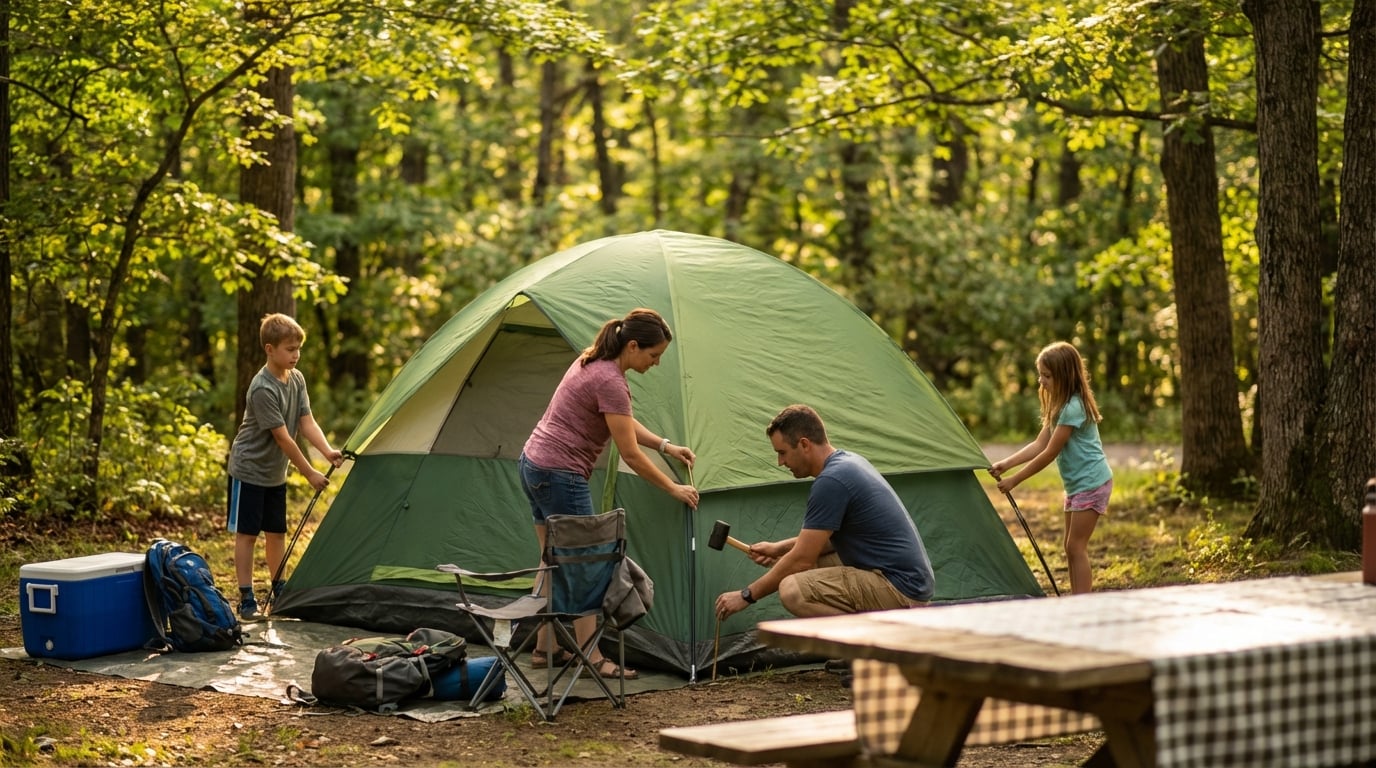

The Minnesota Department of Natural Resources is encouraging campers to secure summer reservations well in advance as demand for state park campsites continues to outpace availability during peak season. With the agency’s 120-day advance booking window now extending into early July, half of summer is open for reservations, and officials note that the most sought-after sites are disappearing quickly. Weekend dates between Memorial Day and Labor Day remain particularly competitive, with electric hookup campsites experiencing the heaviest booking pressure across the state’s 73 parks and recreation areas.
Among the destinations filling most rapidly are Itasca State Park, Gooseberry Falls State Park, Split Rock Lighthouse State Park and Whitewater State Park. These locations consistently attract the highest volume of reservation attempts, leaving many campers unable to book their preferred dates.
The DNR has outlined several strategies for campers struggling to find openings at popular locations. Officials recommend exploring lesser-known parks among Minnesota’s 73 state parks and recreation areas, many of which regularly have camping availability even during peak periods. Booking weekday trips rather than weekends significantly improves the odds of securing a site, as does opting for non-electric campsites when electricity is not essential. The agency also encourages campers to sign up for the notify me function on its reservation website, which sends automated email alerts when cancellations occur matching specific search criteria.
State parks and recreation areas offer modern facilities including showers, flush toilets and optional electric hookups, along with access to rental equipment, visitor centers and naturalist-led programs. Some locations provide additional lodging options such as fully outfitted cabins, guesthouses and more basic camper cabins. In contrast, state forests provide a more rustic camping experience without the need for advance reservations, making them ideal for spontaneous trips. Dispersed camping outside developed campgrounds is permitted in state forests for those seeking a true wilderness experience without amenities.
Walk-in, cart-in and backcountry campsites offer more rugged alternatives for adventurous travelers. Walk-in and cart-in sites are typically located within a half-mile of parking areas, with cart-in locations providing wheeled carts for transporting gear. Backcountry campsites sit half a mile or more from parking, with backpack or hike-in sites representing the most common option. Some backcountry sites are accessible by water or bicycle, expanding opportunities for paddlers and cyclists seeking overnight adventures.
Drive-in camping remains the most common option across state parks, with campers parking directly at their assigned site. Some drive-in locations offer electric hookups, while a small number provide full hookups with water and sewer connections. The DNR advises RV campers to verify parking pad length on the reservation website before booking to ensure their rig will fit. Horse camping is available at 12 state parks and six state forests, with specialized amenities including hitching rails, high lines and manure bins serving equestrian visitors.
Group camps accommodate larger gatherings at many state parks, providing shared facilities for family reunions, scout troops and other organized groups. These sites typically include picnic shelters, fire rings and access to park amenities. Reservations for group camps follow the same 120-day advance booking window as individual campsites.
Campers can make reservations online at mndnr.gov/reservations or by phone at 866-857-2757, with sites available up to 120 days before arrival. A state park vehicle permit is required in addition to camping reservations, costing $7 daily or $35 for an annual permit valid 12 months from purchase date. Permits can be purchased when making a reservation, online at mndnr.gov/permit or upon arrival at the park.
The DNR enforces a strict no-show policy to prevent campsites from sitting empty during periods of high demand. Overnight guests who have not checked in or occupied their site by 11 a.m. the morning after their scheduled arrival will have their reservation canceled without refund. The site then returns to available inventory for other campers.
Officials encourage those with changed plans to cancel reservations, noting there is no cancellation fee for reservations canceled 14 or more days before scheduled arrival. Cancellation provides full or partial refunds while opening sites to other guests.
The DNR offers an online summer activity guide covering recreation opportunities including biking, birding, swimming, tours, fishing and paddling, available at mndnr.gov/summerguide. Campers can also use the ParkFinder tool to locate parks matching their preferred amenities and recreation opportunities, helping them identify alternatives when first-choice destinations are fully booked.
Additional information about Minnesota state park camping, including maps and detailed amenity lists for each location, is available through the DNR website.
