

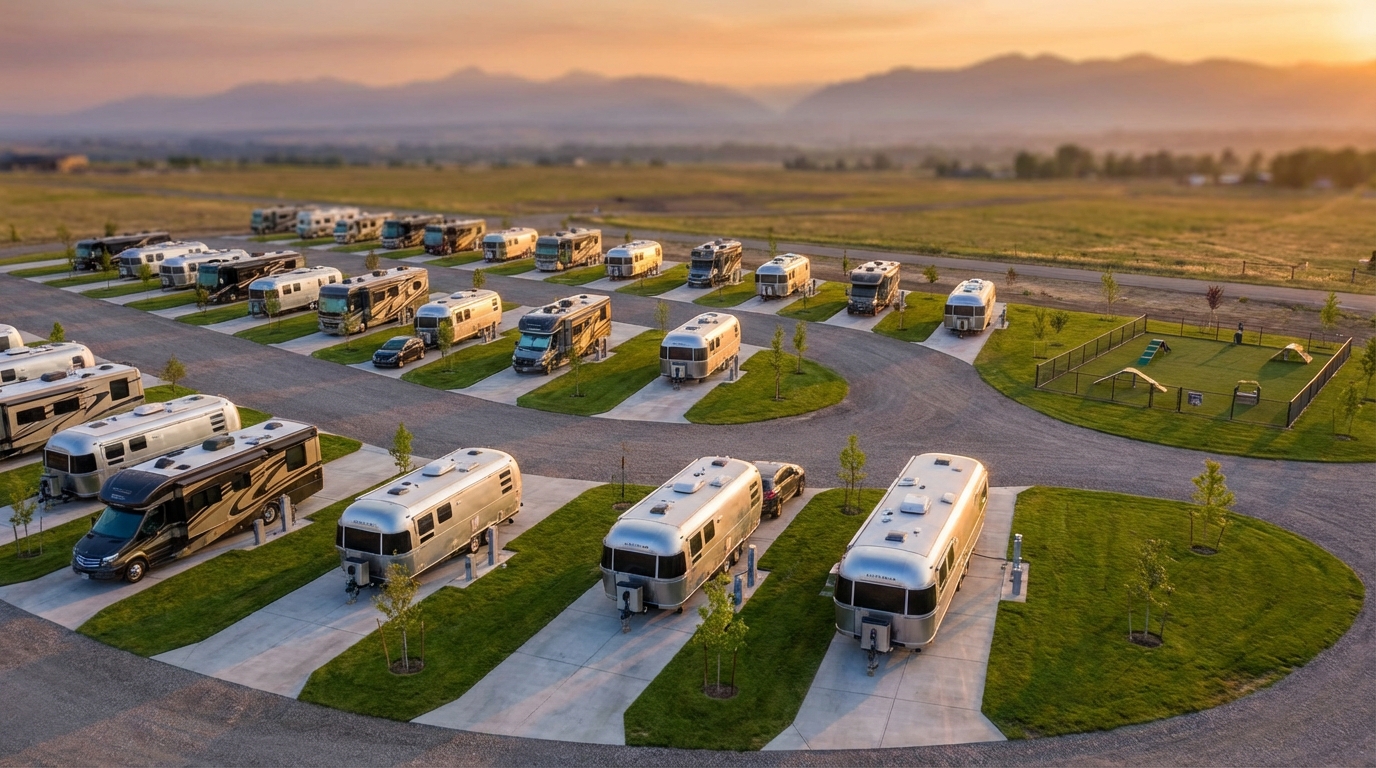

Adams County, Colorado, is currently reviewing a proposal to develop a private recreational vehicle park on approximately 22 acres of agricultural land, a project that industry professionals may want to monitor as an example of the Planned Unit Development rezoning pathway in action. The project seeks to transform land at 14600 Riverdale Road in Brighton from Agricultural-1 zoning to a Planned Unit Development classification, with the developer marketing the facility as a luxury destination featuring more than 100 long-term RV spots, according to the Riverdale RV Park website.
The application includes not only the Zoning Map Amendment but also a Major Subdivision Preliminary Plat and Preliminary Development Plan. This comprehensive documentation package demonstrates the extensive requirements typically associated with PUD approval processes.
Planned Unit Development zoning has become an increasingly popular pathway for RV park developers seeking flexibility in site design and amenity placement. Unlike traditional zoning categories that impose rigid setback requirements and density restrictions, PUD designations allow developers to negotiate customized development standards with local planning authorities. This flexibility proves particularly valuable for outdoor hospitality projects that often require unique configurations to accommodate varying RV sizes, common areas, and recreational amenities that standard zoning classifications might restrict.
The PUD process typically enables developers to cluster infrastructure more efficiently, potentially reducing utility installation costs while preserving natural features that enhance guest experience. Many successful RV parks have utilized this zoning approach to incorporate mixed-use elements such as on-site convenience stores, laundry facilities, and recreational buildings. However, the PUD approval process generally requires more extensive documentation and community engagement than standard rezoning applications, and operators considering similar development projects should anticipate multiple review cycles.
The project remains in the approval process, with the project website indicating the facility is “Coming Soon” and hours of operation still to be determined.
The proposed facility would operate as a private, gated, secure, and fully landscaped RV park with an emphasis on long-term stays, according to the developer’s website. Planned amenities include full hook-ups for all sites, a camera-secured gated entrance, walking trails, a dog park, playground, sporting courts, and community gathering areas. The development would also provide trash and recycling services along with WiFi and Ethernet access for residents seeking connectivity during their stays.
Notably for operators studying target demographic strategies, the developer has implemented a restriction prohibiting RVs older than 10 years from the property, according to the project website. This policy choice represents a deliberate positioning decision that affects both the types of guests the park will attract and occupancy management approaches. Planned business hours of Monday through Friday from 9 a.m. to 5 p.m., with weekend closures, suggest an operational model oriented toward longer-term residents rather than transient travelers requiring around-the-clock check-in services.
Location selection near established public recreation destinations has long been recognized as a strategic advantage for RV park development. Proximity to county parks, trails, and event venues can significantly enhance a property’s appeal to travelers seeking outdoor experiences without requiring the RV park itself to develop extensive on-site recreational programming.
Operators commonly monitor regional infrastructure improvement projects when evaluating development sites or planning facility upgrades. Public investments in flood mitigation, road improvements, and park amenities typically indicate sustained governmental support for an area. Understanding construction timelines also helps operators anticipate temporary disruptions while planning for improved access once projects conclude. Marketing strategies for RV parks situated near public recreation assets commonly emphasize the dual benefit of private accommodations with convenient access to publicly maintained trails, waterways, and event facilities.
This positioning can reduce operational costs associated with amenity development while still offering guests diverse activity options through nearby public facilities.
Industry observers may find this development worth monitoring as an example of private outdoor hospitality investment. The project’s progression through Adams County’s review process will provide insights into approval timelines, documentation requirements, and community engagement expectations for operators considering similar PUD rezoning applications. As the outdoor hospitality sector continues to evolve, developments like the proposed Riverdale RV Park offer practical case studies in navigating the intersection of land use planning, strategic location selection, and amenity programming that can inform business decisions across the industry.
