

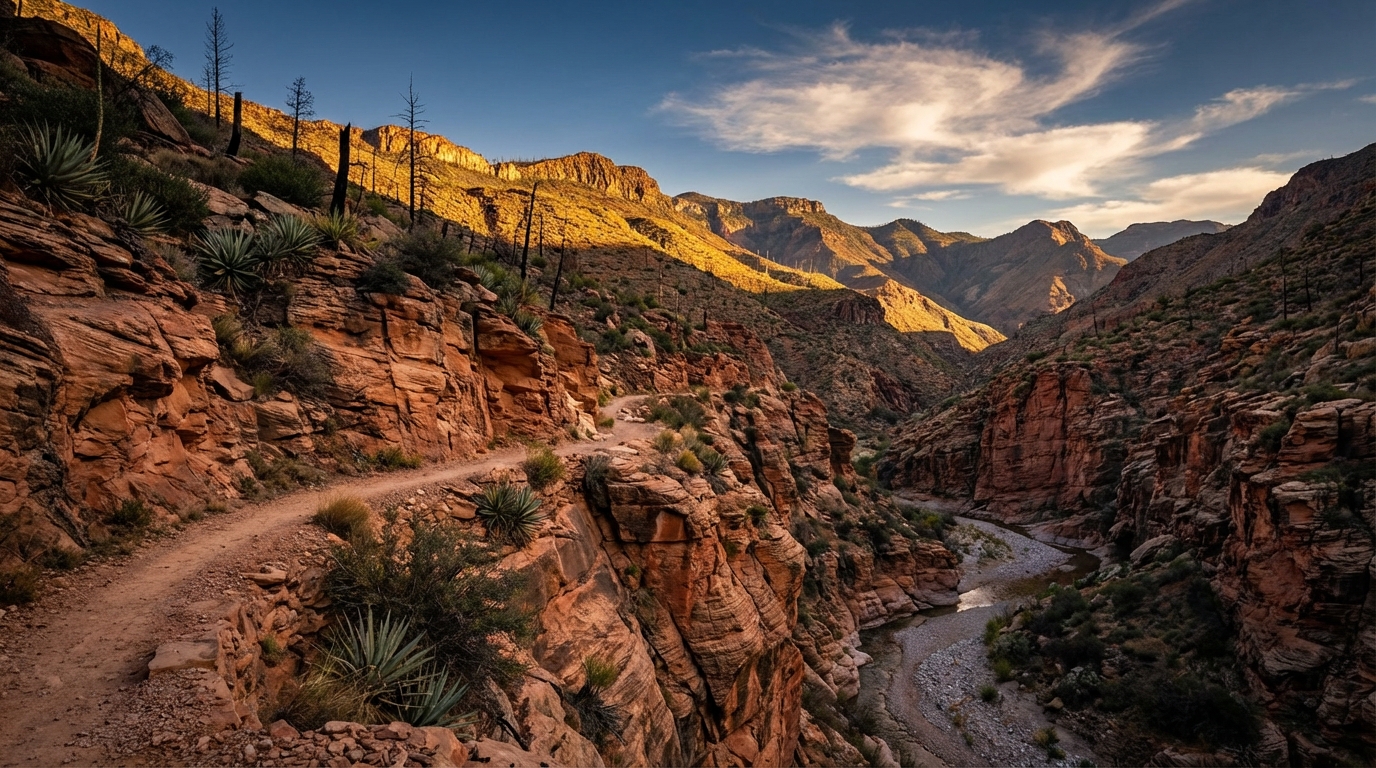

Grand Canyon National Park officials reopened a segment of the North Kaibab Trail on March 4, 2026, marking the first phase of hiker access to the inner canyon since the Dragon Bravo Fire forced a total closure nearly eight months ago. The restored section extends from the Clear Creek Trail junction to Ribbon Falls. Currently, access is only possible from the canyon floor via South Rim trails and Phantom Ranch, as the trail north of Ribbon Falls remains closed to the North Rim trailhead.
The closure originated on July 13, 2025, after a lightning strike ignited the Dragon Bravo Fire. The blaze destroyed the Grand Canyon Lodge, the North Rim Visitor Center, and 11 residences. Shifting winds on July 11, 2025, caused the fire to breach containment, leading to a chlorine gas leak at the North Rim water treatment plant and the immediate evacuation of the inner canyon corridor. While the General Store and campground survived, the water pipeline sustained severe damage.
Before authorizing the reopening, park officials partnered with the U.S. Geological Survey to install enhanced flood monitoring systems. New stream gauges provide real-time water level data to manage risks in the burned watershed. This infrastructure supports a comprehensive evacuation and alert plan specifically for the North Kaibab Trail. Hikers with reservations at Phantom Ranch or Bright Angel Campground now receive targeted hazard notifications regarding flash flood and debris flow risks.
The implementation of real-time monitoring and multi-channel alerts reflects a broader trend in emergency communication for outdoor hospitality providers. Operators of campgrounds and RV parks in Arizona, Utah, and Colorado increasingly utilize these systems to manage post-wildfire risks. Properties near wildlands face heightened danger during monsoon seasons when burned soil cannot absorb moisture, leading to rapid flooding in drainages like Bright Angel Creek.
The park decision to use phased access management allows specific operations to resume based on safety assessments rather than waiting for total infrastructure restoration. This management strategy mirrors practices used by resort developers to maintain revenue streams during long-term repairs. While the trail segment is open, the North Rim itself remains closed for the winter season.
Officials set May 15, 2026, as the target date for reopening North Rim roads and visitor facilities. This timeline depends on weather conditions and the completion of repairs to the water treatment plant. Until that date, the North Kaibab Trail remains a “dead-end” trek from the Colorado River, and through-hiking from the North Rim to the South Rim remains impossible.
Other North Rim trails, including the Widforss, Ken Patrick, and Uncle Jim Loop, stay closed as damage assessments continue. Current open routes include the South Kaibab Trail and the Bright Angel Trail to River Resthouse. National Park Service representatives stated that visitors should verify conditions through official channels, as flash flood risks persist in affected watersheds during heavy precipitation.
