

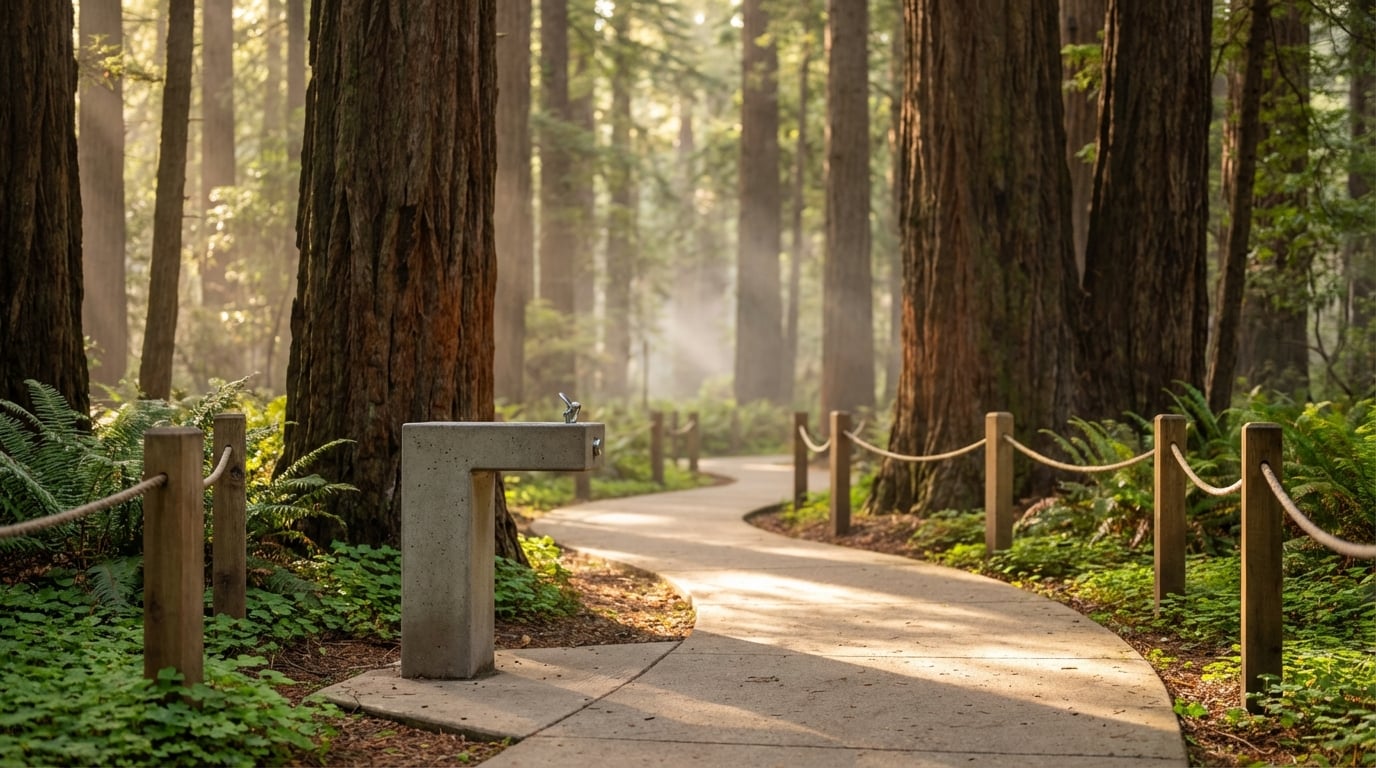

The 107-site campground at Henry Cowell Redwoods State Park in Santa Cruz County, California, is scheduled to reopen April 1, 2026, following an extended closure for Americans with Disabilities Act compliance upgrades that began last November. The facility, located off Graham Hill Road on the park’s east side, has undergone significant renovations including new ADA-compliant restrooms, accessible pathways, updated signage, and a new drinking fountain. For campground and RV park operators considering similar accessibility improvement projects, the Henry Cowell renovation offers both a timeline example and a practical blueprint for modernizing aging infrastructure.
The project experienced multiple setbacks that extended the original closure period by a full year. The campground was initially expected to reopen April 1, then the date was pushed to August 1 due to weather delays and supply chain disruptions for materials needed to complete the work. Additional complications forced the closure to extend through April, resulting in more than 5,200 canceled reservations. Affected campers received refunds but must wait another year to visit. “Our initial reopening date was a provided timeline from the contractor,” said Scott Sipes, head of operations for California State Parks’ Santa Cruz division, when the agency announced the extended closure.
For private campground operators, the Henry Cowell delays underscore the importance of building weather contingencies into construction timelines, which is considered standard practice for outdoor projects. Maintaining open communication with contractors about material availability helps operators anticipate potential delays before they cascade into major schedule disruptions. Some operators choose to phase projects across multiple off-seasons rather than undertaking complete closures, though this approach extends the overall project duration and may require guests to navigate active construction zones during their stays.
While the campground remains closed, day-use areas, the visitor center, and most trails at Henry Cowell Redwoods State Park remain fully accessible to the public. Overnight camping is strictly prohibited until the April reopening, but the park continues hosting educational programming throughout the closure period, including Tree Identification Tours and Redwood Grove Guided Walks scheduled for the final weekend of March.
Properties with separate day-use areas can maintain visitor traffic and ancillary revenue during campsite closures, as demonstrated at Henry Cowell. Gift shop sales, guided tours, and educational programming can continue generating income while overnight stays are suspended. Pre-sale campaigns offering discounted reservations for the reopening period can provide working capital during construction, helping offset the revenue gap created by months without camping fees.
Beyond maintaining revenue streams during closures, operators must also consider the specific facility improvements that will serve guests upon reopening. The ADA improvements at Henry Cowell reflect accessibility standards that private operators should consider when planning their own facility upgrades. Restroom renovations, accessible pathways, updated signage, and drinking fountains represent common elements in comprehensive accessibility projects rather than piecemeal modifications.
For campground owners and RV park operators evaluating similar projects, restroom and shower facilities deserve particular attention. Roll-in showers with fold-down benches provide greater flexibility than transfer-style shower stalls, accommodating a wider range of mobility needs. Grab bars, accessible sink heights, and adequate turning radius within restroom facilities are fundamental requirements that impact daily guest experience. Lever-style hardware is universally easier to operate for guests with limited grip strength, benefiting not only wheelchair users but also elderly visitors and those with arthritis or other conditions affecting hand dexterity.
Pathway and site design present additional considerations for operators. Accessible routes should maintain a firm, stable, and slip-resistant surface throughout the property. Gradual slopes are preferable to abrupt grade changes, and cross-slopes should be minimized for wheelchair users who may struggle to maintain a straight path on uneven terrain. At least a portion of campsites should offer level parking pads with adequate maneuvering space adjacent to picnic tables and fire rings, allowing guests with mobility challenges to fully participate in the camping experience.
Signage and wayfinding improvements enhance navigation for all visitors. High-contrast signage with large fonts improves readability for guests with visual impairments. Tactile elements and Braille on key directional signs further enhance accessibility. Clear mapping of accessible routes on reservation websites helps guests plan visits in advance, reducing frustration upon arrival and setting appropriate expectations about what facilities they can access.
The 5,200 canceled reservations at Henry Cowell illustrate the scale of guest impact that extended closures can create. Proactively notifying guests with existing reservations well in advance of closure dates builds trust and reduces complaint volume. Regular project updates on social media and email newsletters keep the property top-of-mind for returning guests who might otherwise book elsewhere. Highlighting specific improvements underway helps guests understand the value they will experience upon reopening, transforming potential frustration into anticipation.
Visitors planning to camp at Henry Cowell Redwoods State Park for the 2026 season should monitor the California State Parks reservation system as the April 1 reopening date approaches. The campground typically operates from spring through fall, making the April reopening the start of a full camping season with newly upgraded facilities.
For private campground operators, updating online booking platforms with accurate closure dates prevents guest frustration and reduces administrative burden from handling confused inquiries. Implementing waitlist features for high-demand reopening dates captures eager guests and builds anticipation for the return of overnight services. Soft opening periods allow staff to identify any issues with new facilities before peak season demand arrives, ensuring that guests experience polished operations rather than becoming unwitting participants in troubleshooting. Properties that go beyond minimum accessibility requirements often find that these investments yield higher guest satisfaction and open doors to families with members who have mobility challenges, turning compliance projects into competitive advantages.
