

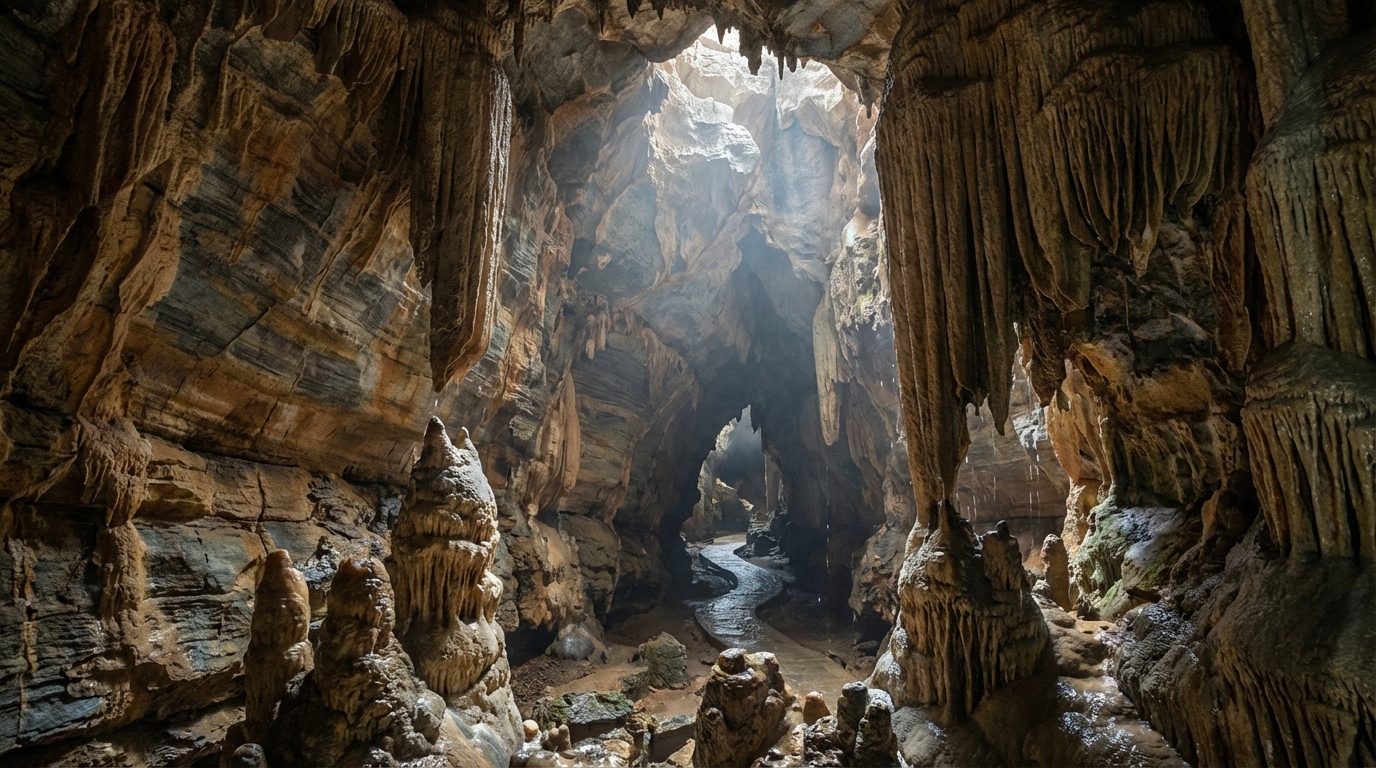

Federal legislation that would authorize the National Park Service to acquire approximately 551 acres from The Nature Conservancy to expand Mammoth Cave National Park in Kentucky advanced through a legislative hearing in March 2026, with local officials testifying that the boundary adjustment would boost tourism without reducing the local tax base. The House Committee on Natural Resources Subcommittee on Federal Lands examined H.R. 3286, the Mammoth Cave National Park Boundary Adjustment Act, which Representative Brett Guthrie and Senator Mitch McConnell introduced in May 2025 according to Guthrie’s office. The measure would grant the park authority to incorporate 551.14 acres spanning Edmonson and Barren counties but does not automatically transfer the property, meaning the bill remains subject to further committee review and floor votes before any acquisition could proceed.
Edmonson County Judge-Executive Scott Lindsey testified before the subcommittee in support of the legislation, presenting a detailed economic case for the expansion. “The park is also a major economic engine for our region. Visitors from across the country and around the world travel to Kentucky not only for horse racing, bourbon, and Abraham Lincoln’s birthplace, but also to explore Mammoth Cave National Park,” Lindsey told lawmakers. “In 2024 alone, approximately 747,000 visitors came to the park and spent an estimated $73.2 million in nearby communities. Those expenditures supported more than 880 jobs and generated nearly $100 million in economic output for the local economy.”
Lindsey emphasized the outsized importance of park-related tourism for the region’s small communities. “For rural communities like mine, those numbers matter,” he said. “Tourism connected to Mammoth Cave supports local restaurants, hotels, outfitters, and small businesses throughout the region.”
Lindsey’s economic testimony underscores the potential business implications for nearby outdoor hospitality operators. For private campground and RV park operators in Edmonson and Barren counties, the proposed expansion signals potential growth in visitor demand that warrants strategic preparation. When national parks expand boundaries or enhance offerings, nearby private campgrounds often benefit from spillover demand since parks typically have limited camping capacity. Operators who highlight their proximity to the national park in marketing materials may capture search traffic from visitors planning park trips, while monitoring federal land management announcements helps anticipate demand shifts and plan expansion timelines accordingly. Adding pull-through sites accommodates larger RVs common among travelers visiting multiple parks on extended trips, and offering flexible check-in and checkout times serves visitors whose park activities may not align with standard campground hours.
The legislation targets land with significant ecological value within the Green River watershed. “This property lies within the Green River watershed, one of the most biologically diverse aquatic ecosystems in the United States,” Lindsey testified. “The area contains numerous cave passages, including Coach Cave and James Cave, which provide important habitat for endangered bat species. Protecting these habitats is essential for the recovery of these species and for the long-term ecological health of the region.”
The emphasis on conservation in Lindsey’s testimony highlights an opportunity for private operators to align with these environmental priorities. Travelers who visit national parks for conservation reasons increasingly seek accommodations that reflect environmental values, creating opportunities for private campgrounds to differentiate themselves. Water quality practices such as installing modern septic systems, using permeable surfaces to reduce stormwater runoff, and educating guests about Leave No Trace principles extend conservation messaging beyond park boundaries. Wildlife-friendly operations including wildlife-resistant food storage, reduced light pollution through downward-facing fixtures, and natural vegetation buffers between campsites and waterways demonstrate alignment with the same conservation priorities emphasized in the legislation.
Beyond ecological significance, the caves within the proposed acquisition hold substantial cultural and archaeological resources. “Equally important, these caves contain significant cultural and archaeological resources,” Lindsey stated. “Evidence suggests these caves played a role in early American history through saltpeter mining during the War of 1812 and contains signatures left by Civil War soldiers who explored the cave in 1862.” He added that “no organization is better equipped to protect these natural and cultural resources than the National Park Service and the experts at Mammoth Cave National Park.”
Private campgrounds near the park can partner with local historical societies to offer interpretive programming that adds educational value to guest stays, creating meaningful connections to place that appeal to history-minded travelers.
Lindsey addressed potential concerns about local tax impacts directly in his testimony. “I also want to emphasize an important point: this acquisition involves land already owned by The Nature Conservancy,” he explained. “No additional private property is involved. The property is already under a conservation easement that restricts development, and because of its nonprofit ownership status, the county is not currently collecting property taxes on it. Therefore, the transfer of this land into the park will not reduce our local tax base.” The purchase price for the property is just under $1 million and will be funded through the Land and Water Conservation Fund along with National Park Service allocations, with sale proceeds reimbursed to the Imperiled Bat Conservation Fund to support future conservation efforts.
Mammoth Cave National Park, officially established in 1941, is home to the world’s longest known cave system with more than 400 miles of surveyed underground passageways and miles still unexplored. The park’s roughly 52,000 acres extend across Edmonson, Barren, and Hart counties, providing recreational opportunities including cave tours, hiking, camping, horseback riding, canoeing, kayaking, and fishing. “What makes Mammoth Cave truly unique is that it operates on two levels: a rich forested landscape and river system above ground, and an extraordinary cave network below,” Lindsey noted. “Together, these features create one of the most remarkable natural environments in the United States.”
Following the hearing, Representative Guthrie released a statement expressing gratitude for the committee’s action. “I’m grateful to the House Committee on Natural Resources for taking an important step to advance my Mammoth Cave National Park Boundary Adjustment Act by conducting today’s legislative hearing,” Guthrie said. “My bill will not only improve the visitor experience at the Park, but it will also expand countless economic opportunities for the local communities surrounding Mammoth Cave.”
The legislation has support from local leaders, regional organizations, and conservation partners across Kentucky, according to testimony presented at the hearing. For outdoor hospitality operators in the region, passage of this legislation could signal increased visitation and economic activity worth preparing for through infrastructure investments, marketing strategies, and conservation-aligned practices.
“As County Judge Executive, one of my priorities is supporting local businesses and encouraging economic growth in our rural communities,” Lindsey concluded in his testimony. “Expanding and protecting Mammoth Cave National Park helps accomplish both goals. This investment will safeguard critical habitat, preserve irreplaceable historical resources, and expand recreational opportunities for future generations.” Private campground and RV park owners who prepare infrastructure, marketing strategies, and conservation-aligned practices may be positioned to capture demand if the boundary adjustment legislation advances through Congress.
