


The Mercer County Park Commission (New Jersey) launched reservations for the 2026 camping and picnic season, activating its online booking system at noon through the Community Pass platform for sites at the East Picnic Area and Campground at 1346 Edinburg Road in Princeton Junction.
The announcement has implemented an exclusively digital reservation policy, accepting no walk-up or in-person bookings at park offices.
Reservations through Community Pass operate on a first-come, first-served basis, with payment accepted via MasterCard or Visa only. The commission requires full prepayment at the time of booking.
Cancellations are non-refundable, and campers who elect to leave early due to inclement weather will receive no refund if the campground remains open.
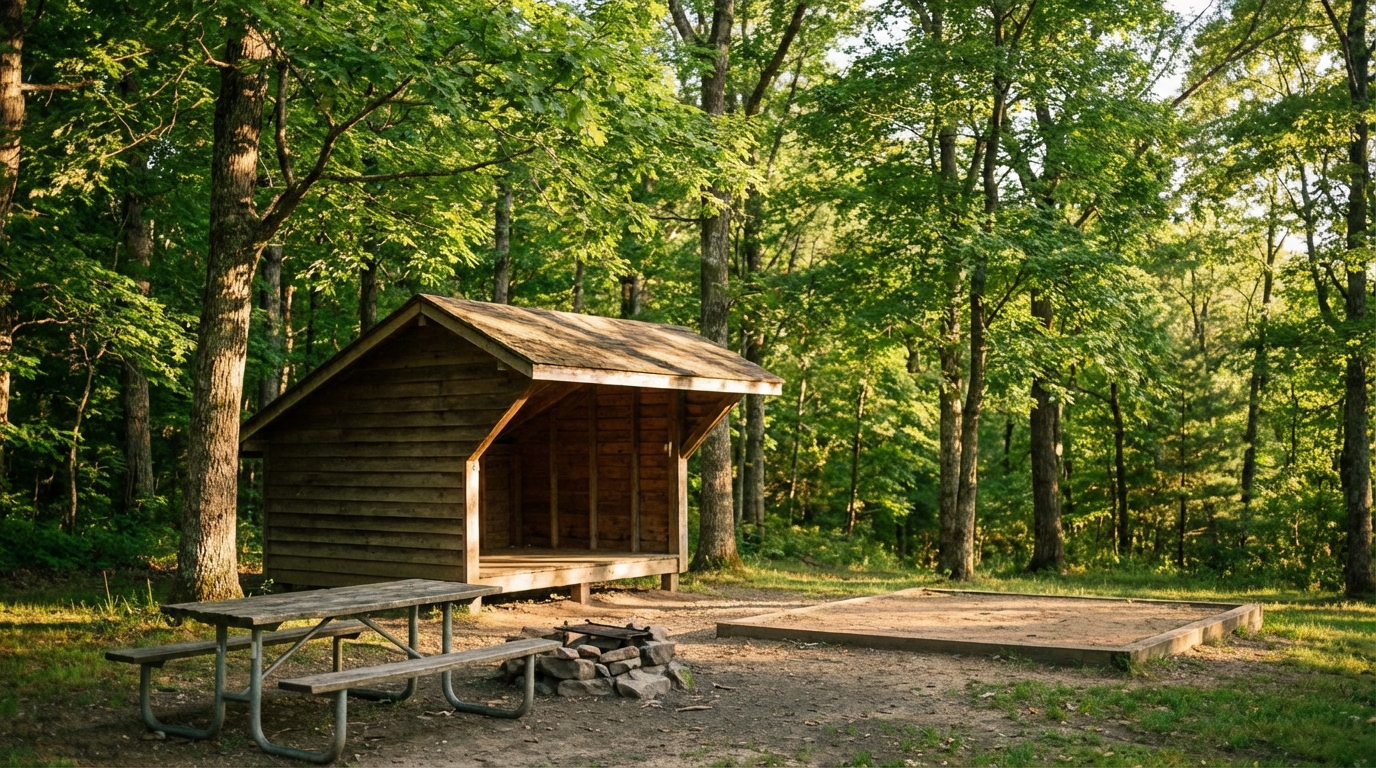
The campground features 10 total sites divided between two distinct accommodation types. Six lean-to structures carry tree-themed names: Ash, Cedar, Elm, Maple, Tulip, and Willow. Four tent sites round out the inventory: Cherry, Dogwood, Lilac, and Oak..
Lean-to structures at the facility consist of three covered sides with a roof, elevated above ground level. No furnishings are provided within the structures. Each lean-to can accommodate up to four people in sleeping bags, with one tent per lean-to site permitted.
Each campsite at the facility includes a campfire ring, picnic table, charcoal grill, and sufficient tent space. Public restrooms and water service are available at the East Picnic Area.
RVs and trailers are not permitted at the campgrounds, a restriction that reflects the facility’s design for tent and lean-to camping. Sites configured for these accommodation types typically cannot support the weight, utility demands, or footprint of larger vehicles.
Additional prohibitions include alcoholic beverages and smoking within the campground, and swimming is not allowed on any county parkland.
The decision to operate on a digital-first basis reflects what many private campground owners and RV park operators have already recognized: guests now expect to complete reservations from their mobile devices at any hour.
Even municipal facilities are eliminating phone-based booking options, which suggests that operators still relying heavily on manual reservation processes may find themselves at a competitive disadvantage. Building on this digital foundation, successful operators typically implement automated communication workflows, sending pre-arrival instructions 48 to 72 hours before check-in that include site-specific information and local regulations.
