

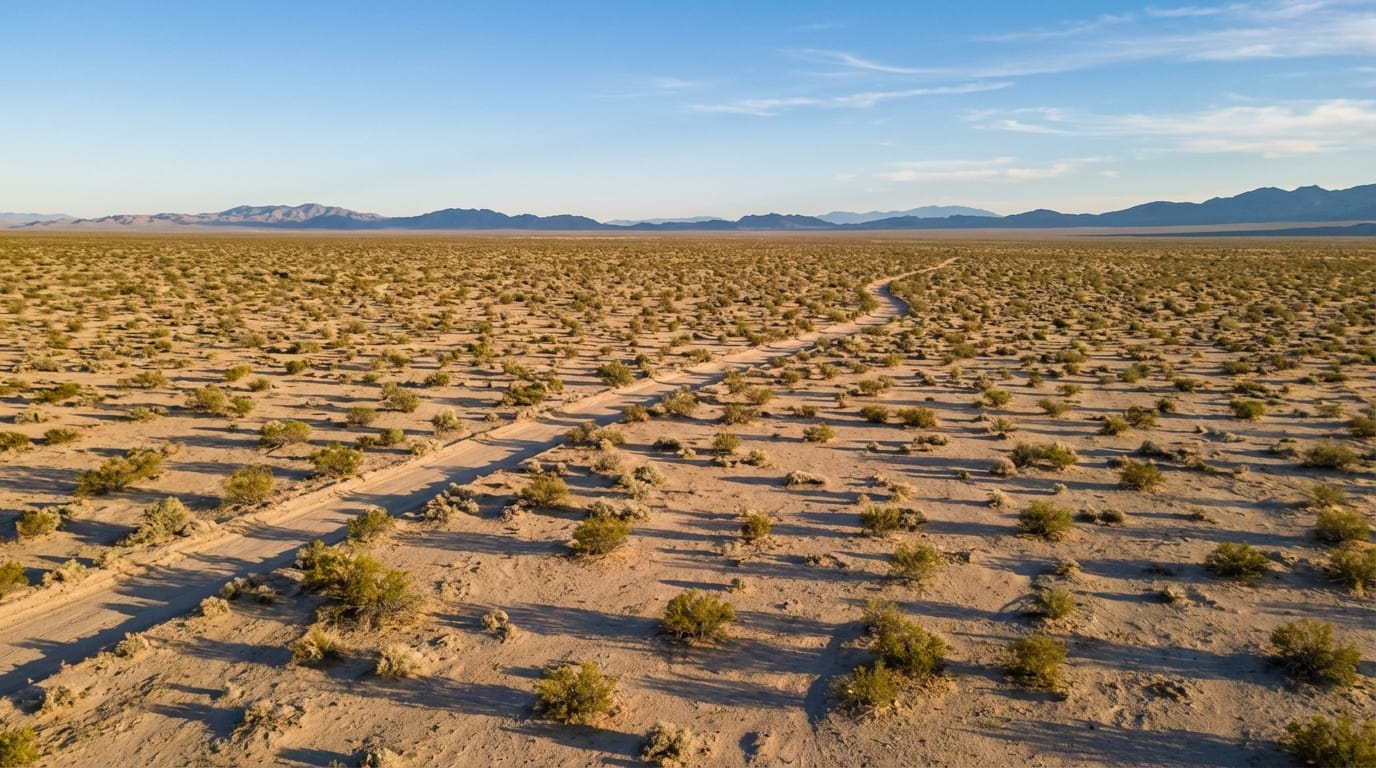

An 81-acre parcel of vacant land near Bouse, Arizona, has entered the market as a development-ready opportunity for investors seeking to build a luxury RV resort in the southwestern desert. The property, nestled between the Granite Wash, Harcuvar, and Plomosa Mountains just off Highway 72, is being marketed as a turnkey prospect with key infrastructure already established.
According to Prism News, the site carries MLS# 22518854 through Coldwell Banker Realty, with Jim Vincent of Jvincent Company LLC serving as the listing agent.
The property arrives on the market with several infrastructure advantages that could appeal to developers looking to compress timelines and reduce initial capital outlays. An operational well already exists on the site, electrical service runs along Highway 72, and zoning for resort use has been secured. These elements position the parcel as more than raw land, offering prospective buyers a foundation that eliminates some of the most time-consuming early-stage development hurdles.
While the existing well, electrical access, and secured zoning provide an advantage, developers evaluating this or similar desert properties must still plan for the comprehensive infrastructure that luxury RV resorts require beyond these foundational elements.
Water management stands as the most critical consideration in arid climates, where balancing guest amenities with conservation realities determines long-term operational sustainability. Best practices include installing water-efficient fixtures throughout common areas, implementing drip irrigation systems, and selecting drought-tolerant native plants that reduce consumption while maintaining the visual appeal guests expect from a luxury property.
Electrical infrastructure planning for modern luxury RV resorts typically accounts for 50-amp service at premium sites, accommodating larger motorhomes equipped with multiple air conditioning units and full electrical systems. Developers increasingly incorporate solar panel installations and battery storage systems to offset peak demand charges while appealing to environmentally conscious travelers.
Shade structures over electrical pedestals protect equipment from intense desert sun while improving guest comfort during hookup procedures. Waste management in remote desert locations demands particular attention during planning, with modern luxury properties installing dump stations featuring wash-down facilities at convenient intervals.
Septic system sizing must account for peak occupancy periods, particularly during the winter snowbird season when southwestern destinations experience their highest demand. Road and pad construction benefits from proper grading and drainage to handle intense monsoon rains, with compacted decomposed granite or concrete providing stable surfaces that withstand temperature extremes better than asphalt.
The site’s geographic positioning places it approximately 13 minutes from Bouse and roughly 30 minutes from Quartzsite, a regional hub that draws substantial winter RV gatherings and generates significant seasonal commerce. This proximity to an established market while maintaining some distance could allow a luxury development to offer a more exclusive, less congested experience than properties situated closer to that busy destination.
The listing reflects broader trends across southwestern rural land markets, where packaged parcels featuring existing infrastructure continue attracting private capital seeking opportunities in niche hospitality segments. The listing’s explicit positioning as a luxury RV resort opportunity raises a fundamental question for prospective developers: what distinguishes properties competing at this tier from standard campground offerings?
Understanding these distinctions matters greatly for investors considering this type of development. The luxury segment has evolved considerably as RV ownership demographics expanded to include younger travelers and those seeking resort-style experiences rather than traditional camping. Properties competing at this tier differentiate themselves through site design that emphasizes spacious lots with significant separation between neighbors, often ranging from 40 to 60 feet in width compared to 25 to 35 feet at standard parks. Premium sites frequently feature concrete patios, landscaped privacy buffers, dedicated fire pit areas, and full hookups including sewer connections at each location.
Clubhouse and common area amenities that define successful luxury positioning typically include fitness centers, swimming pools with hot tubs, modern laundry facilities, dog parks with washing stations, and community gathering spaces designed to encourage interaction among guests.
Many thriving luxury properties incorporate outdoor recreation amenities such as pickleball courts, bocce ball areas, and walking trails that encourage extended stays and foster community. Technology integration has become a baseline expectation, encompassing reliable high-speed Wi-Fi throughout the property, digital check-in capabilities, mobile apps for service requests and amenity reservations, and smart utility monitoring at individual sites.
Programming and organized activities, from social events to fitness classes to local excursions, drive longer stays and generate the word-of-mouth referrals that sustain premium pricing.
Should a developer successfully execute the amenity investments and service levels the luxury segment demands on this 81-acre parcel, the resulting property would generate economic impacts extending well beyond its boundaries. According to marketing materials for the listing, the development could generate economic impacts for Bouse and La Paz County spanning both construction and operational phases.
Short-term employment during build-out would provide immediate benefits, while sustained positions in hospitality, maintenance, and retail sectors would follow once operations commence. The listing materials suggest the project could broaden the local tax base through property and lodging-related revenues while increasing customer traffic for existing businesses in Bouse and along the Highway 72 corridor.
Realizing these projections, however, depends on successfully attracting luxury-tier guests who typically spend more at local businesses and stay longer than budget-conscious travelers. The amenity investments and service levels a developer chooses will directly determine whether the property achieves the economic multiplier effects the community anticipates.
Development of this scale would typically require review of increased demands on water resources, waste management infrastructure, road maintenance, and emergency services. Key verification points include confirming the capacity and water rights associated with the existing well, reviewing the current zoning status along with any attached conditions, and assessing potential transportation impacts on Highway 72.
Experienced outdoor hospitality developers would already anticipate these due diligence requirements, recognizing that the existing well represents an advantage while understanding that capacity and water rights verification remains essential within Arizona’s regulatory environment.
The compressed timeline that development-ready parcels enable, while attractive from an investment perspective, could limit windows for public review and community input. This consideration applies to both those weighing infrastructure impacts and prospective buyers evaluating whether community reception might affect operations. Properties that engage constructively with local stakeholders during development often find smoother paths to opening and stronger relationships that benefit ongoing business.
For campground owners, RV park operators, and outdoor hospitality investors monitoring acquisition opportunities, this listing represents one example of how packaged development sites are being positioned in the current market. The combination of existing infrastructure, secured zoning, and proximity to an established winter RV destination addresses several factors that typically extend project timelines and increase risk. Whether the 81-acre parcel ultimately delivers on its luxury resort potential will depend on the buyer’s ability to execute a development plan that meets the elevated expectations the luxury segment demands.