

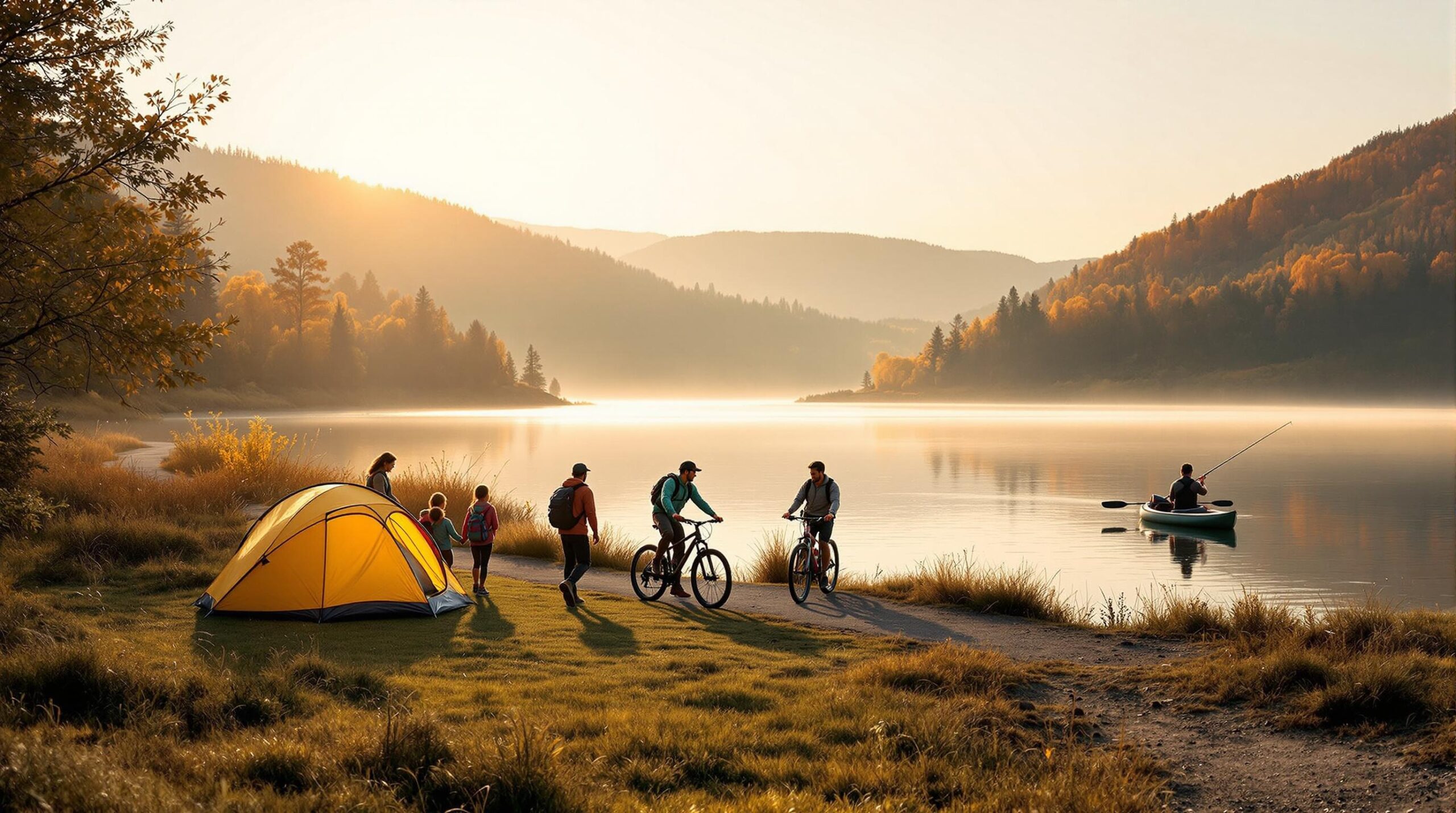

Campers are increasingly honoring campsite reservations, according to the 2026 Camping Report, which found steady improvement in cancellation and no-show behavior across the United States.
The trend could ease booking pressures at campgrounds, where more than half of campers reported difficulty securing a site due to full reservations.
The report, presented by Toyota Trucks and compiled by The Dyrt, shows the share of campers who used all of their reservations has risen for the third consecutive year.
Only 58.9% of campers reported showing up for every reservation in 2023. That figure increased to 70.7% in 2024 and reached 72.9% in 2025.
Additional data in the report indicate fewer late arrivals and no-shows. The number of campers who arrived a day or more after their scheduled reservation declined 9% in 2025, while no-shows fell 5% during the same period.
Researchers gathered the findings from surveys conducted with thousands of members of The Dyrt Community, a representative sample of United States residents, and camping property managers in all 50 states.
Despite the improvements, the report identified several behavioral trends affecting campsite availability. Short-notice cancellations increased 22% in 2025.
Such cancellations may still benefit campers because they create last-minute booking opportunities that can be filled through notification tools such as campsite alerts.
According to a press release, Kevin Long, CEO of The Dyrt, said the data indicate greater awareness among campers about the impact of reservation practices on campsite access.
“We all understand that you can’t plan for everything and sometimes life gets in the way, but it’s encouraging that campers are becoming more cognizant of the difficulty their fellow campers are facing when trying to reserve a campsite,” Long said.
“Based on these statistics — especially the continued increase in using all reservations and the decrease in no-shows — we can see more of an effort being made to do the right thing and ensure more people have access to the great outdoors,” Long added.
The report also explored attitudes toward booking multiple campsites for flexibility. Among campers surveyed, 61.3% said reserving multiple dates with the expectation that some will go unused is not acceptable.
Another 35.5% said the practice is acceptable if extra reservations are canceled well in advance, while 3.2% said it is acceptable without conditions.
Camping property owners expressed slightly more acceptance of the practice. Nearly half, 49.8%, said it was not acceptable, while 36.2% said it was acceptable if cancellations were made with sufficient notice and 14% supported it outright.
Survey respondents were also asked about what constitutes a valid claim on a first-come, first-served campsite. About 66.3% said a tent or vehicle must be present to reserve a site, while 16.4% said a camping chair is sufficient and 13.1% said smaller items such as a backpack or water bottle could indicate a reserved site.
