

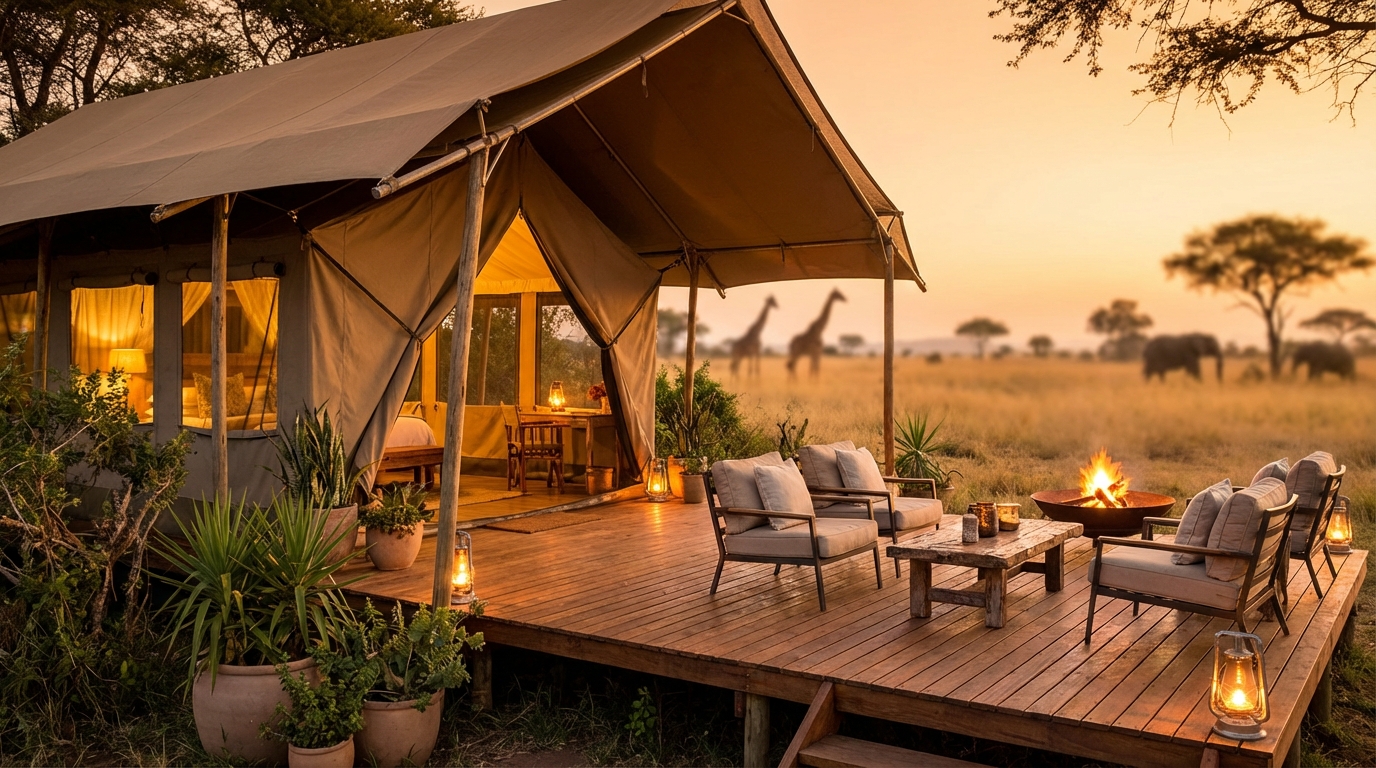

The Oklahoma City Zoo and Botanical Garden has begun accepting reservations for the Baobab Lodge, a luxury safari-style glamping accommodation nestled within the zoo’s 12-acre Expedition Africa expansion. Constructed in 2025 and presented by the Inasmuch Foundation, the climate-controlled lodge offers guests an unobstructed view of the Savanna habitat, where giraffes, ostriches, cranes, Nile lechwe and eland roam in a mixed-species African habitat design. Reservations opened in March 2026, marking a new chapter in overnight experiences at the Oklahoma City attraction.
“One of the ways the OKC Zoo distinguishes itself is by offering exclusive encounters visitors can’t get anywhere else. We are excited to introduce guests to the Baobab Lodge for an overnight stay unlike any other,” said Dr. Dwight Lawson, CEO and executive director of the Oklahoma City Zoo and Botanical Garden.
The lodge’s strategic placement near the Lion Overlook and Cat Forest means guests can fall asleep to the sounds of African lions while enjoying proximity to habitats housing Sumatran tigers and clouded leopards. An extended outdoor deck features a firepit where visitors can gather in the evening, taking in the natural chorus of wildlife just beyond the secure, gated perimeter. The experience transforms a typical zoo visit into an immersive overnight adventure that blurs the line between accommodation and attraction.
For outdoor hospitality operators watching this development, the Baobab Lodge illustrates a principle gaining traction across the industry: location alone no longer guarantees occupancy. Properties offering experiential differentiation through on-site programming, curated encounters or partnerships with nearby venues consistently outperform those relying solely on scenic surroundings. Establishing formal collaborations with wildlife sanctuaries, adventure outfitters or cultural institutions enables operators to create bundled packages that justify premium pricing, often through referral fee structures or revenue-sharing arrangements requiring minimal capital investment.
Inside, the lodge features two bedrooms, two bathrooms, a dining area and a kitchenette alongside a den equipped with a smart TV and board games. The primary bedroom includes a king-sized bed, while the second bedroom offers twin bunk beds, comfortably accommodating four guests under standard arrangements. For larger groups, fully furnished cots can be placed in the shared living area, expanding maximum capacity to 10 overnight visitors seeking a communal safari experience.
The outdoor deck extends beyond simple relaxation, providing space for yard games in a setting designed to keep families engaged without leaving the property. This thoughtful integration of indoor comfort with outdoor recreation reflects a design philosophy that campground and glamping operators can apply to their own projects. Properties developing signature experiences such as guided nature walks, stargazing sessions or wildlife observation opportunities routinely command nightly rates 20 to 40 percent higher than comparable accommodations lacking such programming.
Guests staying at the Baobab Lodge receive extended access to zoo grounds before and after standard public hours, maximizing their time among the animals. A VIP pass grants unlimited participation in daily activities including flamingo encounters, lorikeet feedings and rides on the Endangered Species Carousel. These inclusive perks establish a baseline experience that feels premium from the moment guests arrive.
Optional add-on experiences provide additional layers of engagement for those seeking deeper connections with the zoo’s residents. Private night hikes through darkened pathways, giraffe feedings and animal ambassador presentations are available for purchase, allowing guests to customize their stay according to interest and budget. For glamping resort managers and campground owners, this tiered approach offers a replicable framework. Add-on experiences represent high-margin revenue opportunities, and ancillary spending frequently equals or exceeds base accommodation revenue when guests encounter compelling options during booking and check-in. Operators without access to zoos can achieve similar differentiation through farm animal encounters, bird-watching excursions or partnerships with local adventure guides.
In-room catering elevates the lodge experience beyond typical glamping fare. Guests can order from menus ranging from light snacks, charcuterie boards and pizzas to fully plated meals featuring steak, chicken or salmon. Breakfast service from the Safari Café ensures mornings begin without the need to venture far from the accommodation. This food and beverage component demonstrates how thoughtful amenities can transform an overnight stay into a complete hospitality package.
Beyond overnight accommodations, the Baobab Lodge operates as a venue for private daytime events including corporate meetings, reunions and celebrations. The large deck and smart TV equipped for presentations make the space adaptable for business gatherings seeking an unconventional setting. This dual-use model represents a growing trend in outdoor hospitality toward maximizing asset utilization during periods that might otherwise generate no revenue.
Designing glamping units with flexible layouts from the outset reduces the cost and complexity of serving multiple markets. Open floor plans with modular furniture, adequate electrical capacity for presentation equipment and accessible restroom facilities support event hosting without compromising the overnight guest experience. Corporate and group event clients frequently book during weekday periods when leisure travel demand softens, effectively smoothing revenue across the entire week. Climate control, as featured in the lodge, proves essential for year-round event viability in regions experiencing temperature extremes. Existing operators should evaluate whether current accommodations, particularly larger units or common areas, could be adapted for corporate retreats or family gatherings with minimal modification.
The Baobab Lodge sits within Expedition Africa alongside the Love’s Pachyderm Building and giraffe facilities, positioning it as a centerpiece of the zoo’s most ambitious expansion. The surrounding 12-acre area brings together diverse species and habitats, creating multiple touchpoints for guest engagement throughout their stay.
Reservations and additional details are available through the zoo’s website. For outdoor hospitality professionals, this project serves as a case study in combining premium accommodations with experiential programming, demonstrating how strategic design and partnership thinking can transform a single property into a destination worth traveling for.
