

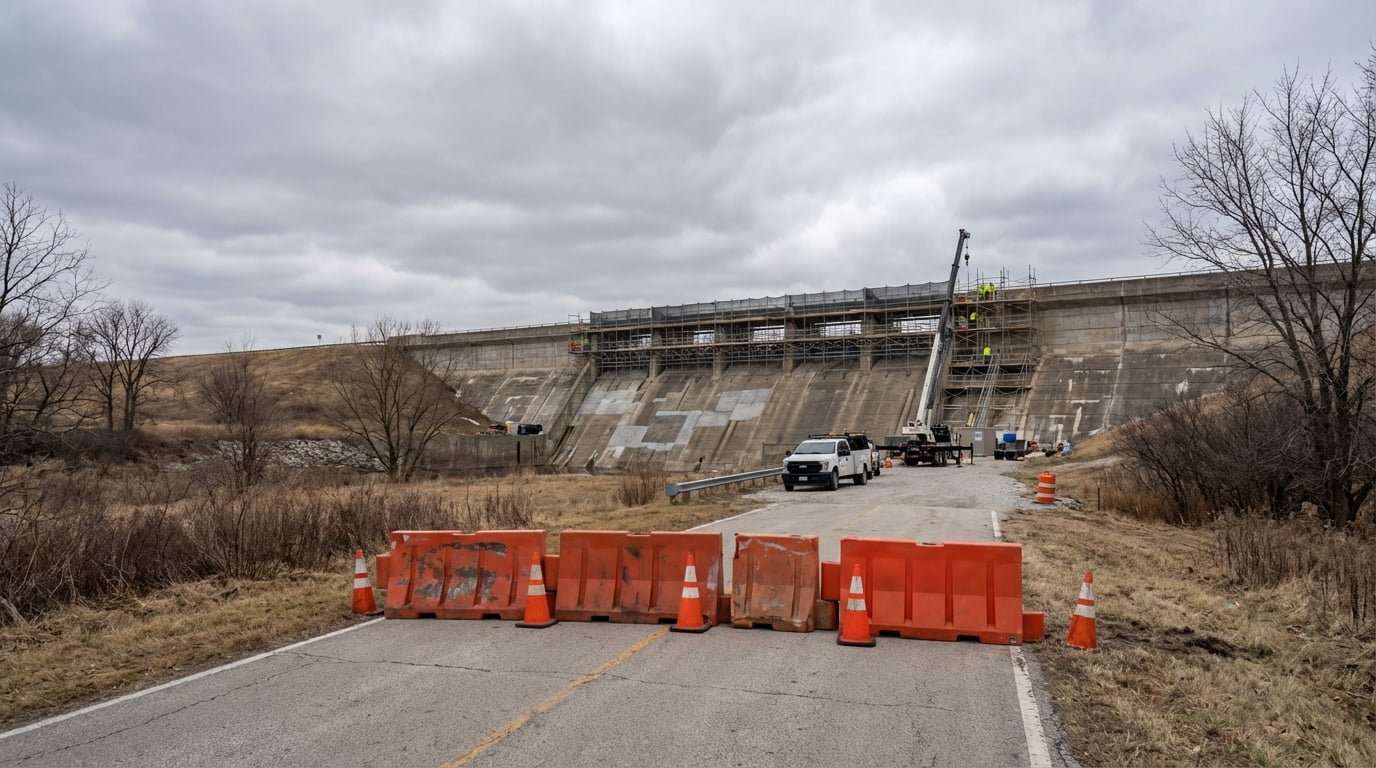

Sherman Dam Road in Nebraska has been closed to traffic after the Farwell Irrigation District initiated concrete repairs on the face of the dam, with favorable winter weather conditions enabling contractors to begin the project earlier than anticipated. The closure, which affects the stretch between 791st Road and 792nd Road, is expected to last one to two weeks as crews work to complete the essential infrastructure improvements before the arrival of peak recreation season.
Travelers seeking access to the Marina Bay boat ramp or Trade Winds Marina must now follow an alternate route during the construction period. The detour requires motorists to take 790th Road east, proceed north on 480th Road, and then connect to 792nd Road to reach their destinations. All park areas located on the south side of Sherman Reservoir State Recreation Area remain open and accessible throughout the duration of the project, according to News Channel Nebraska.
Road closures near popular recreation destinations create ripple effects that extend beyond individual travelers to the businesses that serve them. For campground operators, RV park owners, and marina managers serving guests headed to Sherman Reservoir, this temporary closure presents an opportunity to strengthen guest communication protocols. Properties that proactively share updated directions and estimated travel time changes can reduce frustration among arriving visitors. Sending pre-arrival messages to guests with confirmed reservations containing clear detour instructions is a step that most modern reservation systems can accommodate through bulk messaging tools.
Updating property websites, Google Business profiles, and social media pages with real-time closure information ensures that travelers researching their trips encounter accurate details before departing. This becomes especially critical in rural recreation areas like Sherman Reservoir, where cellular service may be limited and guests cannot easily search for updated directions once they are en route. Properties that establish these communication habits during short-term disruptions build systems that serve them well during future infrastructure projects or unexpected closures.
The Farwell Irrigation District scheduled these repairs strategically to protect the visitor experience during high-traffic months. By taking advantage of recent favorable weather that allowed work to begin ahead of schedule, contractors can complete the concrete repairs on the dam face well before summer crowds arrive at the recreation area. The District appreciates the public’s patience and cooperation while the project proceeds.
This proactive scheduling approach offers a useful model for campground and RV park owners managing their own facilities. Completing major infrastructure work during late winter or early spring minimizes disruption to guests and maximizes revenue potential during peak booking periods. Many operators build annual maintenance calendars that align road resurfacing, utility upgrades, concrete repairs, and similar projects with historically low occupancy windows.
Monitoring extended weather forecasts allows property owners to remain flexible and take advantage of unexpected favorable conditions for weather-sensitive work. The Sherman Dam project demonstrates how readiness to act quickly when repair windows open can compress project timelines and reduce overall impact on operations. Building relationships with reliable contractors who understand the seasonal nature of outdoor hospitality ensures that when conditions align, work can begin promptly without costly delays.
Preventive maintenance reduces long-term costs and prevents unplanned closures during busy periods when every site and slip generates critical revenue. Regular inspections of roads, parking areas, retaining walls, and water control structures help identify problems early, allowing operators to address issues on their own timeline rather than reacting to emergencies that force closures at the worst possible moments. Operators planning infrastructure improvements should also consider eco-friendly upgrades such as permeable paving for parking areas and energy-efficient lighting along roadways, which can reduce long-term maintenance costs while demonstrating environmental stewardship to increasingly sustainability-conscious guests.
Staff at nearby campgrounds, RV parks, and marinas should be thoroughly briefed on the alternative route and estimated detour times so they can answer guest questions consistently and confidently. Front desk personnel and check-in staff serve as the first point of contact for confused or frustrated travelers, and their ability to provide clear, accurate directions shapes the guest experience from the moment of arrival.
Clear on-site signage with visual maps can help guests navigate confidently, particularly those arriving after dark or unfamiliar with the area’s rural road system. Temporary directional signs posted at property entrances and key decision points reduce the likelihood that guests will miss turns or become lost on unfamiliar county roads. These investments in guest experience during a short-term closure contribute to positive reviews and repeat bookings that benefit operations long after the construction equipment has departed.
The temporary nature of this closure means that normal access to Sherman Dam Road should resume within one to two weeks, well ahead of the spring and summer recreation season. South-side recreation areas remain fully accessible throughout the project, ensuring that visitors can still enjoy the reservoir and its amenities via the established detour route.
Outdoor hospitality operators who align their own maintenance schedules with public infrastructure timelines can minimize cumulative disruption to the visitor experience. When a nearby road closure or utility project is already affecting guest travel patterns, adding simultaneous on-property construction creates compounding inconvenience that erodes satisfaction. Coordinating maintenance windows with awareness of regional projects helps properties maintain the seamless experience that drives guest loyalty throughout the busy months ahead.
