

Two state park campgrounds in the Kansas City area will reopen to overnight guests following major renovations, offering upgraded amenities that reflect evolving industry standards for modern recreational vehicle accommodations. The Missouri Department of Natural Resources announced on Feb. 2, 2026, that Weston Bend State Park in Platte County and Lewis and Clark State Park in Buchanan County have completed extensive infrastructure improvements as part of 22 revenue projects across the state aimed at modernizing park facilities. Reservations for the newly renovated sites will be accepted for arrivals beginning Friday, May 1, 2026.
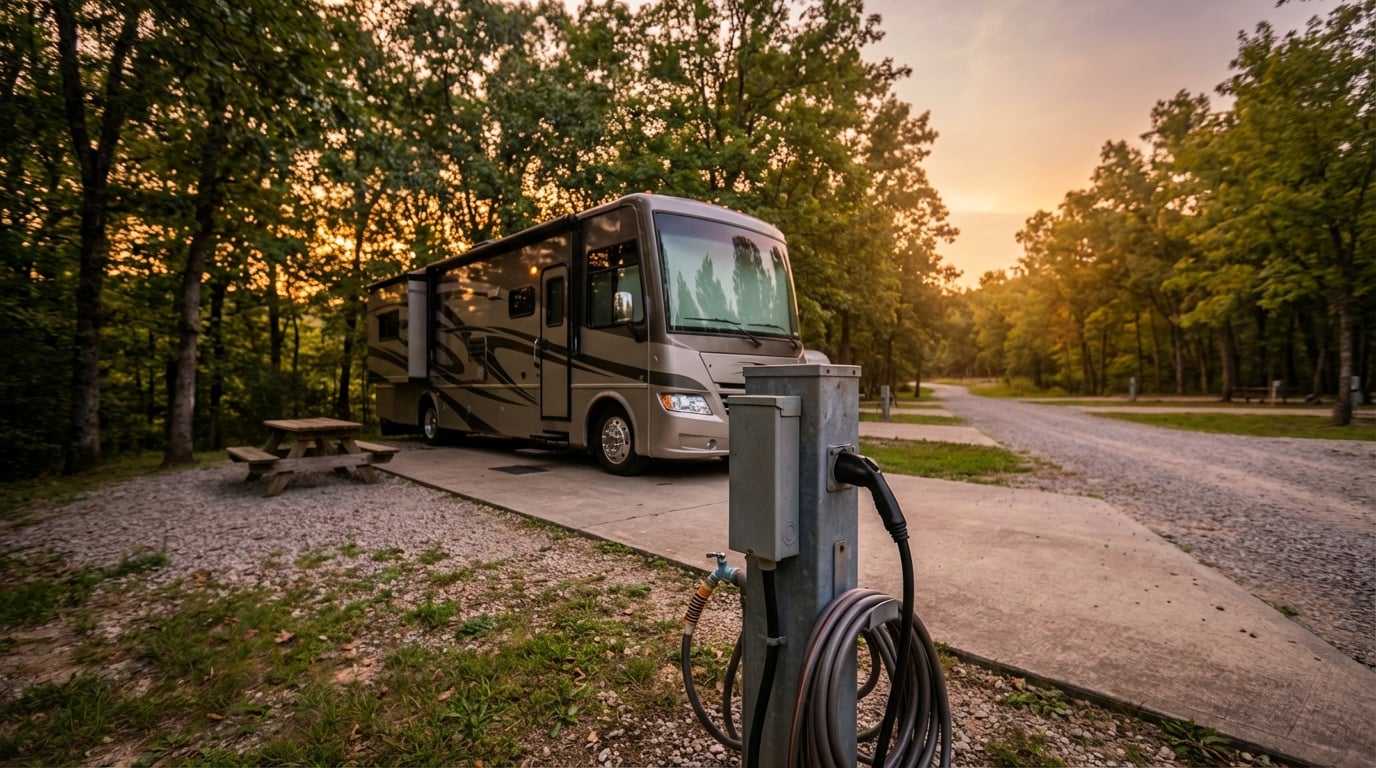
The scope of improvements at both locations signals a deliberate investment in full hookup configurations with high-amperage electrical service, amenities that private campground operators increasingly recognize as essential rather than optional. Weston Bend State Park, located at 16600 Hwy. 45 N in Weston, will offer 15 new campsites equipped with sewer, water and 50-amp electrical service. Lewis and Clark State Park, situated at 801 Lakecrest Blvd. in Rushville, has upgraded 20 existing campsites with identical utility connections and added a new shower house to enhance guest facilities.
For campground owners and RV park operators throughout the region, these specific upgrades carry meaningful implications. Modern recreational vehicles, particularly Class A motorhomes, fifth wheels and luxury travel trailers, increasingly require 50-amp electrical service to operate multiple air conditioning units, residential refrigerators and numerous appliances simultaneously. Campgrounds offering only 30-amp service may find themselves unable to accommodate a growing segment of the RV market, especially higher-end units whose owners expect premium amenities.
Full hookup sites generally command significantly higher nightly rates compared to partial hookup or dry camping options. This pricing power stems from the convenience factor and the ability to attract longer-stay guests who prefer not to relocate for dump station access. Beyond revenue considerations, individual sewer connections also reduce congestion at centralized dump stations, decrease staff time spent managing those facilities and improve overall guest satisfaction.
Private campground operators in the Kansas City market may find that public parks are now offering amenities that match or exceed many private facilities. The state’s investment in these upgrades suggests that full hookup configurations with 50-amp service have become the expected standard across the camping industry rather than a distinguishing luxury amenity. Operators considering similar infrastructure improvements may want to evaluate their current site mix and guest demographics carefully. A phased approach that upgrades high-demand sites first while maintaining basic sites for tent campers and smaller RVs allows operators to test market response before committing to full-scale investment.
The renovations position both parks to compete more effectively for the high-value RV segment. Weston Bend State Park, known for its scenic views of the Missouri River and hiking trails, can now accommodate guests traveling in power-hungry modern rigs. Lewis and Clark State Park, with its oxbow lake and historical connections to the Lewis and Clark expedition, offers upgraded infrastructure alongside the new shower house that enhances overall visitor comfort. Operators throughout the region may want to assess whether their own facilities can compete with these improved public offerings or whether differentiation through unique amenities and experiences represents a more viable strategy.
Guests seeking reservations at either park can book through the Missouri State Parks reservation system at icampmo.com or by calling the reservation call center at 877-422-6766. The centralized online booking platform reflects broader industry expectations that modern campers demand digital reservation capabilities with real-time availability and mobile-friendly interfaces.
Digital reservation platforms have transformed how campgrounds manage bookings, communicate with guests and optimize occupancy. Many operators find that modern campground management software allows them to implement dynamic pricing strategies, adjusting rates based on demand, season, day of week and local events. This approach, borrowed from the hotel industry, helps maximize revenue during peak periods while stimulating demand during slower times through strategic discounting. Many operators now view online booking capabilities as essential rather than optional, with guests increasingly expecting to view real-time site availability, compare amenities across different site types and complete reservations without phone calls.
Integrating point-of-sale systems with reservation platforms allows operators to track ancillary revenue streams, including camp store purchases, firewood sales and equipment rentals. This consolidated data provides insights into guest spending patterns and helps identify opportunities to enhance offerings that generate additional income beyond site fees.
Campgrounds without robust online booking systems risk losing potential guests to competitors who offer this convenience, particularly among younger demographics who conduct nearly all travel planning via mobile devices. Beyond reservations, digital guest engagement platforms can enhance the visitor experience through automated pre-arrival communications, mobile check-in options, digital campground maps and post-stay feedback collection. These tools reduce front desk workload while providing guests with information exactly when they need it.
With Missouri State Parks offering unified digital booking through icampmo.com, private operators may want to evaluate whether their own technology delivers comparable convenience. As these renovated state park campgrounds likely generate increased booking activity, operators throughout the region may benefit from enhanced digital marketing efforts to capture overflow demand and position their properties as attractive alternatives with unique amenities or experiences that public parks cannot offer.
The campground renovations represent a portion of the state’s broader initiative to revitalize outdoor recreation infrastructure using revenue bonds. Additional information on the statewide revenue bond projects is available at mostateparks.com/revenue-bonds. Private operators may benefit from monitoring public park improvement schedules to anticipate overflow demand and identify windows when nearby state facilities are closed for construction.
For direct inquiries, Weston Bend State Park can be reached at 816-640-5443, while Lewis and Clark State Park staff can be contacted at 816-579-5564. General state park information is available at mostateparks.com.
The completion of these projects marks a measurable investment in public outdoor recreation infrastructure that private campground operators throughout the Kansas City region may want to consider. Whether competing directly with upgraded state facilities or positioning as complementary alternatives, operators can assess their own amenity offerings and technology capabilities against these new benchmarks. The upgrades demonstrate that full hookup sites with modern electrical capacity and digital booking convenience have become baseline expectations across the camping industry, regardless of whether facilities are publicly or privately operated.
