

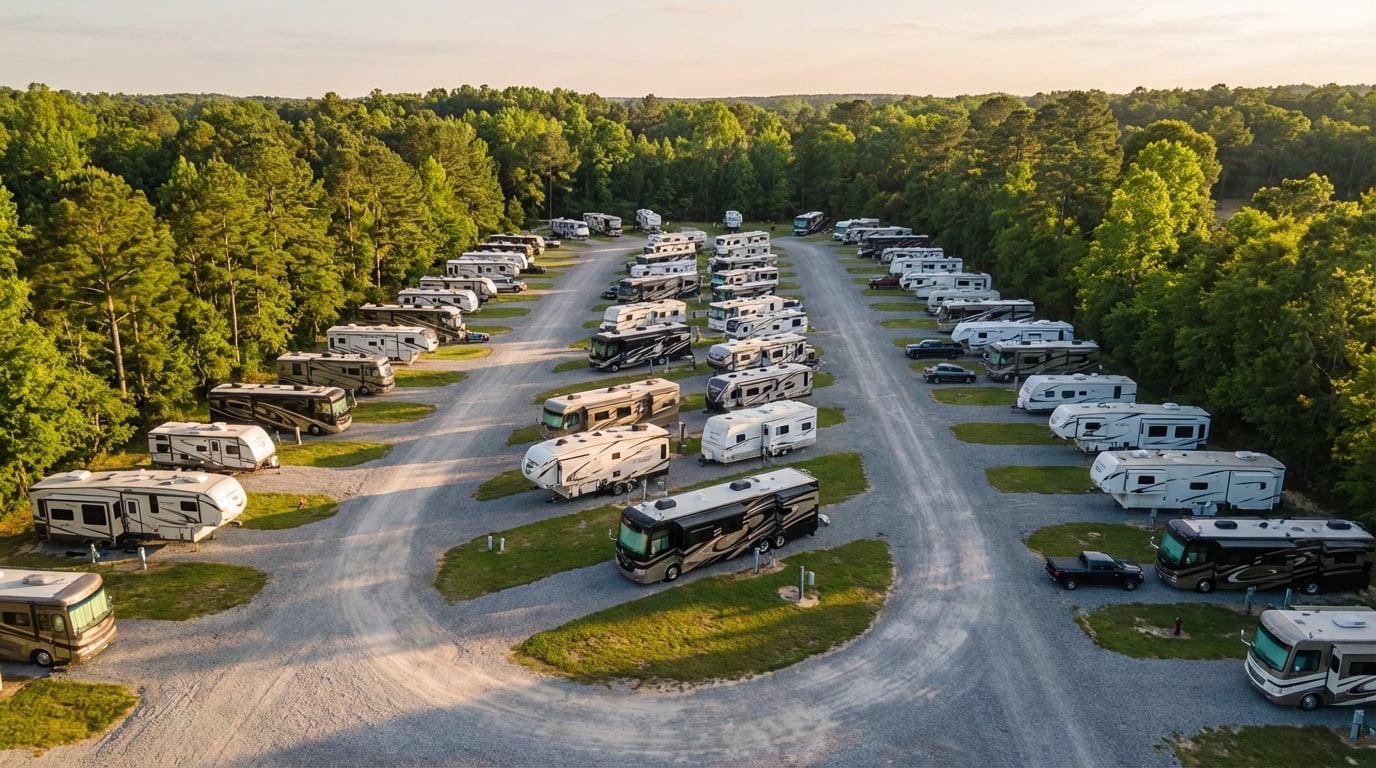

A North Carolina-based investor has acquired Silver Creek Campground, a 259-unit RV park in Mount Hermon, Louisiana, for $2.5 million following an unconventional path to closing that began with a failed auction contract. Soder Capital completed the purchase in March 2026 after the original winning bidder was unable to fulfill the terms of the sale, according to a report on the Washington Parish transaction.
The property was initially sold through an absolute auction on Nov. 20, 2025, with a buyer from New Orleans submitting the winning bid. However, that bidder proved unable to complete the purchase, prompting seller Spencer Mann, owner of JSM Property & Development, to release the buyer from the contract and pursue an alternative strategy. Mann pivoted to direct outreach with private equity investors active in the outdoor hospitality sector, ultimately connecting with Soder Capital to finalize the deal.
The acquisition was financed through Spectra Lending, a Birmingham, Alabama-based commercial lender specializing in bridge and special-situations loans. Spectra structured a $1.6 million acquisition bridge loan with a 13-month term for the purchase. The financing arrangement was specifically designed to provide Soder Capital with adequate time to complete planned property improvements and renovations before officially reopening the park.
Bridge loans have become increasingly common in outdoor hospitality acquisitions, particularly when properties require significant capital improvements before generating stabilized cash flow. Unlike traditional commercial mortgages, bridge financing offers flexibility that aligns with the realities of campground and RV park investments, where seasonal revenue fluctuations and repositioning timelines complicate conventional underwriting.
Investors considering similar financing structures should understand that bridge loans typically carry higher interest rates than permanent debt but provide shorter qualification timelines and more flexible underwriting criteria. Lenders specializing in outdoor hospitality understand the seasonal nature of the business and may structure payment terms that account for off-peak periods when cash flow is limited.
A 12- to 18-month bridge term is generally considered adequate for completing basic infrastructure upgrades and achieving operational stabilization. The 13-month term secured for Silver Creek aligns with typical industry timelines for completing improvements while maintaining adequate runway for unexpected delays. Investors should budget for refinancing costs when planning their exit from bridge financing into permanent debt, as this transition represents a critical component of the overall investment strategy.
Having a clear renovation timeline and reopening strategy strengthens loan applications and may result in more favorable terms from lenders experienced in the campground and RV park sector. Working with specialized lenders can streamline due diligence since they understand industry-specific metrics like pad rent averages and occupancy benchmarks that traditional commercial lenders may overlook.
The failed auction that preceded the Soder Capital acquisition highlights considerations that buyers should weigh when pursuing properties with complicated transaction histories.
When RV park and campground transactions deviate from traditional sale processes, buyers face unique due diligence requirements that demand additional scrutiny. Requesting documentation from a previous failed transaction can reveal issues that caused the original buyer to withdraw, providing valuable insight before committing capital. Conducting independent infrastructure assessments is particularly essential in these situations, as properties in limbo may have experienced deferred maintenance during extended sale periods.
Buyers acquiring properties after failed transactions should also verify that utility systems, including water, sewer and electrical capacity, meet operational requirements. Confirming that all permits and licenses remain current and transferable prevents costly post-closing delays that can derail reopening timelines. For sellers navigating buyer fallout, maintaining relationships with backup bidders and active sector investors creates alternative paths to closing, precisely the approach Mann employed when the original auction buyer fell through.
The outdoor hospitality sector has seen increased interest from private equity investors seeking stable cash-flowing assets with value-add potential. This expanding investor base may provide additional options for property sellers when traditional sale processes encounter obstacles.
The Silver Creek acquisition demonstrates how flexibility and preparation can salvage deals when initial buyers fail to perform. Mann’s decision to pivot toward direct outreach with private equity investors active in outdoor hospitality reflects an approach that some sellers have employed in the current market environment, where capital seeking outdoor hospitality assets often exceeds the available inventory of quality properties.
The property will undergo improvements and renovations before officially reopening under new ownership. The 13-month loan term suggests Soder Capital anticipates completing the repositioning work within that timeframe while maintaining sufficient buffer for potential construction delays or permitting challenges that frequently arise during campground renovation projects.
